 Back
Chapter 1: Biology—Exploring Life (Campbell Biology Concepts & Connections)
Study Guide - Smart Notes
 Tailored notes based on your materials, expanded with key definitions, examples, and context.
Biology: Exploring Life
What Is Life?
Biology is the scientific study of life, encompassing a vast array of living organisms and their interactions. To define life, biologists identify several key characteristics shared by all living things:
Order: Living things exhibit complex organization.
Reproduction: Organisms reproduce their own kind.
Growth and Development: Inherited information controls growth and development.
Energy Processing: Organisms obtain and use energy to power activities.
Response to the Environment: Living things respond to environmental stimuli.
Regulation: Internal conditions are regulated to maintain stability (homeostasis).
Evolutionary Adaptation: Adaptations evolve over generations, enhancing survival.
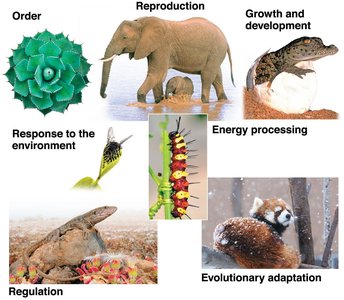
Example: A plant grows toward sunlight (response to environment), uses photosynthesis (energy processing), and maintains water balance (regulation).
Domains of Life
All Species Are in One of Three Domains
All living organisms are classified into three domains based on cellular and genetic differences:
Bacteria: Prokaryotic, unicellular organisms with simple cell structure.
Archaea: Prokaryotic, often found in extreme environments, genetically distinct from bacteria.
Eukarya: Eukaryotic organisms, including protists, fungi, plants, and animals.
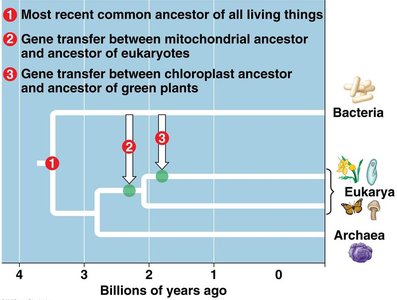
Example: Humans belong to the domain Eukarya, kingdom Animalia.
Classification Within Domains
Within the domain Eukarya, organisms are further classified into kingdoms:
Protists: Diverse, mostly unicellular eukaryotes.
Plantae: Multicellular plants.
Fungi: Multicellular fungi.
Animalia: Multicellular animals.
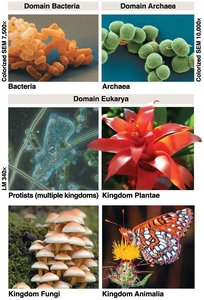
Scientific Inquiry and the Nature of Science
What Is Science?
Science is an evidence-based process of inquiry used to investigate the natural world. It relies on testable and falsifiable hypotheses, systematic observation, experimentation, and data analysis.
Hypothesis: A proposed explanation for an observation, must be testable and falsifiable.
Scientific Theory: A broad explanation supported by extensive evidence.
Types of Data: Qualitative (descriptive) and quantitative (numerical).
Observational Study: Collecting data without manipulating variables.
Clinical Trial: Testing medical interventions in humans, often double-blind.
Testing Hypotheses: Controlled Experiments
Controlled experiments are designed to test hypotheses by manipulating one variable (independent variable) and measuring its effect on another (dependent variable). A control group is used for comparison.
Independent Variable: The factor manipulated by the experimenter.
Dependent Variable: The factor measured in response to changes in the independent variable.
Control: The group not exposed to the independent variable, used as a baseline.
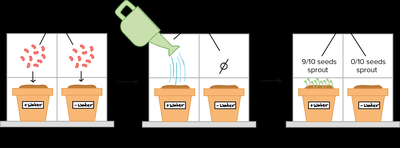
Example: Testing whether water affects seed sprouting by comparing watered and unwatered seeds.
Experimental Design in Biology
Biologists use laboratory experiments and observational studies to test hypotheses. Clinical trials and double-blind studies are used in medical research to minimize bias.
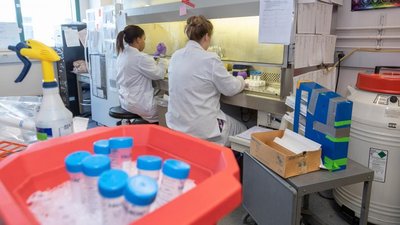
Observational Studies in Science
Observational studies are crucial when experiments are not feasible. For example, mapping disease cases can reveal patterns and causes.
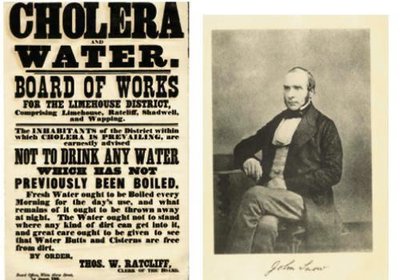
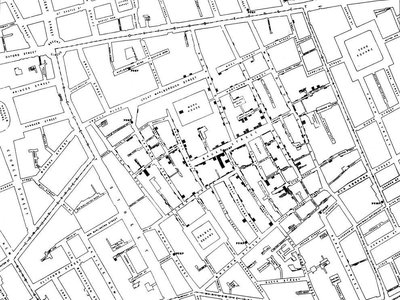
Example: John Snow's mapping of cholera cases in London helped identify contaminated water as the source.
Using Observational Data
Observational data can be used to study phenomena such as climate change or fossil records.
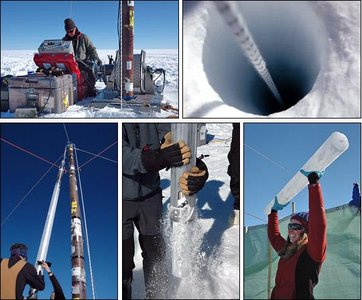
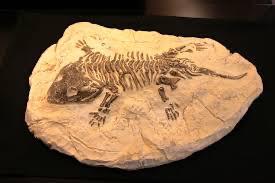
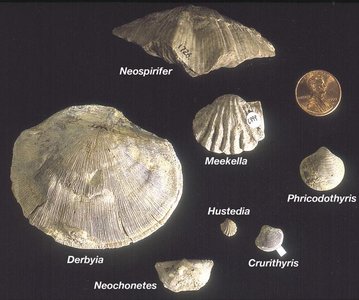
Example: Ice core samples provide evidence of past climate conditions; fossils reveal evolutionary history.
Impact of Hypothesis Testing and Observational Studies
Scientific Advances and Public Health
Hypothesis testing and observational studies have led to major advances in medicine, such as vaccines, which have dramatically reduced disease incidence.


Example: Vaccines have nearly eliminated diseases like polio and measles in the U.S.
Unifying Themes in Biology
Evolution: The Core Theme of Biology
Evolution explains the diversity and unity of life. It is driven by natural selection, which acts on individual variation, overproduction of offspring, unequal reproductive success, and accumulation of favorable traits.
Individual Variation: Individuals differ in heritable traits.
Overproduction of Offspring: More offspring are produced than can survive.
Unequal Reproductive Success: Individuals with advantageous traits reproduce more.
Accumulation of Favorable Traits: Over generations, favorable traits become more common.
Example: Peppered moths in England changed color due to industrial pollution, demonstrating natural selection.
Life Depends on the Flow of Information
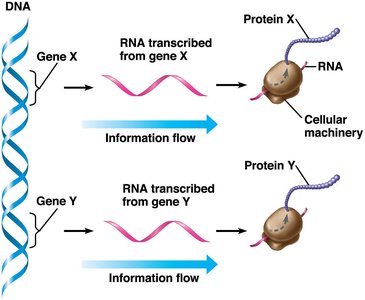
Biological information is stored in DNA and transmitted through gene expression. Genes are transcribed into RNA, which is then translated into proteins that carry out cellular functions.
Gene Expression: The process by which information from a gene is used to synthesize a functional product (protein).
Central Dogma: DNA → RNA → Protein
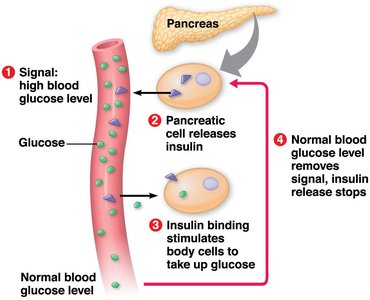
Example: Insulin gene expression regulates blood glucose levels.
Life Depends on the Transfer and Transformation of Energy and Matter
Living systems require energy and matter to sustain life. Energy flows from the sun to producers (plants), then to consumers (animals), and is eventually lost as heat. Matter cycles through ecosystems via processes such as photosynthesis and decomposition.
Producers: Organisms that make their own food (e.g., plants).
Consumers: Organisms that eat other organisms.
Decomposers: Organisms that break down dead material, recycling nutrients.
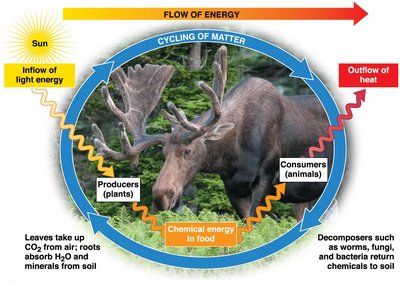
Example: Plants convert sunlight into chemical energy, which is transferred to animals and decomposers.
Summary Table: Key Terms in Scientific Inquiry
Term | Definition |
|---|---|
Hypothesis | Testable, falsifiable explanation for an observation |
Scientific Theory | Broad explanation supported by evidence |
Control | Group used as a baseline in experiments |
Independent Variable | Manipulated factor in an experiment |
Dependent Variable | Measured outcome in an experiment |
Qualitative Data | Descriptive, non-numerical data |
Quantitative Data | Numerical data |
Observational Study | Data collected without manipulation |
Clinical Trial | Testing medical interventions in humans |
Double-blind Clinical Trial | Neither participants nor researchers know who receives treatment |
