 Back
Chapter 1: Evolution and the Foundations of Biology – Study Notes
Study Guide - Smart Notes
 Tailored notes based on your materials, expanded with key definitions, examples, and context.
Introduction to Biology
What is Biology?
Biology is the scientific study of life, seeking to understand the structure, function, growth, origin, evolution, and distribution of living organisms. Biologists define life by a set of shared characteristics that distinguish living things from non-living matter.
Order: Living things are highly organized, composed of one or more cells.
Sensitivity or Response to Stimuli: Organisms respond to environmental changes.
Reproduction: Life forms reproduce to pass genetic information to the next generation.
Adaptation: Populations evolve over time to adapt to their environment.
Growth & Development: Organisms grow and develop according to specific instructions coded in their genes.
Regulation: Internal mechanisms coordinate biological processes.
Homeostasis: Maintenance of a stable internal environment.
Energy Processing: Organisms obtain and use energy to power activities.
Viruses are a special case: they can reproduce and evolve but lack cellular structure and cannot reproduce independently, so they are not considered fully alive by most biologists.
Levels of Biological Organization
Hierarchical Structure of Life
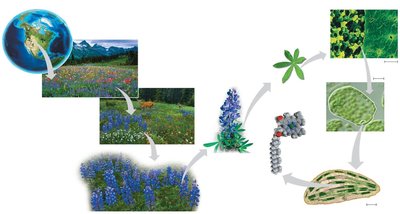
Biological systems are organized into a hierarchy, from the smallest chemical building blocks to the entire biosphere. Each level exhibits emergent properties—new functions that arise from the interactions of components at lower levels.
Biosphere: All life on Earth and the places where life exists.
Ecosystems: All living and non-living things in a particular area.
Communities: All populations of different species in an area.
Populations: Individuals of the same species in an area.
Organisms: Individual living things.
Organs and Organ Systems: Body parts that perform specific functions.
Tissues: Groups of similar cells performing a function.
Cells: Basic units of life.
Organelles: Functional components within cells.
Molecules: Chemical structures consisting of two or more atoms.
Form and Function
The structure of biological components determines their function. For example, the hollow, lightweight bones of birds are adapted for flight, illustrating the principle of structural determinism.

Cell Theory
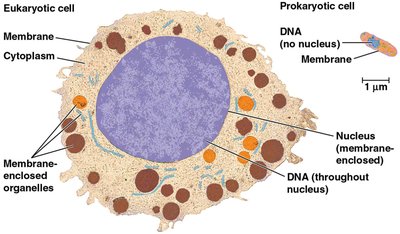
Cells are the fundamental units of life. The cell theory states:
All living things are composed of cells.
The cell is the basic unit of structure and function.
All cells arise from pre-existing cells.
Biological Information: The Software of Life
DNA: The Blueprint of Life
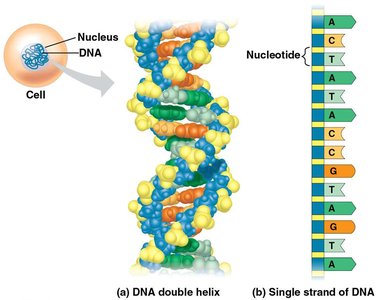
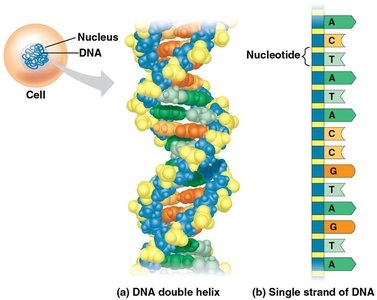
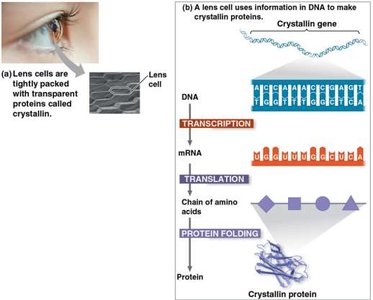
Genetic information is stored in DNA (deoxyribonucleic acid), which encodes instructions for building and maintaining an organism. DNA is composed of four types of nucleotides (A, T, C, G).
The Central Dogma: Information Flow
Biological information flows from DNA to RNA to protein, a process known as the Central Dogma of molecular biology:
Transcription: DNA is transcribed into messenger RNA (mRNA).
Translation: mRNA is translated into a chain of amino acids, forming a protein.
Gene Expression and Protein Function
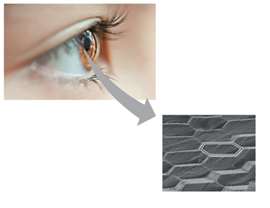
Gene expression involves converting genetic instructions into functional proteins. For example, lens cells in the eye express crystallin proteins, which are essential for focusing light.
Systems Biology and Bioinformatics
Systems Biology
Modern biology uses high-throughput technologies and computational tools to study complex interactions within biological systems, such as genomes (genomics) and proteomes (proteomics). Bioinformatics manages and analyzes large datasets to reveal emergent properties.
Energy, Matter, and Interactions
Homeostasis and Feedback Loops
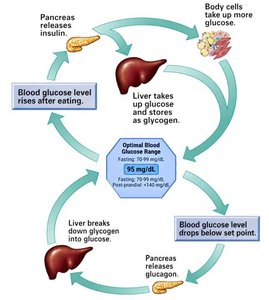
Organisms maintain internal stability through feedback mechanisms. For example, the insulin feedback loop regulates blood glucose levels; failure of this system leads to diseases like diabetes.
Energy Flow and Chemical Cycling
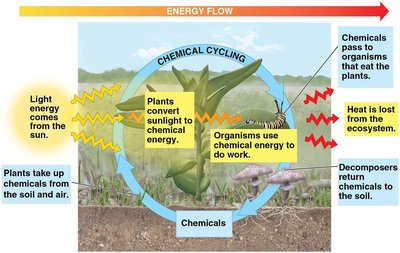
Energy flows through ecosystems in one direction—from sunlight to chemical energy (via photosynthesis) to heat. In contrast, matter cycles continuously between living organisms and the environment.
Evolution: The Core Theme of Biology
Unity and Diversity of Life
Evolution explains both the similarities and differences among living organisms. All life shares a common ancestry, reflected in universal molecular and cellular features, such as the structure of cilia in both protists and humans.
Biological Classification
Life is classified into three domains based on cellular structure and genetics:
Bacteria: Single-celled prokaryotes, diverse and widespread.
Archaea: Single-celled prokaryotes, often extremophiles.
Eukarya: Organisms with eukaryotic cells (plants, animals, fungi, protists).
Natural Selection and Adaptation
Natural selection is the process by which environmental pressures favor the survival and reproduction of individuals with advantageous traits, leading to adaptation and speciation.
Descent with Modification
Species accumulate differences from their ancestors as they adapt to new environments, resulting in the branching pattern of evolution known as adaptive radiation.
Scientific Inquiry: The Process of Science
The Scientific Method
Science is a systematic approach to understanding the natural world through observation, hypothesis formation, experimentation, and analysis. It is self-correcting and relies on reproducible evidence.
Observation: Gathering data about phenomena.
Hypothesis: A testable, falsifiable explanation for an observation.
Experiment: Testing the hypothesis by manipulating variables.
Analysis: Interpreting data to support or refute the hypothesis.
Conclusion: Drawing inferences and refining understanding.
Variables in Experiments
Independent Variable: The factor manipulated by the researcher.
Dependent Variable: The measured outcome.
Control Group: The standard for comparison, not exposed to the independent variable.
Types of Reasoning
Inductive Reasoning: Deriving general principles from specific observations.
Deductive Reasoning: Making specific predictions based on general principles.
Scientific Theories and Laws
Theory: A broad, well-supported explanation of natural phenomena.
Law: A descriptive statement or equation that reliably predicts events under certain conditions.
Limitations of Science
Science addresses questions that can be tested with evidence. It does not answer questions of morality, values, or the supernatural.
Summary Table: Key Biological Processes
Process | Component | Resulting Function |
|---|---|---|
Genetic Storage | DNA Nucleotides (A, T, C, G) | Transmission of blueprints across generations |
Gene Expression | Transcription and Translation | Conversion of genetic code into proteins |
Energy Transformation | Producers (photosynthesis) | Powering ecosystems via energy flow |
Chemical Cycling | Decomposers | Recycling matter for growth |
Biological Interaction | Mutualism / Predation | Community stability |
Key Equations and Concepts
Central Dogma:
Energy Flow:
Practice Questions
Why is the cell considered the basic unit of life?
How does the structure of a bird's wing bone relate to its function?
Describe the flow of information from DNA to protein.
Contrast the path of energy and matter in an ecosystem.
Explain how natural selection leads to adaptation.
What is the difference between a scientific theory and a hypothesis?
