 Back
Chapter 1: Evolution and the Foundations of Biology – Mini-Textbook Study Notes
Study Guide - Smart Notes
 Tailored notes based on your materials, expanded with key definitions, examples, and context.
Introduction to Biology
What is Biology?
Biology is the scientific study of living organisms and their life processes. It encompasses everything from the molecular mechanisms within cells to the interactions of organisms with their environment.
Biology comes from 'bio' (life) and 'ology' (study).
Science is a systematic method for exploring and understanding nature, relying on knowledge gained through experience and experimentation.
Characteristics of Life
All living things share several fundamental characteristics that distinguish them from non-living matter.
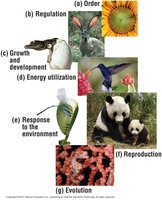
Order: Organized structure from molecules to cells.
Regulation: Ability to maintain internal stability (homeostasis).
Growth and Development: Increase in size and complexity.
Energy Utilization: Metabolism and energy transformation.
Response to Environment: Reacting to stimuli.
Reproduction: Producing offspring, either sexually or asexually.
Evolution: Adaptation and change over generations.
Homeostasis
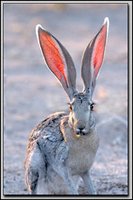
Homeostasis is the process by which living organisms maintain a stable internal environment despite external changes.
Definition: State of internal balance (physical equilibrium).
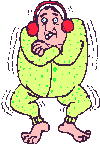
Example: Humans shiver to generate heat when cold.
Levels of Biological Organization
Hierarchy of Life
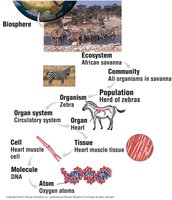
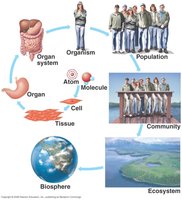
Biology studies life at multiple levels, from atoms to the biosphere. Each level has emergent properties not found in the previous level.
Biosphere: All life and environments on Earth.
Ecosystem: Living and nonliving components in a region.
Community: All organisms in an ecosystem.
Population: Group of individuals of one species.
Organism: Individual living entity.
Organ System: Group of organs working together.
Organ: Structure with a specific function.
Tissue: Group of similar cells.
Cell: Basic unit of life.
Organelle: Specialized structure within a cell.
Molecule: Group of atoms bonded together.
Atom: Smallest unit of matter.
The Diversity and Classification of Life
Taxonomy and Domains
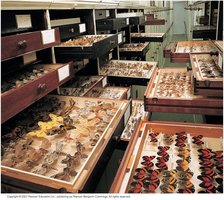
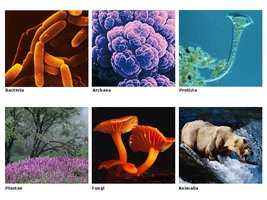
Taxonomy is the science of naming and classifying organisms. Life is classified into three domains based on cellular structure and genetics.
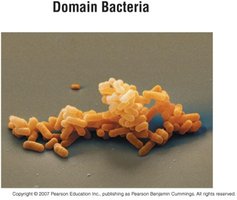
Bacteria: Prokaryotic, no nucleus.
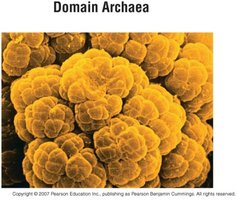
Archaea: Prokaryotic, distinct from bacteria.
Eukarya: Eukaryotic, true nucleus; includes Protists, Fungi, Plants, and Animals.
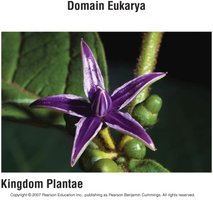
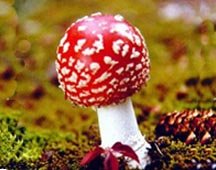
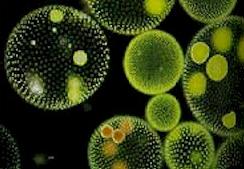
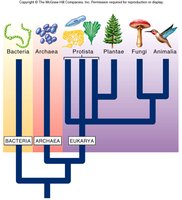
Kingdoms of Eukarya
Plantae: Multicellular, photosynthetic.
Fungi: Multicellular, absorb nutrients.
Animalia: Multicellular, ingest food.
Protists: Mostly unicellular, diverse group.
Unifying Themes in Biology
Organization and Emergent Properties
Biological systems exhibit emergent properties, which arise from the arrangement and interaction of parts within a system.
Reductionism: Breaking down complex systems into simpler parts.
Systems Biology: Studying interactions among system components.
Example: A functioning bicycle only works when all parts are correctly assembled.
Structure and Function
There is a close relationship between the structure of biological components and their function.
Example: The shape of a bird’s beak determines its feeding habits.
The Cell: Basic Unit of Life
Prokaryotic vs. Eukaryotic Cells
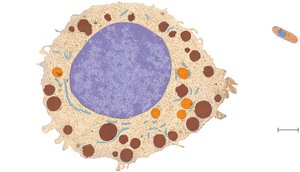
Cells are the fundamental units of life. They are classified as prokaryotic or eukaryotic based on their internal structure.
Prokaryotic Cells: No nucleus, no membrane-bound organelles, generally smaller (Bacteria and Archaea).
Eukaryotic Cells: Membrane-bound organelles, nucleus containing DNA, larger and more complex.
Genetic Information and DNA
DNA: The Genetic Material
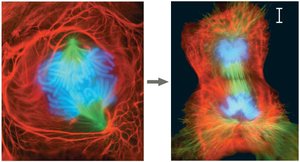
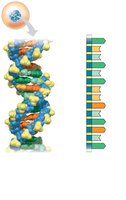
DNA (deoxyribonucleic acid) is the molecule that stores genetic information in all living organisms.
Chromosomes: Structures containing DNA.
Genes: Segments of DNA that code for traits.
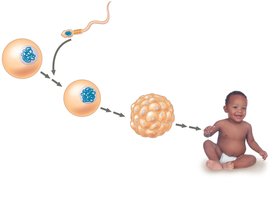
Inheritance: DNA is passed from parents to offspring.
Energy and Matter in Biological Systems
Metabolism and Energy Flow
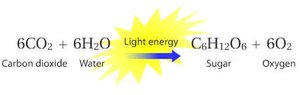
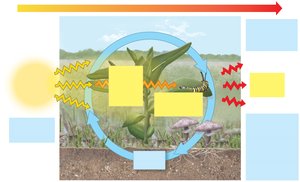
Life depends on the transfer and transformation of energy and matter. Metabolism is the sum of all chemical reactions in an organism.
Producers: Convert sunlight to chemical energy (photosynthesis).
Consumers: Obtain energy by eating other organisms.
Decomposers: Break down dead organisms, recycling nutrients.
Interactions in Biological Systems
Organism and Environment Interactions
Organisms interact with each other and their environment, affecting both in various ways.
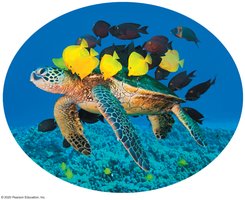
Mutualism: Both organisms benefit.
Competition: Both organisms are harmed.
Example: Plants take up water and minerals from soil, roots break up rocks to form soil.
Scientific Inquiry and Method
Forming and Testing Hypotheses
Science relies on forming hypotheses and testing them through observation and experimentation.
Hypothesis: Testable explanation based on observations.
Experiment: Controlled test of a hypothesis.
Inductive Reasoning: Generalizations from many observations.
Deductive Reasoning: Predictions from general premises.
Control Groups: Used to cancel out unwanted variables.
Case Study: Mouse Coat Coloration
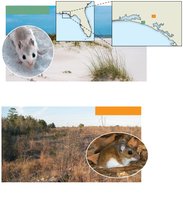
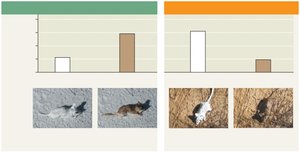
Scientific inquiry can be illustrated by studying how mouse coat coloration affects predation rates in different habitats.
Observation: Mice in beach habitats have light fur; inland mice have dark fur.
Hypothesis: Camouflage affects predation rates.
Experiment: Models with different coat colors placed in habitats; predation rates measured.
Evolution: The Core Theme of Biology
Evolution and Natural Selection
Evolution explains both the unity and diversity of life. It is the process by which organisms change over generations, accumulating differences from their ancestors.
Unity: All organisms share common features due to descent from a common ancestor.
Diversity: Differences arise from heritable changes after divergence.
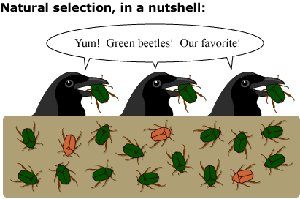
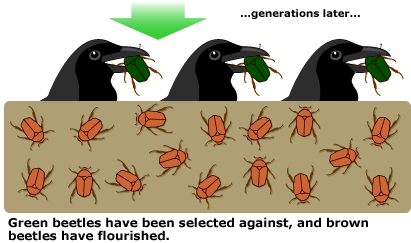
Natural Selection: Individuals with advantageous traits are more likely to survive and reproduce.
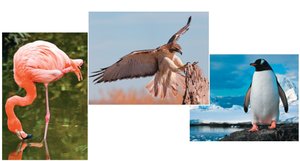
Adaptation: Traits that enhance survival and reproduction in a particular environment.
Descent with Modification and the Tree of Life
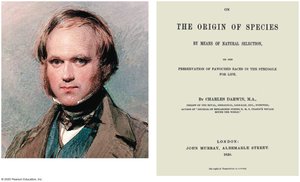
Darwin proposed that natural selection could lead to the formation of new species from a common ancestor, illustrated by treelike diagrams.
Branch points: Represent divergence from a common ancestor.
Example: Finch species on the Galápagos Islands descended from a common ancestor.
Summary Table: Domains and Kingdoms of Life
Domain | Cell Type | Kingdoms/Groups | Key Features |
|---|---|---|---|
Bacteria | Prokaryotic | Bacteria | No nucleus, unicellular |
Archaea | Prokaryotic | Archaea | No nucleus, unicellular, distinct biochemistry |
Eukarya | Eukaryotic | Protists, Plantae, Fungi, Animalia | True nucleus, multicellular or unicellular |
Additional info:
Scientific theories are broader than hypotheses and supported by extensive evidence.
Science and technology are interdependent; technology applies scientific knowledge for practical purposes.
