 Back
Chapter 1: Evolution, the Themes of Biology, and Scientific Inquiry - Study Notes
Study Guide - Smart Notes
 Tailored notes based on your materials, expanded with key definitions, examples, and context.
Evolution, the Themes of Biology, and Scientific Inquiry
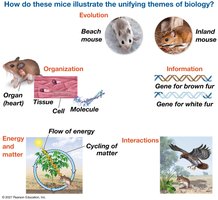
Unifying Themes of Biology
Biology is the scientific study of life, encompassing a vast scope from molecular to planetary levels. The discipline is unified by five major themes: Organization, Information, Energy and Matter, Interactions, and Evolution. These themes help explain the complexity and diversity of living organisms.
Organization: Life is structured in a hierarchy, from molecules to the biosphere. Each level exhibits emergent properties not found in the preceding level.
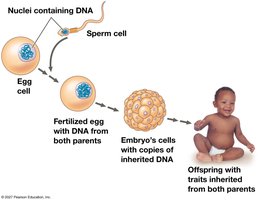
Information: Genetic information, primarily in the form of DNA, is essential for inheritance, development, and functioning.
Energy and Matter: Life requires the transfer and transformation of energy and matter, enabling growth, development, and maintenance.
Interactions: Organisms interact with each other and their environment, affecting survival and reproduction.
Evolution: The concept that living organisms are modified descendants of common ancestors explains both unity and diversity.
Properties of Life
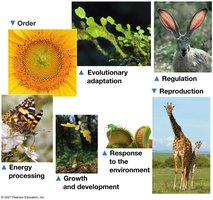
Living organisms share several key properties that distinguish them from nonliving matter:
Order: Highly ordered structure characterizes living things.
Evolutionary adaptation: Organisms adapt to their environment through evolution.
Regulation: Homeostatic mechanisms maintain internal stability.
Reproduction: Organisms reproduce, passing genetic information to offspring.
Energy processing: Organisms obtain and use energy for growth and maintenance.
Growth and development: Organisms grow and develop according to inherited instructions.
Response to the environment: Organisms respond to environmental stimuli.
Levels of Biological Organization
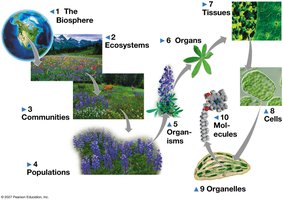
Biological organization ranges from the molecular level to the biosphere. Each level is defined by unique emergent properties:
Biosphere: All life on Earth and its environments.
Ecosystems: Communities of organisms and their physical environment.
Communities: All organisms in a particular ecosystem.
Populations: Individuals of the same species in a given area.
Organisms: Individual living entities.
Organs and Organ Systems: Body parts with specific functions.
Tissues: Groups of cells performing a function.
Cells: Basic unit of life.
Organelles: Functional components within cells.
Molecules: Chemical structures consisting of two or more atoms.
Structure and Function
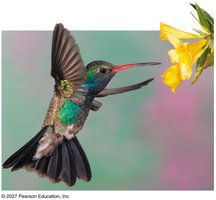
There is a close relationship between the structure of biological components and their function. Understanding one often provides insight into the other. For example, the shape of a hummingbird's wings enables it to hover and feed from flowers.
The Cell: Basic Unit of Life
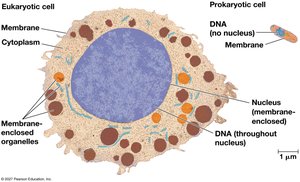
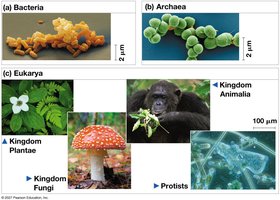
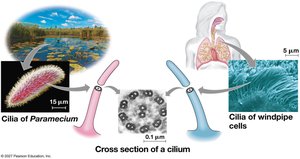
The cell is the fundamental unit of life. All living organisms are composed of cells, which are classified as either prokaryotic or eukaryotic:
Prokaryotic cells: Simpler, smaller, lack a nucleus and membrane-bound organelles. Found in Bacteria and Archaea.
Eukaryotic cells: Larger, more complex, contain a nucleus and membrane-bound organelles. Found in Eukarya.
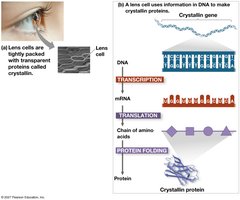
Genetic Information: DNA
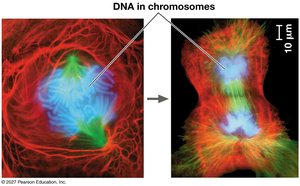
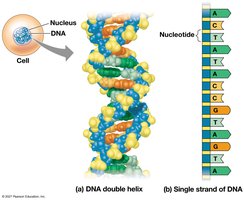
Within cells, chromosomes contain genetic material in the form of DNA. DNA is the molecule of inheritance, directing the development and functioning of organisms.
Genes: Units of inheritance, encoding instructions for building molecules.
Gene expression: The process by which information from a gene is used to synthesize a functional product, usually a protein.
Energy Flow and Chemical Cycling
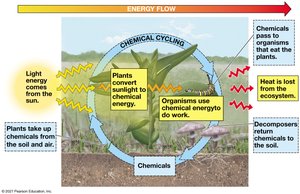
Life depends on the transfer and transformation of energy and matter. Energy flows through ecosystems, entering as sunlight and exiting as heat, while chemicals cycle within ecosystems.
Producers: Organisms (e.g., plants) that convert sunlight to chemical energy.
Consumers: Organisms that feed on other organisms.
Decomposers: Organisms that recycle nutrients back to the environment.
Regulation and Feedback Mechanisms
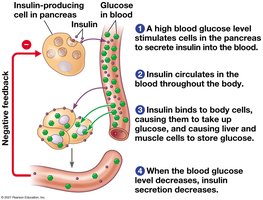
Biological processes are regulated by feedback mechanisms. Negative feedback reduces the initial stimulus, while positive feedback amplifies it. Regulation is essential for maintaining homeostasis.
Negative feedback: The response counteracts the initial stimulus (e.g., insulin regulation of blood glucose).
Positive feedback: The response reinforces the stimulus.
Interactions Within Ecosystems
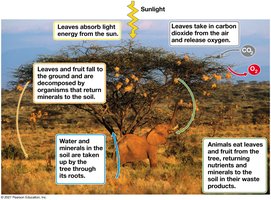
Organisms interact with each other and their physical environment. These interactions can be beneficial, harmful, or neutral, and are essential for ecosystem stability.
Biotic interactions: Relationships among living organisms (e.g., predation, competition).
Abiotic interactions: Relationships with nonliving environmental factors (e.g., climate, soil).
Evolution: Unity and Diversity of Life
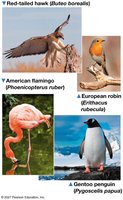
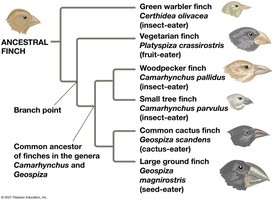
Evolution is the central theme of biology, explaining both the unity and diversity of life. All organisms share a common ancestry, but have adapted to their environments through natural selection.
Unity: Shared characteristics, such as the universal genetic code.
Diversity: Adaptations to different environments.
Charles Darwin and Natural Selection
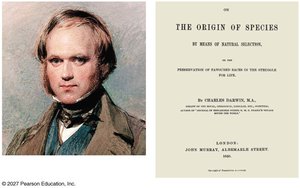
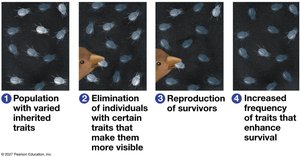
Charles Darwin's theory of natural selection provides the mechanism for evolution. Natural selection results in adaptation, as individuals with advantageous traits are more likely to survive and reproduce.
Variation: Individuals in a population vary in their traits.
Heritability: Many traits are inherited.
Competition: More offspring are produced than can survive.
Adaptation: Traits that enhance survival become more common.
Scientific Inquiry and the Process of Science
Science is a process of inquiry involving observation, hypothesis formation, experimentation, and analysis. Hypotheses must be testable and falsifiable. The scientific method is flexible and iterative.
Observation: Gathering information about the natural world.
Hypothesis: A testable explanation for an observation.
Experiment: Controlled testing of hypotheses.
Data: Qualitative and quantitative information collected during experiments.
Inductive reasoning: Deriving generalizations from specific observations.
Deductive reasoning: Making predictions based on general premises.

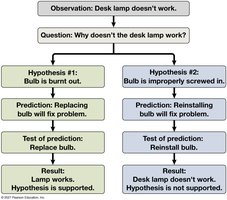
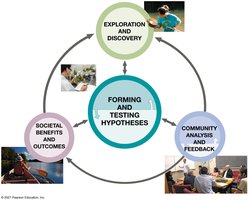
Case Study: Mouse Coat Coloration and Natural Selection
Scientific inquiry can be illustrated by studies of mouse coat coloration. Researchers hypothesized that coloration evolved as an adaptation to reduce predation. Experiments using model mice confirmed that camouflage affects predation rates.
Experimental group: Non-camouflaged mice.
Control group: Camouflaged mice.
Independent variable: Mouse coloration.
Dependent variable: Predation rate.
Theories in Science
A scientific theory is broader than a hypothesis, generates new hypotheses, and is supported by a large body of evidence. Theories are fundamental to scientific progress.
Science, Technology, and Society
Science aims to understand natural phenomena, while technology applies scientific knowledge for practical purposes. Both are interdependent and can have profound effects on society, raising ethical, political, and cultural issues.
The Value of Diverse Viewpoints
Science benefits from cooperation and diversity among practitioners. Different backgrounds and perspectives enhance creativity and robustness in scientific inquiry.
Theme | Description | Example |
|---|---|---|
Organization | Hierarchy from molecules to biosphere | Cell, tissue, organ, organism |
Information | Genetic material (DNA) | Gene expression |
Energy and Matter | Energy flow and chemical cycling | Photosynthesis, respiration |
Interactions | Organism-environment relationships | Predation, symbiosis |
Evolution | Descent with modification | Natural selection |
Key Equation:
Gene expression (central dogma):
Additional info: These notes expand on the brief points in the original materials, providing definitions, examples, and academic context suitable for General Biology students.
