 Back
BackChapter 1: Evolution, the Themes of Biology, and Scientific Inquiry – Study Notes
Study Guide - Smart Notes
 Tailored notes based on your materials, expanded with key definitions, examples, and context.
Evolution, the Themes of Biology, and Scientific Inquiry
Unifying Themes of Biology
Biology is the scientific study of life, encompassing a vast range of topics and scales. To organize this complexity, biologists focus on several unifying themes that recur throughout the study of life:
Organization
Information
Energy and Matter
Interactions
Evolution
Theme: Evolution as the Core Theme of Biology
Evolution explains both the unity and diversity of life. Through natural selection, populations adapt to their environments over generations, leading to the wide variety of organisms observed today. The process of evolution is supported by evidence from the fossil record, comparative anatomy, and molecular biology.
Natural Selection: The mechanism by which individuals with advantageous traits are more likely to survive and reproduce, passing those traits to the next generation.
Adaptation: Traits that enhance survival and reproductive success in a particular environment.
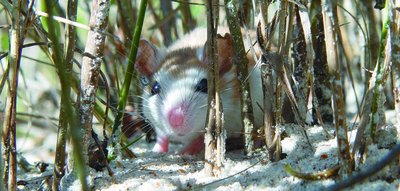
Example: The beach mouse (Peromyscus polionotus) has light fur that camouflages it against white sand, while inland populations have darker fur to blend with soil and vegetation. This is a classic example of adaptation through natural selection.
Theme: Organization – Levels of Biological Organization
Life is structured in a hierarchy, from the molecular level to the biosphere. Each level exhibits emergent properties not present at lower levels.
Biosphere – All life on Earth and the places where life exists
Ecosystem – All living and nonliving components in a particular area
Community – All organisms in an ecosystem
Population – Individuals of the same species in a given area
Organism – An individual living thing
Organ System/Organ – Body parts that perform specific functions
Tissue – Groups of similar cells performing a function
Cell – Basic unit of life
Organelle – Functional components within cells
Molecule – Chemical structure consisting of atoms
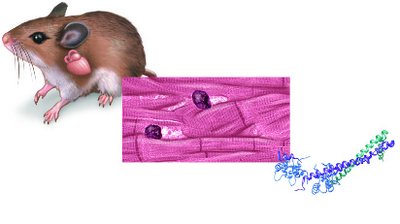
Additional info: Structure and function are closely related at all levels. For example, the anatomy of a mouse’s muscle tissue enables movement, and the structure of proteins determines their function in the cell.
Theme: Information – Genetic Information and Gene Expression
Genetic information is stored in DNA and transmitted from one generation to the next. Genes encode instructions for building proteins, which determine the structure and function of organisms.
DNA (Deoxyribonucleic Acid): The molecule that carries genetic instructions.
Gene Expression: The process by which information from a gene is used to synthesize a functional product, usually a protein.
Example: The genes responsible for fur color in mice are inherited and expressed to produce the pigments that determine coat color.
Theme: Energy and Matter – Flow and Cycling
All living organisms require energy to perform work. Energy flows through ecosystems, typically entering as sunlight and exiting as heat, while matter cycles between organisms and their environment.
Producers: Organisms (like plants) that convert solar energy into chemical energy via photosynthesis.
Consumers: Organisms that obtain energy by eating other organisms.
Decomposers: Organisms that break down dead material, returning nutrients to the environment.
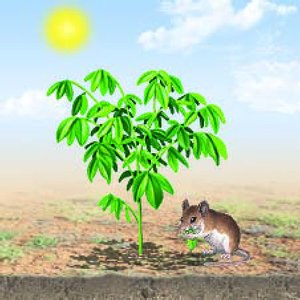
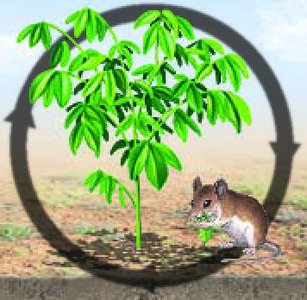
Example: A mouse eats a plant, obtaining energy and matter. The mouse is then preyed upon by a hawk, transferring energy up the food chain. Decomposers recycle nutrients from dead organisms back into the ecosystem.
Theme: Interactions – Biological Systems and Feedback
Interactions occur at all levels of biological organization, from molecules within cells to organisms within ecosystems. These interactions often involve feedback mechanisms that regulate biological processes.
Negative Feedback: A process in which the end product slows its own production (e.g., regulation of blood glucose).
Positive Feedback: A process in which the end product speeds up its own production (e.g., blood clotting).
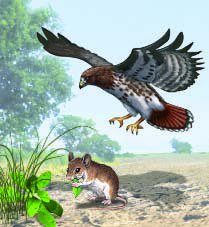
Example: The interaction between a mouse and its predator (hawk) is an example of ecological interaction that can influence population dynamics and drive evolutionary change.
Scientific Inquiry and the Process of Science
Science is a way of knowing about the natural world, based on observation, hypothesis formation, experimentation, and analysis. The scientific method is iterative and flexible, involving:
Making observations
Forming hypotheses
Testing hypotheses through experiments or further observation
Analyzing data and drawing conclusions
Controlled experiments compare an experimental group with a control group, differing only in the variable being tested.
Summary Table: Five Unifying Themes of Biology
Theme | Definition | Example |
|---|---|---|
Organization | Hierarchy of biological structure | Cells form tissues, tissues form organs |
Information | Genetic information in DNA | Gene expression determines fur color |
Energy and Matter | Energy flow and matter cycling | Mouse eats plant, is eaten by hawk |
Interactions | Organisms interact with each other and environment | Predator-prey relationships |
Evolution | Descent with modification | Adaptation of mouse fur color to habitat |
Conclusion
The study of biology is unified by several major themes, with evolution as the central concept explaining the diversity and unity of life. Understanding these themes provides a framework for exploring the complexity of living systems, from molecules to ecosystems.
