 Back
Chapter 1: Evolution, the Themes of Biology, and Scientific Inquiry – Study Notes
Study Guide - Smart Notes
 Tailored notes based on your materials, expanded with key definitions, examples, and context.
Biology: The Scientific Study of Life
Introduction to Biology
Biology is the scientific study of life, encompassing a wide range of questions about living organisms and their interactions. Biologists investigate how life works, from the molecular level to entire ecosystems, using systematic methods of inquiry.
Biology seeks to understand the structure, function, growth, origin, evolution, and distribution of living organisms.
Key questions include: How do cells develop into organisms? How do living things interact in communities?
The Process of Science
The Scientific Method
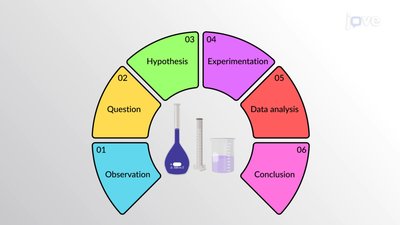
Science is an evidence-based approach to understanding the natural world. The scientific method is a systematic process for inquiry, involving observation, hypothesis formation, experimentation, and analysis.
Observation: Gathering information about phenomena.
Question: Formulating questions based on observations.
Hypothesis: Proposing a tentative explanation that is testable and falsifiable.
Experimentation: Testing hypotheses through controlled experiments or additional observations.
Data Analysis: Interpreting results to support or refute the hypothesis.
Conclusion: Drawing conclusions and refining hypotheses as needed.
Hypothesis, Theory, and Law
Hypothesis: A tentative explanation based on observations; must be testable and falsifiable.
Theory: A hypothesis that has survived repeated testing and is supported by substantial evidence (e.g., theory of evolution).
Law: A statement describing consistent natural phenomena (e.g., law of gravity).
Hypotheses become theories through extensive testing and validation.
Limits of Scientific Inquiry
Scientific questions must be testable and falsifiable.
Supernatural and religious explanations are outside the scope of science.
Reasoning in Science
Deductive reasoning: Applying general principles to predict specific outcomes.
Inductive reasoning: Drawing general conclusions from specific observations.
Strong inference: Testing and rejecting multiple hypotheses to strengthen conclusions.
Types of Data
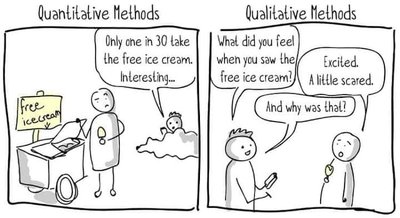
Qualitative data: Descriptive, non-numerical information (e.g., color, texture).
Quantitative data: Numerical measurements (e.g., length, mass, temperature).
Experimental Design
Manipulative experiment: Deliberate alteration of one variable while holding others constant.
Controlled study: Comparing a treatment group to a control group.
Natural experiment: Observing events that have already occurred.
Blind experiment: Researcher does not know which group is treated until after data analysis.
Double-blind experiment: Neither subject nor researcher knows group assignments.
Variables in Experiments
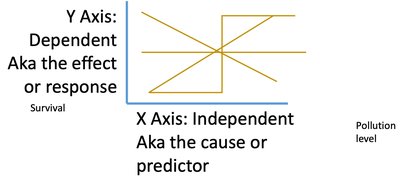
Independent variable: The variable that is manipulated (plotted on the X-axis).
Dependent variable: The variable that is measured (plotted on the Y-axis); it depends on the independent variable.
Types of Graphs
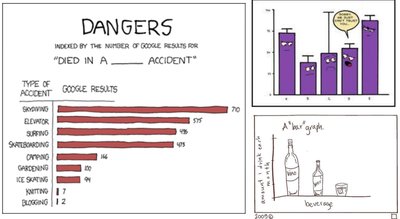
Bar/Column graph: Used for comparing counts, averages, or summary statistics.
Line graph: Used for continuous data where order matters (e.g., time series).
Scatter graph: Used for plotting independent data points to observe trends.

Peer Review and Scientific Literature
Peer review is essential for validating scientific research.
Types of scientific literature include original research articles, reviews, and reports.
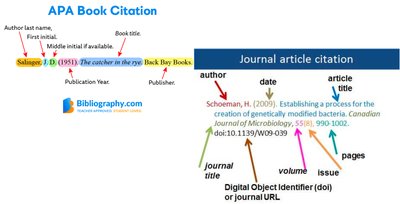
Proper citation (e.g., APA style) is required for all scientific work.
The Nature and Properties of Life
Characteristics of Living Things
Life is defined by a set of characteristics shared by all living organisms:
Homeostasis: Regulation of internal environment to maintain stability (e.g., sweating to cool down).
Organization: Composed of one or more cells, the basic units of life.
Metabolism: Transformation of energy through anabolic and catabolic reactions.
Growth: Increase in size and complexity through cell division and development.
Nutrition, Transport, Respiration, Excretion, Response, Reproduction: Essential functions for sustaining life.
Levels of Biological Organization
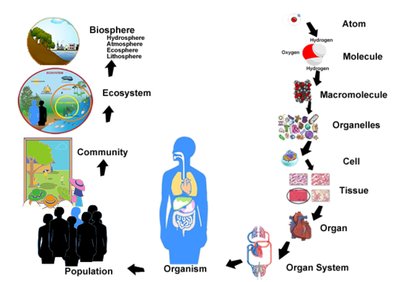
Life is organized hierarchically, from atoms to the biosphere:
Atom → Molecule → Macromolecule → Organelle → Cell → Tissue → Organ → Organ System → Organism → Population → Community → Ecosystem → Biosphere
The Tree of Life: Domains and Kingdoms
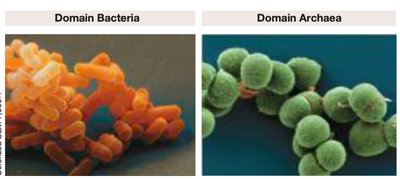
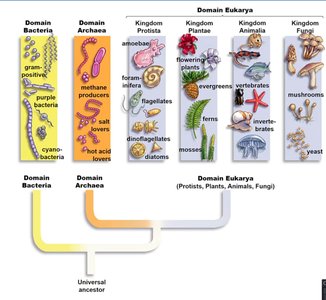
All living organisms are classified into three domains:
Bacteria: Single-celled prokaryotes without a nucleus.
Archaea: Single-celled prokaryotes, often found in extreme environments.
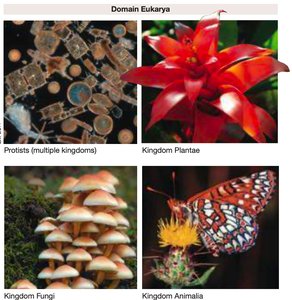
Eukarya: Organisms with cells containing a nucleus; includes protists, plants, fungi, and animals.
Five Unifying Themes in Biology
1. Evolution: The Core Theme of Biology
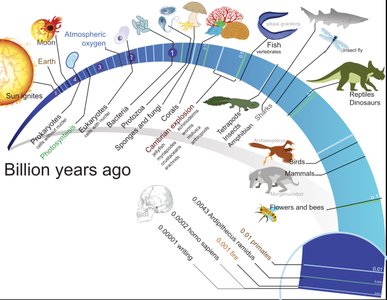
Evolution explains both the unity and diversity of life. Charles Darwin's theory of evolution by natural selection describes how populations change over time due to differential reproductive success.
Natural selection: Individuals with advantageous traits reproduce more successfully, leading to adaptation.
Evolution: Change in gene frequencies in a population over generations.
Other mechanisms: Genetic drift, gene flow, sexual selection.
2. Life Depends on the Flow of Information
Information is essential for life, from genetic inheritance to cellular regulation. DNA encodes instructions for building proteins, and information flow follows the central dogma: DNA → RNA → Protein.
Gene expression: The process by which information from a gene is used to synthesize proteins.
Feedback regulation: The product of a process regulates that process (negative or positive feedback).
3. Structure and Function are Related
Biological structures are closely related to their functions at all levels of organization. For example, the shape of hemoglobin enables oxygen transport, and the structure of nerve cells allows for signal transmission.
4. Life Depends on the Transfer and Transformation of Energy and Matter
Energy flows through ecosystems, entering as sunlight, converted by producers, transferred to consumers, and lost as heat. Matter cycles between the environment and living organisms.
Producers: Organisms that convert solar energy to chemical energy (e.g., plants).
Consumers: Organisms that obtain energy by eating other organisms.
Decomposers: Organisms that break down dead matter, recycling nutrients.
5. Life Depends on Interactions Within and Between Systems
Emergent properties arise from interactions among system components. Systems biology studies these interactions to understand complex biological functions.
Reductionism: Breaking down complex systems into simpler parts for study.
Emergent properties: New characteristics that arise at higher levels of organization.
Summary Table: Domains and Kingdoms of Life
Domain | Key Features | Examples |
|---|---|---|
Bacteria | Prokaryotic, unicellular, no nucleus | Escherichia coli, Cyanobacteria |
Archaea | Prokaryotic, unicellular, often extremophiles | Halobacterium, Methanogens |
Eukarya | Eukaryotic, unicellular or multicellular, nucleus present | Protists, Plants, Fungi, Animals |
Key Equations and Concepts
Central Dogma of Molecular Biology:
Feedback Regulation (Negative Feedback):
Evolution (Change in Gene Frequency):
where is the frequency of a gene in one generation and is the frequency in the next generation.
