 Back
BackChapter 1: Evolution, the Themes of Biology, and Scientific Inquiry – Study Notes
Study Guide - Smart Notes
 Tailored notes based on your materials, expanded with key definitions, examples, and context.
Evolution, the Themes of Biology, and Scientific Inquiry
Introduction to Biology
Biology is the scientific study of life, encompassing a vast scope from molecular mechanisms to global ecosystems. The study of life reveals common themes that unify all living organisms, including the expression and transmission of genetic information, the transformation of energy and matter, and the process of evolution.
Biology: The science of life and living organisms.
Living things are recognized by their unique properties, such as reproduction, evolutionary adaptation, energy processing, regulation, growth, and response to the environment.
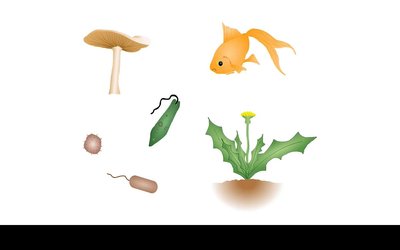
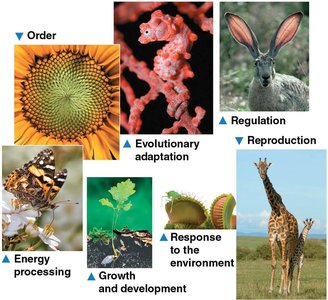
Unifying Themes in Biology
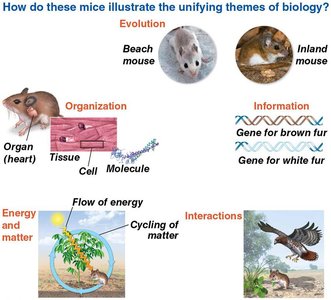
There are five major themes that unify the study of biology: Organization, Information, Energy and Matter, Interactions, and Evolution. These themes help explain the complexity and diversity of life.
Organization: Life is structured in a hierarchical manner, from molecules to the biosphere.
Information: Genetic information is stored and transmitted via DNA.
Energy and Matter: Life requires the transfer and transformation of energy and matter.
Interactions: Components of biological systems interact to ensure smooth functioning.
Evolution: Accounts for the unity and diversity of life.
Levels of Biological Organization
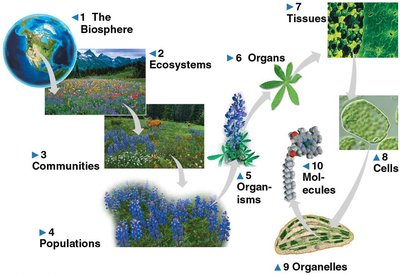
Biological organization ranges from the molecular level to the biosphere. Each level exhibits emergent properties not found in the preceding level.
Biosphere → Ecosystems → Communities → Populations → Organisms → Organs → Tissues → Cells → Organelles → Molecules
Reductionism: Breaking down complex systems into simpler components for study.
Structure and Function
There is a close relationship between structure and function at every level of biological organization. Understanding the structure of a biological entity provides insight into its function, and vice versa.
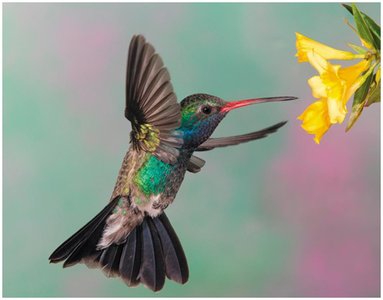
Example: The shape of a hummingbird’s beak is adapted for feeding from flowers.
The Cell: Basic Unit of Life
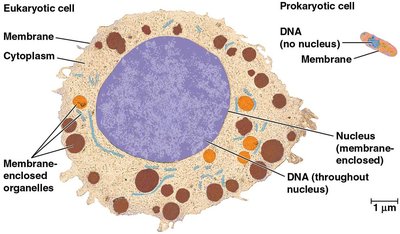
The cell is the fundamental unit of structure and function in living organisms. Cells are classified as prokaryotic or eukaryotic.
Prokaryotic cells: Simpler, smaller, lack a nucleus and membrane-bound organelles (e.g., bacteria, archaea).
Eukaryotic cells: Larger, contain a nucleus and membrane-bound organelles (e.g., plants, animals, fungi, protists).
Cell theory: All living organisms are composed of cells.
Genetic Information and DNA
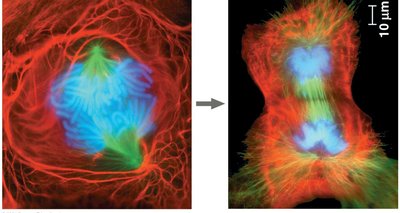
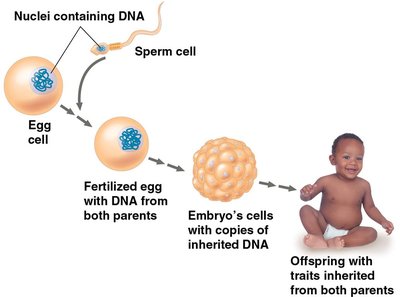
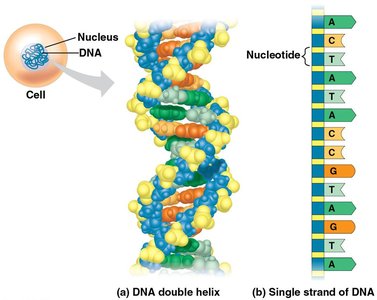
Genetic information is stored in DNA, which is organized into chromosomes. DNA directs the development and functioning of organisms through gene expression.
Genes: Units of inheritance, encode information for building molecules.
DNA structure: Double helix composed of nucleotides (A, G, C, T).
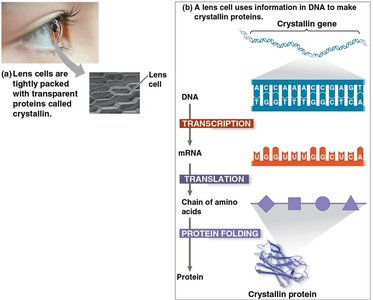
Gene expression: DNA is transcribed into RNA, which is translated into proteins.
Genomics and Proteomics
Genomics is the study of whole sets of genes, while proteomics focuses on the entire set of proteins expressed by a cell, tissue, or organism. These fields rely on high-throughput technology and bioinformatics.
Genome: The complete set of genetic instructions in an organism.
Proteome: The complete set of proteins expressed by a cell or organism.
Bioinformatics: Computational tools for analyzing large biological datasets.
Energy Flow and Chemical Cycling
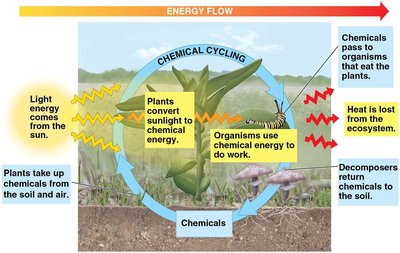
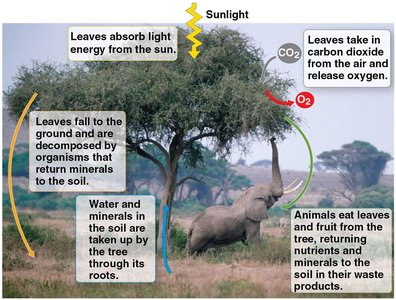
Life depends on the transfer and transformation of energy and matter. Energy flows through ecosystems, entering as light and exiting as heat, while chemicals cycle within ecosystems.
Producers: Organisms (e.g., plants) that convert sunlight to chemical energy.
Consumers: Organisms that feed on other organisms.
Decomposers: Organisms that recycle nutrients back to the environment.
Biological Interactions and Feedback Regulation
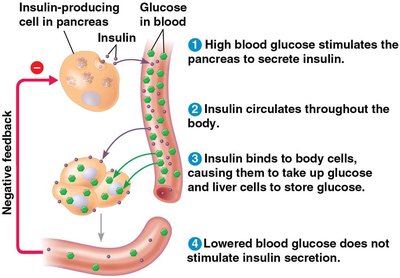
Interactions among components of biological systems are essential for their functioning. Feedback regulation is a key mechanism for self-regulation in living organisms.
Negative feedback: The response reduces the initial stimulus (e.g., insulin regulation).
Positive feedback: The end product speeds up its own production.
Interactions in Ecosystems
Organisms interact with each other and with their physical environment. These interactions can be beneficial or harmful and are crucial for ecosystem stability.
Example: African acacia tree interacts with animals and the environment.
Human impact: Activities such as burning fossil fuels contribute to climate change.
Evolution: The Core Theme of Biology
Evolution explains both the unity and diversity of life. All living organisms are modified descendants of common ancestors, and natural selection is the mechanism driving evolutionary change.
Unity: DNA is the universal genetic language.
Diversity: Millions of species exist, each with unique traits.
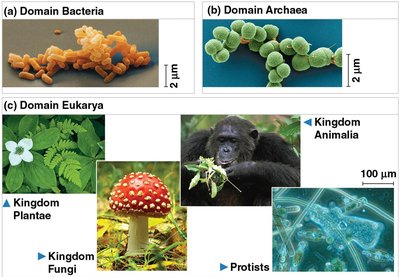
Classification: Life is organized into three domains—Bacteria, Archaea, and Eukarya.
Charles Darwin and Natural Selection
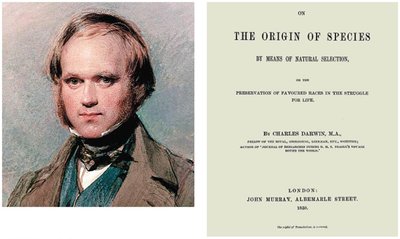
Charles Darwin’s theory of natural selection explains how species adapt to their environments and how new species arise. Natural selection results in the propagation of beneficial traits and adaptation to changing environments.
Descent with modification: Species evolve from common ancestors.
Natural selection: Individuals with advantageous traits are more likely to survive and reproduce.
Adaptation: Traits that enhance survival and reproduction become more common in populations.
Scientific Inquiry and the Scientific Method
Science is a process of inquiry involving observation, hypothesis formation, experimentation, and data analysis. Both inductive and deductive reasoning are used to draw conclusions and test hypotheses.
Hypothesis: A testable explanation based on observations.
Experiment: A controlled test to evaluate hypotheses.
Variables: Independent (manipulated) and dependent (measured) variables.
Theory: A broad explanation supported by extensive evidence.
Case Study: Mouse Coat Coloration
Scientific inquiry can be illustrated by investigating coat coloration in mouse populations. Researchers hypothesized that coloration evolved as an adaptation to protect mice from predators, and tested this using controlled experiments.
Experimental group: Non-camouflaged mice.
Control group: Camouflaged mice.
Results: Data supported the hypothesis that camouflage reduces predation.
Science, Technology, and Society
Science aims to understand natural phenomena, while technology applies scientific knowledge for practical purposes. Both are interdependent and can have profound effects on society, raising ethical, political, and cultural issues.
Example: Advances in DNA technology have enabled genetic testing and biotechnology.
Diverse viewpoints: Science benefits from a diversity of backgrounds and perspectives.
Summary of Key Concepts
Biological organization, genetic information, energy flow, interactions, evolutionary adaptation, and natural selection are central themes in biology.
