 Back
BackChapter 1: Evolution, the Themes of Biology, and Scientific Inquiry – Study Notes
Study Guide - Smart Notes
 Tailored notes based on your materials, expanded with key definitions, examples, and context.
Evolution, the Themes of Biology, and Scientific Inquiry
Introduction to Biology
Biology is the scientific study of life, encompassing a vast scope from molecules to the biosphere. Life is recognized by a set of characteristics and processes that distinguish living organisms from nonliving matter.
Biology: The study of living organisms and their interactions with one another and their environments.
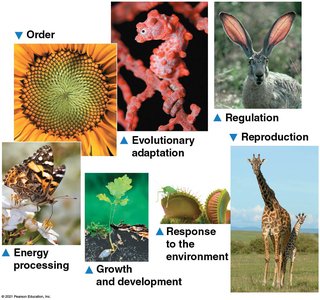
Life is characterized by order, evolutionary adaptation, regulation, energy processing, growth and development, response to the environment, and reproduction.
Unifying Themes in Biology
There are five unifying themes that organize the study of biology:
Organization
Information
Energy and Matter
Interactions
Evolution
Theme 1: Organization – Levels of Biological Organization
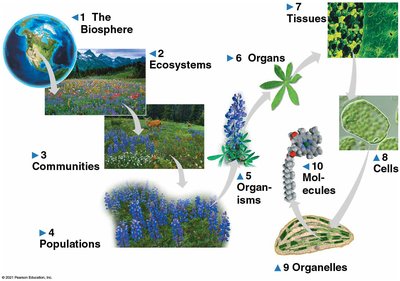
Life can be studied at different levels, from molecules to the entire biosphere. Each level has emergent properties that arise from the arrangement and interaction of parts within a system.
Reductionism: Reducing complex systems to simpler components for study.
Systems Biology: Analysis of interactions among the parts of a biological system.
Emergent Properties
Properties that arise with increasing complexity due to the arrangement and interaction of parts.
Example: A functioning bicycle emerges only when all necessary parts are correctly assembled.
Structure and Function
At every level of the biological hierarchy, there is a correlation between structure and function. Understanding one provides insight into the other.
The Cell: Basic Unit of Life
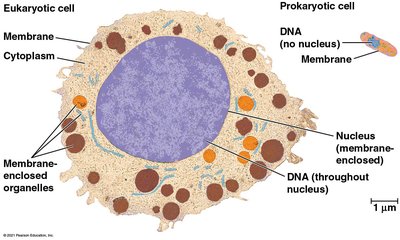
The cell is the smallest unit of organization that can perform all activities required for life.
Cell Theory: All living organisms are made of cells.
Cells are classified as prokaryotic (no nucleus, no membrane-bound organelles) or eukaryotic (with nucleus and organelles).
Theme 2: Information – Genetic Information and Its Expression
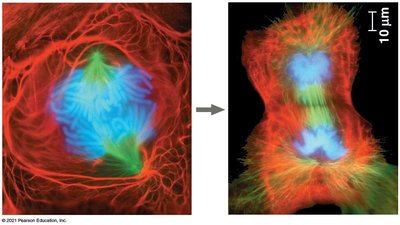
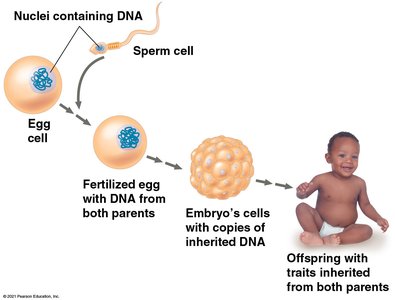
Genetic information is stored in DNA and transmitted from one generation to the next. The expression of genetic information underlies the development and functioning of all living organisms.
Chromosomes contain DNA, the molecule of inheritance.
Genes are units of inheritance that encode information for building molecules within the cell.
DNA Structure and Function
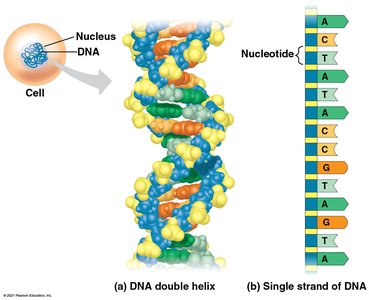
DNA is a double helix composed of four types of nucleotides: A, T, C, G.
The sequence of nucleotides encodes genetic information.
Gene Expression
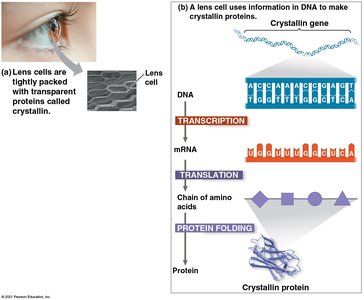
DNA is transcribed into RNA, which is then translated into protein.
Gene expression is the process by which information from a gene is used to synthesize a functional product (usually a protein).
Genomics and Proteomics
Genome: The complete set of genetic material in an organism.
Genomics: Study of whole sets of genes.
Proteomics: Study of whole sets of proteins (the proteome).
Theme 3: Energy and Matter – Life’s Energy Transformations
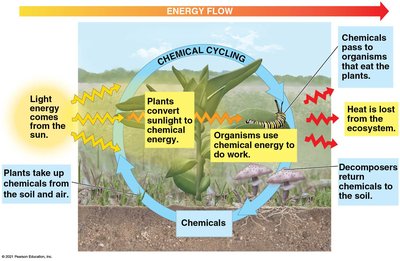
All living organisms require energy to carry out life’s activities. Energy flows through ecosystems, while matter cycles within them.
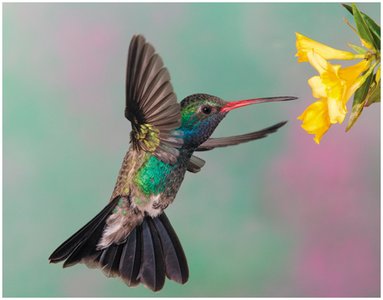
Producers (e.g., plants) convert sunlight into chemical energy.
Consumers obtain energy by eating other organisms.
Energy flows through an ecosystem, entering as light and exiting as heat.
Chemicals are recycled within ecosystems.
Theme 4: Interactions – Biological Systems and Feedback
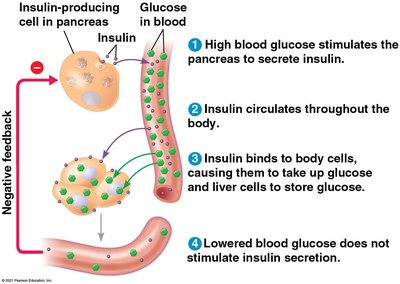
Interactions among components at all levels of biological organization are crucial for the regulation and integration of life processes.
Feedback regulation: The output or product of a process regulates that process.
Negative feedback: The response reduces the initial stimulus (most common).
Positive feedback: The end product speeds up its own production (less common).
Interactions in Ecosystems
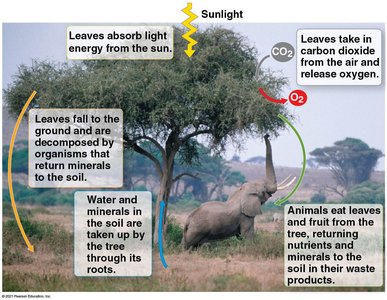
Organisms interact with each other and with physical factors in their environment.
Human activities, such as burning fossil fuels, impact global climate and ecosystems.
Theme 5: Evolution – The Core Theme of Biology
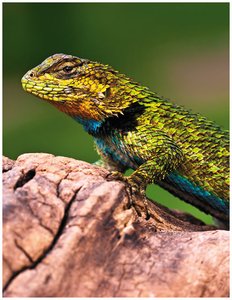
Evolution explains both the unity and diversity of life. All living organisms are modified descendants of common ancestors.
Approximately 1.8 million species have been identified and named.
Each species is given a two-part scientific name (genus and species).
Organisms are classified into three domains: Bacteria, Archaea, and Eukarya.
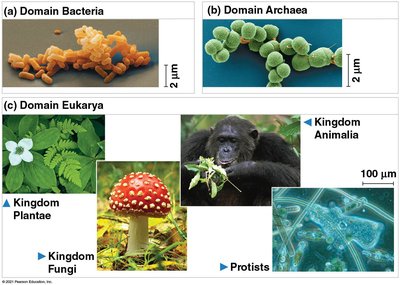
Unity and Diversity
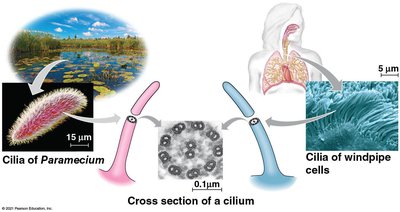
All organisms use DNA as the universal genetic language.
Unity is evident in similar anatomical structures and molecular mechanisms.
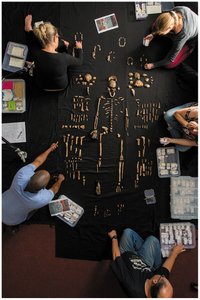
Charles Darwin and Natural Selection
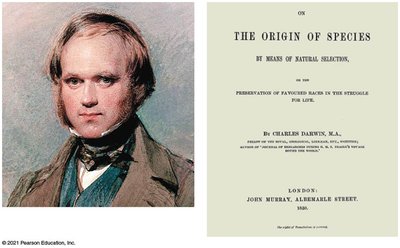
Darwin’s theory of evolution by natural selection explains adaptation and speciation.
Natural selection is the process by which individuals with advantageous traits survive and reproduce more successfully.
Scientific Inquiry and the Process of Science
Science is a way of knowing, based on inquiry and evidence. Scientists use observations, hypotheses, and experiments to understand natural phenomena.
Data: Recorded observations (qualitative or quantitative).
Inductive reasoning: Deriving generalizations from specific observations.
Deductive reasoning: Making specific predictions from general premises.
Hypothesis: A testable explanation for an observation.
Experiment: A controlled test of a hypothesis.
Variables and Controls
Independent variable: Manipulated by the researcher.
Dependent variable: Predicted to be affected by the independent variable.
Control group: Used for comparison with the experimental group.
Theories in Science
A scientific theory is broader in scope than a hypothesis, generates new hypotheses, and is supported by a large body of evidence.
Science, Technology, and Society
Science seeks to understand natural phenomena, while technology applies scientific knowledge for practical purposes. Both are interdependent and influence society.
Ethical, political, and cultural issues often arise from technological advances.
Diverse viewpoints and collaboration enhance scientific progress.
