 Back
BackChapter 1: Evolution, the Themes of Biology, and Scientific Inquiry – Study Notes
Study Guide - Smart Notes
 Tailored notes based on your materials, expanded with key definitions, examples, and context.
Chapter 1: Evolution, the Themes of Biology, and Scientific Inquiry
Introduction to Biology
Biology is the scientific study of life, encompassing a vast scope from molecules to the entire biosphere. Life is recognized by a set of characteristics and processes that distinguish living organisms from nonliving matter.
Biology: The study of living organisms and their interactions with one another and their environments.
Life is characterized by order, evolutionary adaptation, regulation, reproduction, energy processing, growth and development, and response to the environment.
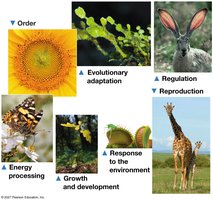
Unifying Themes in Biology
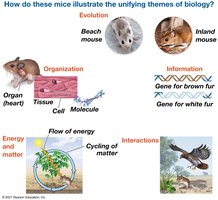
Five Unifying Themes
Biology is organized around five unifying themes that help explain the complexity and diversity of life:
Organization
Information
Energy and Matter
Interactions
Evolution
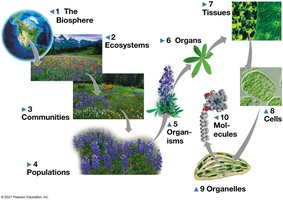
Levels of Biological Organization
Life can be studied at different levels, from molecules to the entire biosphere. Each level exhibits emergent properties that arise from the arrangement and interaction of parts within a system.
Reductionism: Reducing complex systems to simpler components for study.
Systems Biology: Analysis of interactions among the parts of a biological system.
Structure and Function
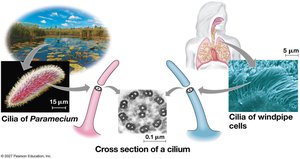
At every level of the biological hierarchy, there is a correlation between structure and function. Understanding the structure of a biological component provides insight into its function and vice versa.
The Cell: Basic Unit of Life
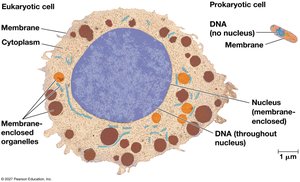
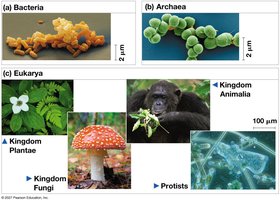
The cell is the smallest unit of organization that can perform all activities required for life. Cells are classified as prokaryotic or eukaryotic.
Prokaryotic cells: Simpler, smaller, lack a nucleus and membrane-bound organelles (e.g., Bacteria, Archaea).
Eukaryotic cells: Larger, contain a nucleus and membrane-bound organelles (e.g., plants, animals, fungi, protists).
Genetic Information and Gene Expression
DNA: The Genetic Material
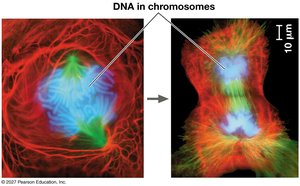
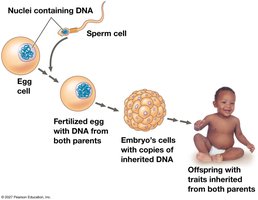
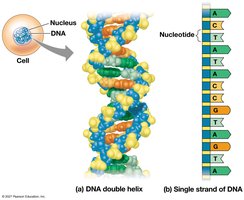
Within cells, chromosomes contain DNA, the molecule that stores genetic information. Genes are units of inheritance that encode instructions for building proteins and other molecules.
DNA is composed of two long chains forming a double helix, made up of four types of nucleotides: A, T, C, G.
Gene expression involves transcription (DNA to RNA) and translation (RNA to protein).
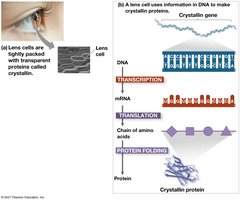
Genomics and Proteomics
Genomics is the study of whole sets of genes, while proteomics is the study of entire sets of proteins (proteomes) expressed by cells, tissues, or organisms. Advances in technology and bioinformatics have enabled large-scale analysis of biological data.
Energy and Matter in Biological Systems
Energy Flow and Chemical Cycling
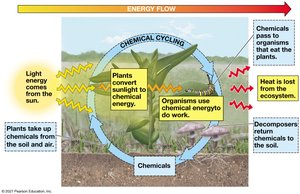
Life requires the transfer and transformation of energy and matter. Energy flows through ecosystems, usually entering as sunlight and exiting as heat, while chemicals cycle within ecosystems.
Producers (e.g., plants) convert sunlight to chemical energy.
Consumers obtain energy by eating other organisms.
Interactions in Biological Systems
Feedback Regulation
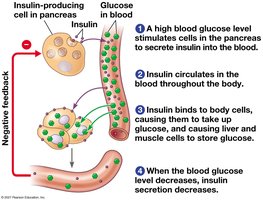
Biological processes are often regulated by feedback mechanisms. Negative feedback reduces the initial stimulus, while positive feedback amplifies it.
Example: Regulation of blood glucose by insulin (negative feedback).
Interactions in Ecosystems
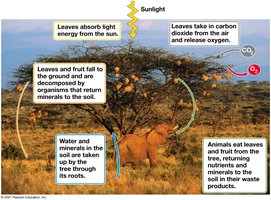
Organisms interact with each other and with their physical environment. These interactions can be beneficial or harmful and are essential for ecosystem function.
Global Change and Climate Patterns
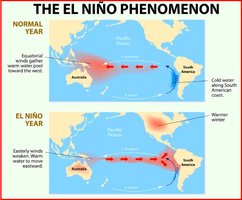
Human activities, such as burning fossil fuels, have altered global climate patterns, leading to phenomena like global warming and El Niño, which have widespread ecological impacts.
Evolution: The Core Theme of Biology
Unity and Diversity of Life
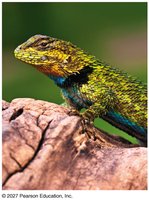
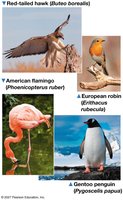
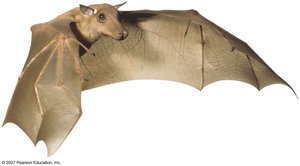
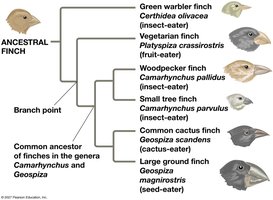
Evolution explains both the unity and diversity of life. All organisms share a common genetic language (DNA) and structural similarities, but have diversified through descent with modification.
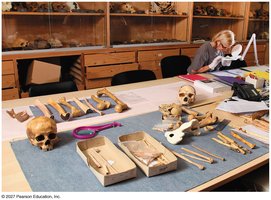
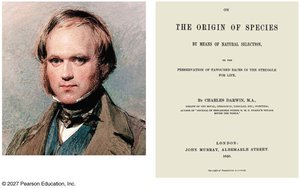
Charles Darwin and Natural Selection
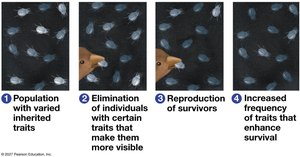
Charles Darwin proposed that natural selection is the mechanism of evolution. Individuals with advantageous traits are more likely to survive and reproduce, leading to adaptation over generations.
"Descent with modification" explains the duality of unity and diversity.
Natural selection acts on heritable variation within populations.
Scientific Inquiry and the Process of Science
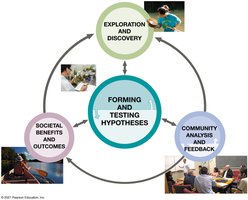
Forming and Testing Hypotheses
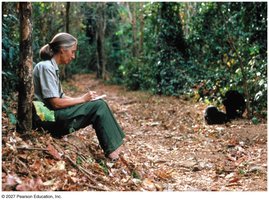
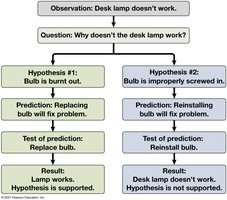
Science is a process of inquiry involving observation, hypothesis formation, and experimentation. Hypotheses must be testable and falsifiable.
Inductive reasoning: Deriving generalizations from specific observations.
Deductive reasoning: Making specific predictions from general premises.
Case Study: Coat Coloration in Mouse Populations
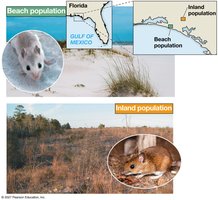
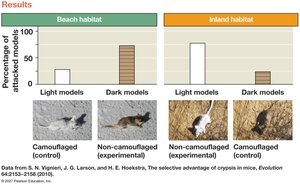
Scientific inquiry can be illustrated by investigating the adaptive significance of coat coloration in beach and inland populations of Peromyscus polionotus. Experiments showed that mice with coloration matching their habitat had higher survival rates due to reduced predation.
Variables and Controls in Experiments
Controlled experiments compare an experimental group with a control group. The independent variable is manipulated, and the dependent variable is measured.
Theories in Science
A scientific theory is broader than a hypothesis, generates new hypotheses, and is supported by a large body of evidence.
Science, Technology, and Society
Interdependence of Science and Technology
Science seeks to understand natural phenomena, while technology applies scientific knowledge for practical purposes. Advances in one often drive progress in the other, but ethical, political, and cultural considerations are also important.
Diversity and Collaboration in Science
Science benefits from diverse viewpoints and collaborative efforts. Peer review and reproducibility are essential for scientific progress.
Summary Tables
Theme | Description |
|---|---|
Organization | Life is organized into hierarchical levels, each with emergent properties. |
Information | Genetic information is stored in DNA and expressed through gene expression. |
Energy and Matter | Energy flows through ecosystems; matter cycles within them. |
Interactions | Organisms interact with each other and their environment, often regulated by feedback mechanisms. |
Evolution | Explains the unity and diversity of life through descent with modification and natural selection. |
*Additional info: Some explanations and examples have been expanded for clarity and completeness based on standard academic context for introductory biology.*
