 Back
BackChapter 1: Evolution, the Themes of Biology, and Scientific Inquiry – Study Notes
Study Guide - Smart Notes
 Tailored notes based on your materials, expanded with key definitions, examples, and context.
Introduction to Biology
The Scope and Nature of Biology
Biology is the scientific study of life, encompassing a vast range of topics from molecular mechanisms to ecosystem dynamics. Life is recognized by a set of characteristics and processes that distinguish living organisms from non-living matter.
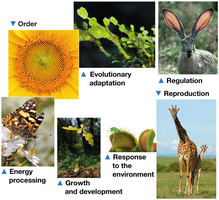
Key Characteristics of Life: Order, evolutionary adaptation, regulation, reproduction, energy processing, growth and development, and response to the environment.
Scope: Biology covers all levels of organization, from molecules to the biosphere.
Unifying Themes in Biology
Major Themes
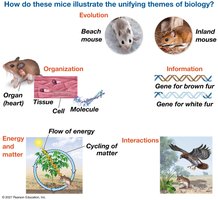
There are five unifying themes that connect all fields of biology:
Organization: Life is structured in a hierarchical manner, from molecules to the biosphere.
Information: Living systems store, transmit, and respond to information, primarily through genetic material (DNA).
Energy and Matter: Life requires the transfer and transformation of energy and matter to sustain biological processes.
Interactions: Biological systems interact at all levels, from molecules within cells to organisms within ecosystems.
Evolution: The process that explains both the unity and diversity of life.
Hierarchy of Biological Organization
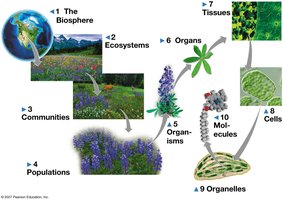
Biological organization is structured in a hierarchy, with each level building upon the previous one. This hierarchy allows for the emergence of novel properties at each level, known as emergent properties.
Levels: Biosphere, ecosystems, communities, populations, organisms, organs and organ systems, tissues, cells, organelles, molecules.
Emergent Properties: New properties arise at each level due to the arrangement and interactions of parts as complexity increases.
Structure and Function
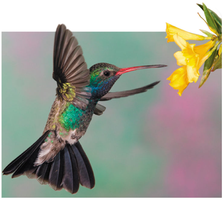
At every level of the biological hierarchy, there is a close relationship between structure and function. Understanding the structure of a biological component provides insight into its function, and vice versa.
Example: The shape of a bird’s wing is adapted for flight, and the structure of enzymes allows them to catalyze specific reactions.
Cell Components
The Cell: Basic Unit of Life
The cell is the fundamental unit of structure and function in living organisms. All living things are composed of cells, which are enclosed by membranes that regulate the passage of materials.
Cell Theory: All living organisms are made of cells.
Types of Cells: Prokaryotic (bacteria and archaea) and eukaryotic (all other life forms).
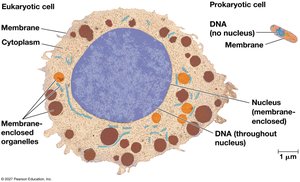
Prokaryotic vs. Eukaryotic Cells
Prokaryotic Cells: Simpler, smaller, lack a nucleus and membrane-bound organelles.
Eukaryotic Cells: Larger, contain a nucleus and various membrane-bound organelles.
Genetic Information and Gene Expression
DNA: The Genetic Material
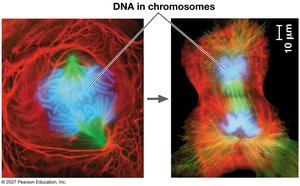
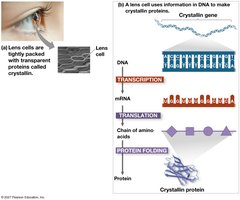
DNA (deoxyribonucleic acid) is the molecule that stores genetic information in all living organisms. Each chromosome contains one long DNA molecule with many genes, which are units of inheritance.
Genes: Encode instructions for building proteins and other molecules essential for life.
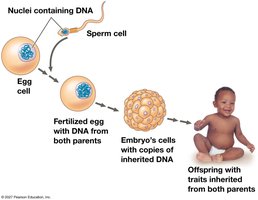
Inheritance: DNA is passed from parents to offspring, directing development and functioning.
Molecular Structure of DNA
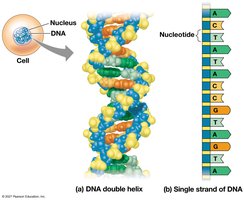
The structure of DNA enables it to store and transmit genetic information. DNA consists of two long chains forming a double helix, composed of four types of nucleotides: adenine (A), guanine (G), cytosine (C), and thymine (T).
Base Pairing: A pairs with T, and G pairs with C.
Gene Expression
Gene expression is the process by which information from a gene is used to synthesize a functional product, typically a protein. This involves two main steps: transcription (DNA to RNA) and translation (RNA to protein).
Central Dogma: DNA → RNA → Protein
Energy and Metabolism
Energy Transfer and Transformation
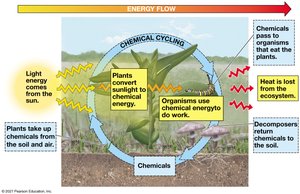
Life depends on the transfer and transformation of energy and matter. Energy flows through ecosystems, primarily entering as sunlight and exiting as heat, while chemicals are recycled within the ecosystem.
Producers: Organisms (like plants) that convert sunlight into chemical energy.
Consumers: Organisms that obtain energy by eating other organisms.
Decomposers: Organisms that break down dead material, returning nutrients to the environment.
Regulation and Feedback Mechanisms
Feedback Regulation
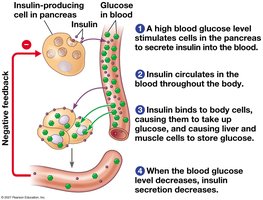
Biological systems use feedback mechanisms to maintain homeostasis. The most common is negative feedback, where the output of a process inhibits its own production. Positive feedback amplifies the response.
Negative Feedback Example: Regulation of blood glucose by insulin.
Positive Feedback Example: Blood clotting (not shown in images).
Evolution: The Core Theme of Biology
Unity and Diversity of Life
Evolution explains both the similarities (unity) and differences (diversity) among living organisms. All life shares a common ancestry, but adaptation to different environments leads to diversity.
Evidence: Fossils, anatomical similarities, and molecular data support evolution.
Domains and Kingdoms of Life
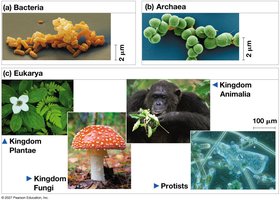
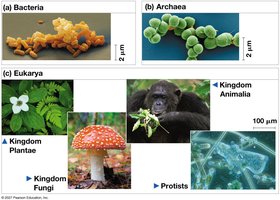
All life is classified into three domains: Bacteria, Archaea, and Eukarya. Eukarya includes four major groups: plants, fungi, animals, and protists.
Domain | Characteristics | Examples |
|---|---|---|
Bacteria | Prokaryotic, unicellular | Escherichia coli |
Archaea | Prokaryotic, unicellular, often extremophiles | Halobacterium |
Eukarya | Eukaryotic, unicellular or multicellular | Plants, fungi, animals, protists |
Charles Darwin and Natural Selection
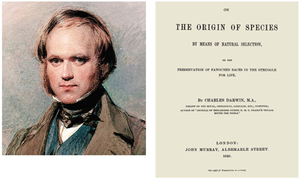
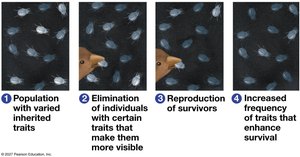
Charles Darwin proposed the theory of evolution by natural selection, explaining how species adapt and change over time. Natural selection is the process by which individuals with advantageous traits are more likely to survive and reproduce.
Key Observations: Variation in traits, overproduction of offspring, competition, and adaptation to the environment.
Key Inferences: Differential survival and reproduction lead to the accumulation of favorable traits in a population.
Tree of Life and Adaptive Radiation
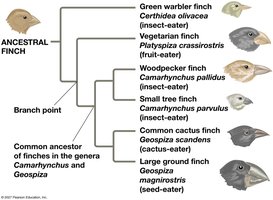
Evolutionary relationships among species are often depicted as tree-like diagrams, illustrating common ancestry and divergence. Adaptive radiation is the process by which one species gives rise to multiple species adapted to different environments.
Example: The finches of the Galápagos Islands, which evolved from a common ancestor into multiple species with different beak shapes and diets.
Summary Table: Key Themes and Concepts
Theme | Description | Example |
|---|---|---|
Organization | Hierarchy from molecules to biosphere | Cells, tissues, organs |
Information | Genetic information in DNA | Gene expression |
Energy and Matter | Energy flow and chemical cycling | Photosynthesis, food webs |
Interactions | Biological systems interact at all levels | Predator-prey relationships |
Evolution | Descent with modification | Natural selection, adaptation |
