 Back
Chapter 1: Evolution, the Themes of Biology, and Scientific Inquiry – Study Notes
Study Guide - Smart Notes
 Tailored notes based on your materials, expanded with key definitions, examples, and context.
Evolution, the Themes of Biology, and Scientific Inquiry
Introduction to Biology and Evolution
Biology is the scientific study of life, focusing on the diversity and unity of living organisms. Evolution is the central theme that explains the adaptations and changes observed in organisms over time. Adaptations, such as the wind-dispersed seeds of dandelions, are the result of evolutionary processes.
Properties of Life
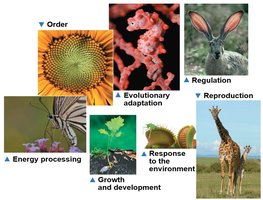
Living organisms share several key properties that distinguish them from non-living matter:
Order: Highly organized structures and systems.
Evolutionary adaptation: Ability to adapt to the environment through evolution.
Regulation: Maintenance of internal balance (homeostasis).
Reproduction: Ability to produce offspring.
Energy processing: Use of energy to power activities.
Growth and development: Increase in size and complexity.
Response to the environment: Reacting to external stimuli.
Unifying Themes in Biology
Levels of Biological Organization
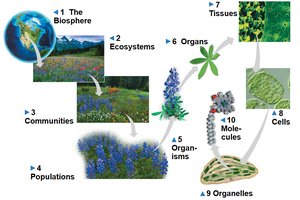
Life can be studied at various levels, from molecules to the entire biosphere. Each level exhibits emergent properties that arise from the interactions and organization of its parts.
The biosphere includes all life on Earth.
Ecosystems consist of living organisms and their physical environment.
Communities are groups of interacting populations.
Populations are groups of individuals of the same species.
Organisms are individual living entities.
Organs and tissues are structural units within organisms.
Cells are the basic units of life.
Organelles are functional components within cells.
Molecules are chemical structures that provide the foundation for biological processes.
Emergent Properties and Systems Biology
Emergent properties arise from the arrangement and interaction of parts within a system. Systems biology studies these interactions to understand complex biological functions. For example, a functioning bicycle only emerges when all parts are correctly assembled.
Structure and Function
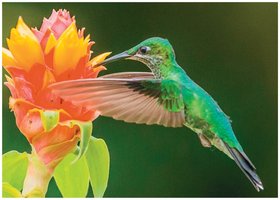
There is a close relationship between the structure of biological components and their function. Analyzing structure provides insight into function, and vice versa. For example, the shape of a hummingbird's beak is adapted for feeding on specific flowers.
The Cell: Basic Unit of Life
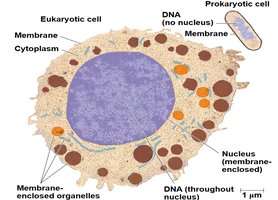
The cell is the smallest unit capable of all life processes. Cells are classified as either prokaryotic (lacking a nucleus and membrane-bound organelles) or eukaryotic (having a nucleus and organelles).
Prokaryotic cells: Simpler, smaller, no nucleus (e.g., bacteria, archaea).
Eukaryotic cells: Larger, complex, contain nucleus and organelles (e.g., plants, animals, fungi, protists).
Genetic Information and Its Expression
DNA: The Genetic Material
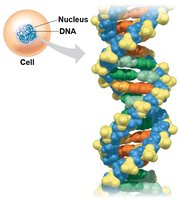
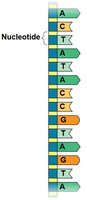
Genetic information is stored in DNA (deoxyribonucleic acid), which is organized into chromosomes. Each chromosome contains many genes, which are units of inheritance. DNA's double helix structure allows it to store and transmit genetic information.
Gene Expression
Genes encode instructions for building proteins. The process of gene expression involves two main steps:
Transcription: DNA is transcribed into RNA.
Translation: RNA is translated into a protein.
This flow of information is often summarized as the "central dogma" of molecular biology:
Genomics and Proteomics
Genomics is the study of entire sets of genes (genomes) within and between species. Proteomics is the study of all proteins (proteomes) expressed by a cell, tissue, or organism. Advances in technology and bioinformatics have enabled large-scale analysis of biological data.
Energy, Matter, and Interactions in Biological Systems
Energy Flow and Chemical Cycling
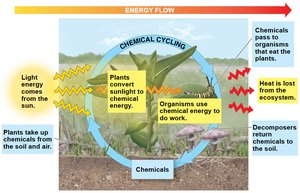
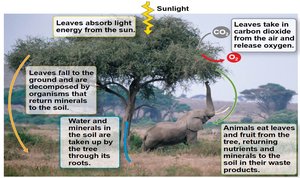
Life depends on the transfer and transformation of energy and matter. Energy flows through ecosystems, entering as sunlight and exiting as heat, while chemicals cycle within ecosystems.
Producers (e.g., plants) convert solar energy to chemical energy.
Consumers (e.g., animals) obtain energy by eating other organisms.
Decomposers recycle nutrients back into the ecosystem.
Feedback Regulation
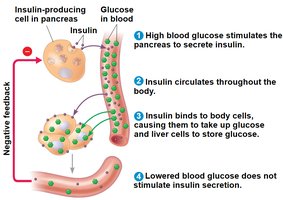
Biological processes are often regulated by feedback mechanisms:
Negative feedback: The response reduces the initial stimulus (e.g., regulation of blood glucose by insulin).
Positive feedback: The response amplifies the initial stimulus.
Interactions in Ecosystems
Organisms interact with each other and with their physical environment. These interactions can be beneficial, harmful, or neutral, and they shape the structure and dynamics of ecosystems.
Evolution: The Core Theme of Biology
Unity and Diversity of Life
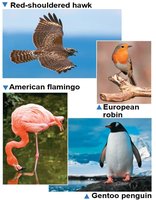
Evolution explains both the unity and diversity of life. All living organisms share a common ancestry, as evidenced by universal features such as DNA and cell structure. Diversity arises from evolutionary changes over time.
Classification of Life
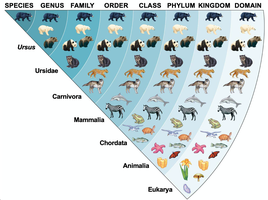
Taxonomy is the science of naming and classifying organisms. The broadest categories are domains, followed by kingdoms, phyla, classes, orders, families, genera, and species.
The Three Domains of Life
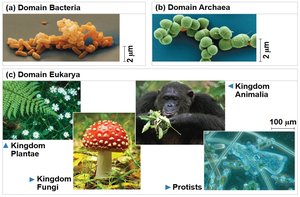
All life is classified into three domains:
Bacteria: Prokaryotic, unicellular organisms.
Archaea: Prokaryotic, often found in extreme environments.
Eukarya: Eukaryotic organisms, including protists, plants, fungi, and animals.
Charles Darwin and Natural Selection
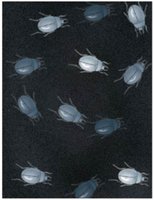
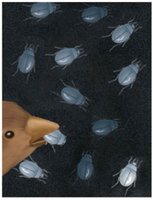
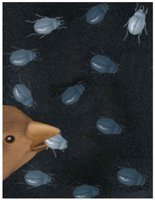
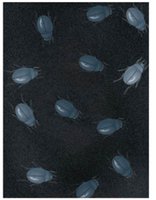
Charles Darwin proposed that evolution occurs through natural selection. Key observations include:
Variation exists among individuals in a population.
More offspring are produced than can survive.
Individuals with advantageous traits are more likely to survive and reproduce.
Over time, beneficial traits become more common in the population.
Evidence for Evolution
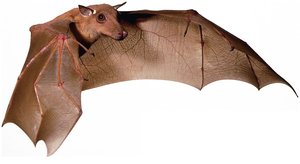
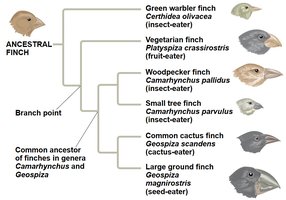
Evidence for evolution includes anatomical similarities, fossil records, and molecular data. For example, the forelimbs of mammals share a common structure, indicating descent from a common ancestor. Adaptive radiation, such as the diversification of finches on the Galápagos Islands, illustrates how species evolve to fill different ecological niches.
Scientific Inquiry and the Process of Science
The Scientific Method
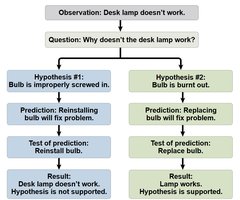
Science is a process of inquiry involving observation, hypothesis formation, experimentation, and analysis. Hypotheses must be testable and falsifiable. Experiments are designed to test predictions derived from hypotheses.
Inductive and Deductive Reasoning
Inductive reasoning: Drawing general conclusions from specific observations.
Deductive reasoning: Making specific predictions based on general principles.
Variables and Controls in Experiments
Experiments involve manipulating an independent variable and measuring the effect on a dependent variable. Control groups are used for comparison to ensure that results are due to the variable being tested.
Theories in Science
A scientific theory is broader than a hypothesis, supported by extensive evidence, and can generate new hypotheses.
Case Study: Coat Coloration in Mouse Populations
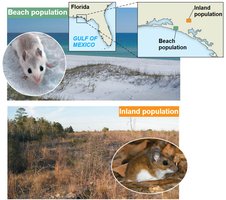
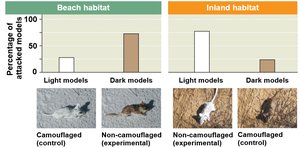
Researchers tested the hypothesis that mouse coloration evolved as an adaptation to avoid predation. By placing camouflaged and non-camouflaged models in different habitats, they found that mice matching their environment were preyed upon less frequently, supporting the hypothesis of natural selection.
Science, Technology, and Society
Cooperation and Communication in Science
Science advances through collaboration, peer review, and the sharing of data. Diverse viewpoints and backgrounds enhance scientific progress and innovation.
Science and Technology
Science seeks to understand natural phenomena, while technology applies scientific knowledge for practical purposes. Advances in one often drive progress in the other, but ethical considerations must be addressed.
The Value of Diversity in Science
Diverse perspectives contribute to robust scientific inquiry and technological innovation. Inclusion of different cultures, genders, and backgrounds strengthens the scientific community.
