 Back
Chapter 1: Evolution, the Themes of Biology, and Scientific Inquiry - Study Notes
Study Guide - Smart Notes
 Tailored notes based on your materials, expanded with key definitions, examples, and context.
Evolution, the Themes of Biology, and Scientific Inquiry
Learning Objectives
Employ the scientific process in discovery science and hypothesis-based science.
Formulate hypotheses based on observations.
Identify dependent and independent variables in experiments.
Design experiments with appropriate controls.
Distinguish among hypothesis, theory, and law.
The Study of Life: Unifying Themes
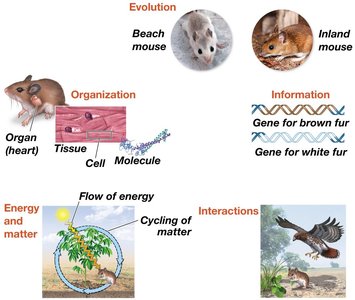
Biology is the scientific study of life, encompassing a wide range of questions about organisms, their development, and their interactions. Life is recognized by what living things do, rather than by a single definition.
Organization: Living things exhibit a high degree of organization, from molecules to the biosphere.
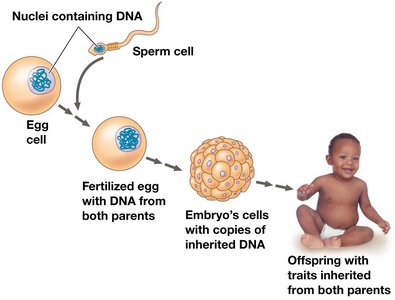
Information: Genetic information is stored and transmitted via DNA.
Energy and Matter: Life requires the input and transformation of energy and matter.
Interactions: Components of biological systems interact at all levels.
Evolution: The process of change that has transformed life on Earth.
Characteristics of Living Things
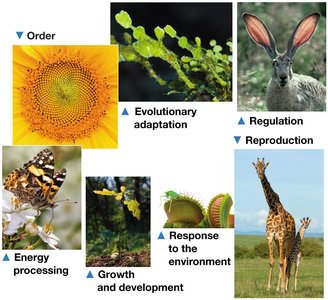
All living organisms share several fundamental characteristics:
Order: Structured organization at multiple levels.
Energy Processing: Use and transformation of energy.
Growth and Development: Increase in size and complexity.
Evolutionary Adaptation: Ability to adapt to the environment.
Regulation: Maintenance of internal conditions (homeostasis).
Response to Environment: Reacting to stimuli.
Reproduction: Producing offspring using DNA.
Levels of Biological Organization
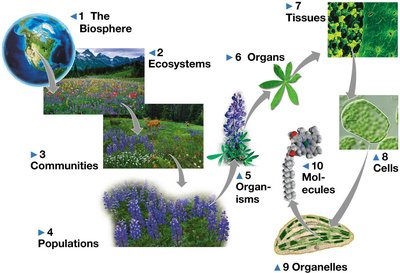
Biological organization is hierarchical, ranging from molecules to the biosphere:
Biosphere: All life on Earth and its environments.
Ecosystems: Communities and their physical environment.
Communities: All organisms in an ecosystem.
Populations: Individuals of the same species in an area.
Organisms: Individual living entities.
Organs and Organ Systems: Body parts with specific functions.
Tissues: Groups of cells performing a function.
Cells: Basic unit of life.
Organelles: Functional components within cells.
Molecules: Chemical structures consisting of atoms.
Emergent Properties
Emergent properties arise from the arrangement and interaction of parts as complexity increases. These properties are not present in the individual components but emerge when they are combined.
Reductionism: Studying isolated components.
Systems Biology: Analyzing interactions among parts of a biological system.
Structure and Function
There is a correlation between structure and function at every level of the biological hierarchy. Understanding one provides insight into the other.
The Cell: Basic Unit of Structure and Function
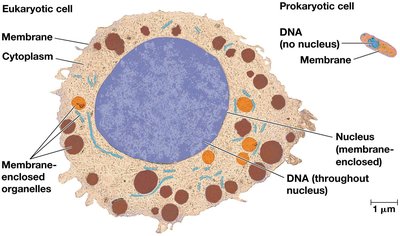
The cell is the smallest unit capable of performing all activities required for life. The cell theory states that all living organisms are made of cells.
Prokaryotic Cells: Simpler, smaller, no nucleus or membrane-enclosed organelles.
Eukaryotic Cells: Larger, contain membrane-enclosed organelles, including a nucleus.
Genetic Information: DNA and Chromosomes
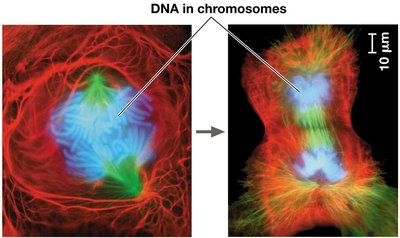
Chromosomes contain genetic material in the form of DNA. Genes are units of inheritance that encode information for building molecules within the cell.
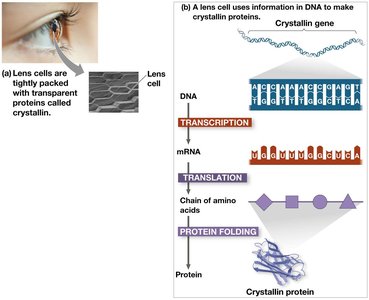
Gene Expression: DNA is transcribed into RNA, which is translated into protein.
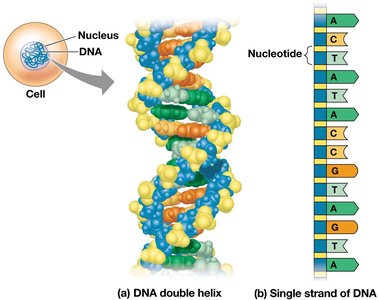
DNA Structure: Double helix composed of nucleotides (A, G, C, T).
Energy and Matter: Transfer and Transformation
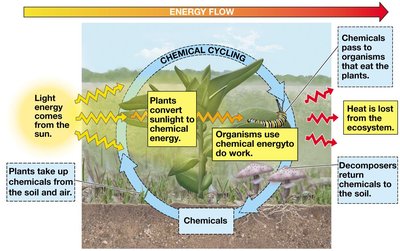
Life depends on the input of energy from the sun and the transformation of energy from one form to another. Plants convert sunlight to chemical energy, which is passed to consumers.
Energy Flow: Energy enters as light and exits as heat.
Chemical Cycling: Chemicals are recycled within ecosystems.
Interactions in Biological Systems
Interactions among components ensure smooth integration of all parts, from molecules in a cell to components of an ecosystem.
Evolution: Unity and Diversity of Life
Evolution is the process of change that has transformed life on Earth, accounting for both the unity and diversity of life. Adaptations are the result of evolutionary processes.
Classifying the Diversity of Life
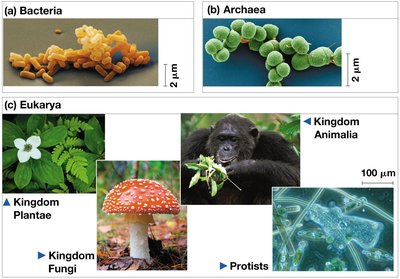
Organisms are classified into three domains: Bacteria, Archaea, and Eukarya. Eukarya includes plants, fungi, animals, and protists.
Bacteria: Prokaryotic, diverse.
Archaea: Prokaryotic, often found in extreme environments.
Eukarya: Eukaryotic, includes four subgroups.
Unity in Diversity
Despite diversity, unity is evident in features such as the universal genetic language (DNA) and similar skeletal structures among animals.
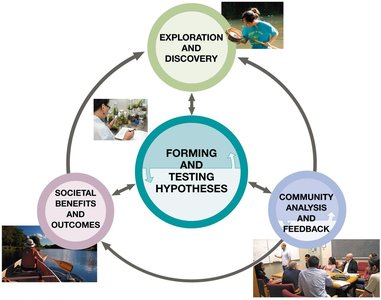
Scientific Inquiry: Forming and Testing Hypotheses
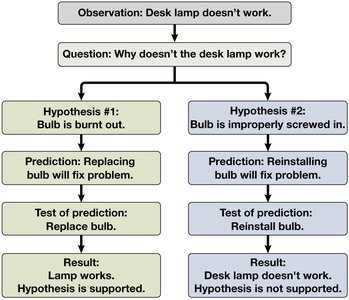
Science is a process of inquiry involving observation, hypothesis formation, and testing. Data can be qualitative or quantitative.
Inductive Reasoning: Deriving generalizations from specific observations.
Deductive Reasoning: Using general premises to make specific predictions.
Case Study: Mouse Coat Coloration
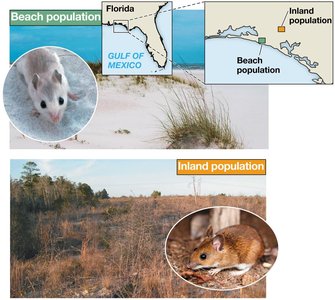
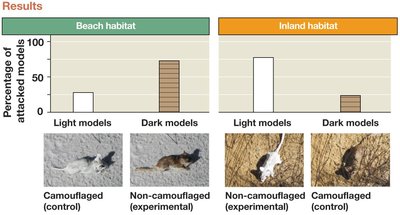
Researchers investigated how coat coloration in beach and inland mice affects predation rates. Mice matching their habitat were preyed upon less, supporting the camouflage hypothesis.
Experimental Group: Non-camouflaged mice.
Control Group: Camouflaged mice.
Independent Variable: Manipulated by researchers.
Dependent Variable: Predicted to be affected.
Theories and Laws in Science
A scientific theory is broader than a hypothesis, general enough to lead to new hypotheses, and supported by substantial evidence. Laws describe occurrences but do not explain them.
Scientific Principles
Natural causality: Natural causes explain phenomena.
Uniformity in space and time: Consistency of natural laws.
Common perceptions: Objective measurements.
Science Benefits from Cooperation and Diversity
Science is a collaborative endeavor, relying on communication, peer review, and building on the work of others. Diverse viewpoints enhance scientific progress.
Science, Technology, and Society
Science aims to understand natural phenomena, while technology applies scientific knowledge. Both are interdependent and can have significant societal impacts, including ethical considerations.

Quiz Review
Dependent variable: The change in blood pressure values.
In mouse predation experiments, the dependent variable is the number of mice caught.
Biological science requires data.
Changes at the biosphere level have the farthest-reaching consequences.
