 Back
Chapter 1: Evolution, the Themes of Biology, and Scientific Inquiry - Study Notes
Study Guide - Smart Notes
 Tailored notes based on your materials, expanded with key definitions, examples, and context.
Evolution, the Themes of Biology, and Scientific Inquiry
Biology: The Scientific Study of Life
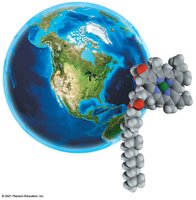
Biology is the scientific discipline concerned with the study of life and living organisms. It encompasses a vast scope, from molecular biology to ecology, and investigates the most complex chemical systems on Earth.
Definition: Biology is the study of life, including its structure, function, growth, origin, evolution, and distribution.
Scope: Living things exhibit remarkable complexity and diversity.
Key Question: What distinguishes living from non-living matter?
What is Life?
Life is defined by a set of characteristics that distinguish living organisms from inorganic objects and dead organisms. Death is the absence of these characteristics.
Basic Definition: The ability to grow, respond to stimuli, and reproduce are fundamental to life.
Recognition: Life is recognized by what living things do, such as movement, metabolism, and adaptation.
Characteristics of Living Things
Living organisms share several key characteristics:
Organization: Structured from molecules to cells, tissues, organs, and organisms.
Information: Use genetic material (DNA) to store and transmit information.
Energy and Matter: Acquire and use energy; transform matter.
Interactions: Interact with their environment and other organisms.
Evolution: Change over time through descent with modification.
Levels of Biological Organization
Life can be studied at multiple levels, from molecules to the biosphere. Reductionism simplifies complex systems for study, while systems biology analyzes interactions among system components.
Emergent Properties: New properties arise at each level due to the arrangement and interaction of parts.
Example: A functioning bicycle emerges only when all parts are correctly assembled.
Structure and Function
There is a close relationship between the structure of biological components and their function. Understanding one provides insight into the other.
Structure: Physical form or arrangement.
Function: The role or activity performed.
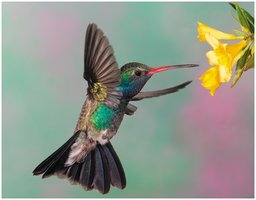
Example: The shape of a bird's wing enables flight.

The Cell: Basic Unit of Life
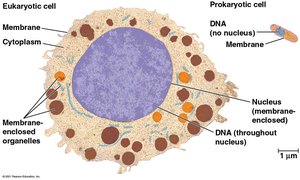
The cell is the smallest unit capable of all life activities. The cell theory states that all living organisms are composed of cells, which are enclosed by membranes.
Prokaryotic Cells: Simpler, smaller, lack a nucleus and membrane-bound organelles (Bacteria and Archaea).
Eukaryotic Cells: Larger, contain a nucleus and membrane-bound organelles (Plants, Animals, Fungi, Protists).
Genetic Information: DNA and Chromosomes
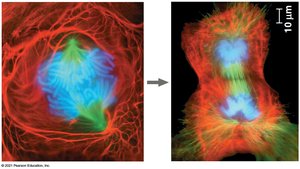
Within cells, chromosomes contain DNA, the molecule of inheritance. Genes encode information for building molecules and direct organismal development.
DNA: Deoxyribonucleic acid, composed of nucleotide sequences.
Gene Expression: The process by which information from a gene is used to synthesize functional products.
Genome: The complete set of genetic material in an organism.
Energy and Matter in Biological Systems
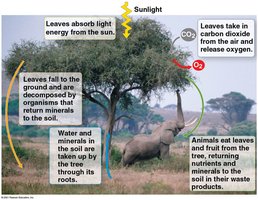
Life depends on the transfer and transformation of energy and matter. Energy flows through ecosystems, while matter cycles within them.
Producers: Organisms (e.g., plants) that convert solar energy to chemical energy.
Consumers: Organisms that feed on other organisms.
Energy Flow: Enters as light, exits as heat.
Chemical Cycling: Elements are recycled within ecosystems.
Interactions and Regulation in Biological Systems
Biological systems rely on interactions among their components. Feedback mechanisms regulate processes, maintaining homeostasis.
Negative Feedback: Reduces the initial stimulus (e.g., ATP production).
Positive Feedback: Amplifies the response (e.g., blood clotting).
Classifying the Diversity of Life
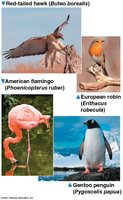
Biologists classify organisms to understand their relationships. Each species is given a two-part scientific name (genus and species).
Estimated Species: 1.8 million identified; total may exceed 10 million.
Example: Homo sapiens is the scientific name for humans.
The Three Domains of Life
All life is classified into three domains: Bacteria, Archaea, and Eukarya. Prokaryotes include Bacteria and Archaea; Eukarya includes plants, fungi, animals, and protists.
Bacteria: Prokaryotic, diverse, found in many environments.
Archaea: Prokaryotic, often found in extreme environments.
Eukarya: Eukaryotic, includes multicellular and unicellular organisms.
Evolution: Unity and Diversity of Life
Evolution explains both the diversity and unity of life. All organisms share a common ancestry, and natural selection drives adaptation.
Universal Genetic Language: DNA is common to all life.
Fossil Evidence: Documents the history of life and evolutionary change.
Evolution and Natural Selection
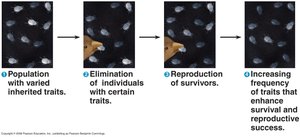
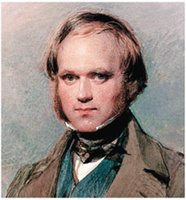
Evolution is the process by which living organisms are modified descendants of common ancestors. Natural selection is the mechanism proposed by Charles Darwin.
Natural Selection: Individuals with advantageous traits are more likely to survive and reproduce.
Descent with Modification: Species evolve over time, giving rise to new species.
Darwin’s Research and Evolutionary Relationships
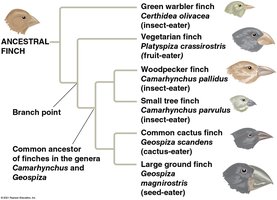
Darwin observed that finch species on the Galápagos Islands descended from a common ancestor. Evolutionary relationships are illustrated with tree diagrams.
Example: Finch species adapted to different environments.
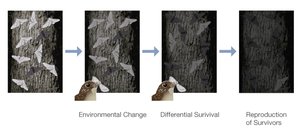
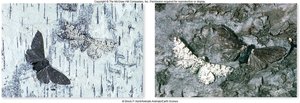
Peppered Moths and Industrial Melanism
The case of peppered moths demonstrates natural selection in response to environmental change. Dark-colored moths became predominant during industrialization due to predation and camouflage.
Industrial Melanism: Darker individuals predominate in polluted environments.
Reversal: Pollution control led to lighter moths becoming predominant again.
Scientific Inquiry: Forming and Testing Hypotheses
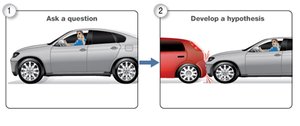
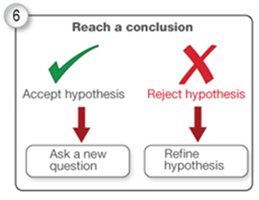
Science is a process of inquiry involving observation, hypothesis formation, experimentation, and conclusion. Hypotheses must be testable and falsifiable.
Observation: Gathering information about the natural world.
Hypothesis: Tentative explanation for an observation.
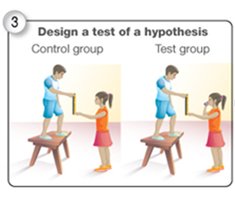
Experiment: Tests the hypothesis, includes control and experimental groups.
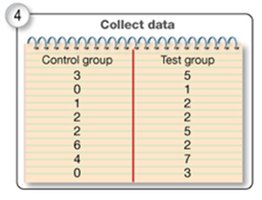
Data: Recorded observations, qualitative or quantitative.



Process of Science: Steps and Controls
The scientific method is iterative and flexible. Controlled experiments compare experimental and control groups, isolating variables.
Independent Variable: Deliberately changed.
Dependent Variable: Measured outcome.
Control Group: Used to cancel effects of unwanted variables.


Logical Reasoning in Science: Deductive and Inductive
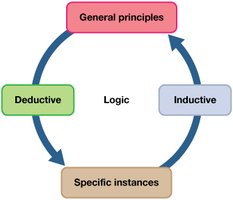
Science uses both deductive and inductive reasoning. Deductive reasoning applies general principles to predict specific outcomes, while inductive reasoning develops general conclusions from specific observations.
Deductive Reasoning: "If all mammals have hair, and this animal has no hair, it is not a mammal."
Inductive Reasoning: "If every dog observed has hair, then all dogs must have hair."
Theories in Science
A scientific theory is broader than a hypothesis, generates new hypotheses, and is supported by substantial evidence. It is not a guess, but a well-substantiated explanation.
Scope: Theories explain a wide range of phenomena.
Evidence: Supported by extensive data and experimentation.
Science Benefits from Cooperation and Diversity
Scientific progress relies on teamwork, communication, and peer review. Diverse backgrounds and viewpoints enhance scientific inquiry.
Peer Review: Ensures reliability and repeatability of results.
Collaboration: Scientists work in teams and share findings.
Science and Technology: Interdependence
Science seeks to understand natural phenomena, while technology applies scientific knowledge for practical purposes. Advances in science often lead to technological innovations, which can impact society.
Example: Discovery of DNA enabled genetic testing and biotechnology.
Ethics: Debates focus on "should we do it" rather than "can we do it."
In-Class Assignment: Are Viruses Alive?
Students are encouraged to investigate whether viruses meet the criteria for life, using resources such as textbooks, ViralZone, and Google Scholar.
Criteria: Organization, information, energy and matter, interactions, evolution.
Discussion: Viruses challenge the definition of life due to their unique characteristics.
