 Back
Chapter 1: Evolution, the Themes of Biology, and Scientific Inquiry – Study Notes
Study Guide - Smart Notes
 Tailored notes based on your materials, expanded with key definitions, examples, and context.
Concept 1.1: The Study of Life Reveals Unifying Themes
What is Biology?
Biology is the scientific study of life. Life is recognized by the activities and characteristics that living things exhibit, such as growth, reproduction, response to stimuli, and metabolism. The scope of biology is vast, encompassing all forms and processes of life.
Biology investigates the structure, function, growth, origin, evolution, and distribution of living organisms.
Life is studied at multiple levels, from molecules to the entire biosphere.
Five Unifying Themes in Biology
Organization: Life is structured in a hierarchical manner, from molecules to the biosphere.
Information: Living organisms store, transmit, and respond to genetic information.
Energy and Matter: Life requires the transfer and transformation of energy and matter.
Interactions: Biological systems interact at all levels of organization.
Evolution: The process that accounts for the unity and diversity of life.
Biological Organization and Emergent Properties
Life can be studied at different levels, each with unique properties that emerge from the arrangement and interaction of parts. This concept is known as emergent properties.
Reductionism: Breaking down complex systems into simpler components for study.
Systems Biology: Examining the interactions among parts of a biological system to understand emergent properties.
Structure and Function
There is a close relationship between the structure of a biological component and its function. Understanding one often provides insight into the other.
For example, the structure of a bird’s wing is adapted for flight.
The Cell: Basic Unit of Life
The cell is the smallest unit capable of performing all activities required for life. According to the cell theory, all living organisms are composed of cells.
Prokaryotic cells: Simpler, smaller, lack a nucleus (e.g., Bacteria, Archaea).
Eukaryotic cells: Larger, contain membrane-bound organelles, including a nucleus (e.g., Plants, Animals, Fungi, Protists).
Genetic Information and Gene Expression
Genetic information is stored in DNA, which is organized into chromosomes. Genes are units of inheritance that encode instructions for building proteins.
DNA is composed of two strands forming a double helix, with four types of nucleotides: A, T, C, G.
Gene expression is the process by which information from a gene is used to synthesize a functional product, usually a protein.
Genomics: Study of whole sets of genes and their interactions.
Proteomics: Study of entire sets of proteins produced by an organism.
Energy and Matter in Living Systems
Life depends on the transfer and transformation of energy and matter. Energy flows through ecosystems, entering as sunlight and exiting as heat, while chemicals are recycled.
Producers (e.g., plants) convert solar energy to chemical energy.
Consumers obtain energy by eating other organisms.
Interactions in Biological Systems
Interactions occur at all levels, from molecules within cells to organisms within ecosystems. Many biological processes are regulated by feedback mechanisms.
Negative feedback: The response reduces the initial stimulus (e.g., regulation of blood glucose).
Positive feedback: The response amplifies the initial stimulus (e.g., blood clotting).
Concept 1.2: Evolution Accounts for the Unity and Diversity of Life
The Core Theme: Evolution
Evolution explains both the similarities and differences among living organisms. All life shares a common ancestry, and diversity arises through modification over time.
Species are given a two-part scientific name (genus and species), e.g., Homo sapiens.
There are three domains of life: Bacteria, Archaea (both prokaryotic), and Eukarya (eukaryotic).
Domain Eukarya includes plants, fungi, animals, and protists.
Unity and Diversity
All organisms use DNA as their genetic material.
Unity is seen in shared structures (e.g., similar skeletons in vertebrates).
Diversity results from evolutionary changes over time.
Charles Darwin and Natural Selection
Charles Darwin proposed that species evolve through a process called natural selection, where individuals with advantageous traits are more likely to survive and reproduce.
Populations have heritable variation.
More offspring are produced than can survive, leading to competition.
Individuals best suited to their environment leave more offspring.
Over generations, beneficial traits become more common.
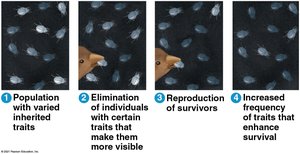
Example: The evolution of camouflage in mice living in different habitats demonstrates natural selection in action.
Adaptation
Adaptations are inherited traits that enhance an organism’s ability to survive and reproduce in a particular environment.
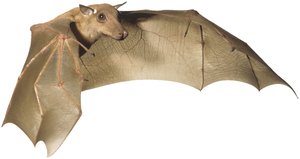
Example: The structure of a bat’s wing is an adaptation for flight.
The Tree of Life
Evolutionary relationships among species are often depicted as a tree, with branches representing the divergence of species from common ancestors.
Fossil evidence and anatomical similarities support the concept of descent with modification.
Concept 1.3: Scientific Inquiry and Hypothesis Testing
The Process of Science
Science is a way of knowing about the natural world through observation, inquiry, and experimentation.
Observation: Gathering information about phenomena.
Data: Recorded observations; can be qualitative (descriptive) or quantitative (numerical).
Inductive reasoning: Drawing generalizations from specific observations.
Deductive reasoning: Making specific predictions from general premises.
Forming and Testing Hypotheses
A hypothesis is a testable explanation for an observation.
Experiments are designed to test hypotheses under controlled conditions.
Variables in experiments include:
Independent variable: Manipulated by the researcher.
Dependent variable: Predicted to change in response.
Control group: Serves as a standard for comparison.
Theories in Science
A theory is broader than a hypothesis, supported by a large body of evidence, and can generate new hypotheses.
Concept 1.4: Science Benefits from Cooperation and Diverse Viewpoints
Collaboration and Communication
Scientific progress depends on teamwork, communication, and peer review. Scientists build on each other’s work and share data, often using model organisms.
Science, Technology, and Society
Science seeks to understand natural phenomena; technology applies scientific knowledge for practical purposes.
Ethical, political, and cultural considerations often accompany technological advances.
Diversity in Science
Diverse backgrounds and viewpoints among scientists enhance creativity and the robustness of scientific inquiry.
Additional info: Where the original notes were brief, academic context and definitions were added for clarity and completeness.
