 Back
Chapter 1: Evolution, the Themes of Biology, and Scientific Inquiry – Study Notes
Study Guide - Smart Notes
 Tailored notes based on your materials, expanded with key definitions, examples, and context.
Biology and Evolution
What Does It Mean to Study Life?
Biology is the scientific study of life, encompassing a wide range of philosophical and practical questions. Biologists seek to understand what life is, how it originated, how it functions, and whether its processes can be altered or manipulated. The study of life spans from the molecular level to the scale of entire ecosystems and the biosphere.
Branches of Biology: Focus on specific types of life (e.g., plants, animals, fish) or phenomena (e.g., molecular biology, biochemistry).
Interdisciplinary Areas: Many branches overlap, such as biochemistry, which combines biology and chemistry.
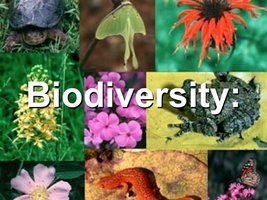
Characteristics of Life
Life is identified by the processes and characteristics it exhibits. These include:
Order: Highly organized structure, from molecules to entire organisms.
Energy Processing: Ability to obtain and use energy.
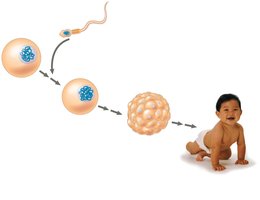
Growth and Development: Consistent growth and development controlled by inherited information.
Regulation: Ability to maintain internal stability (homeostasis).
Reproduction: Ability to produce offspring.
Response to the Environment: Ability to sense and react to environmental stimuli.
Evolutionary Adaptation: Populations evolve over generations to adapt to their environments.
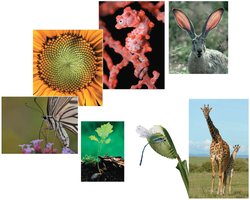
Themes in Biology
Five Unifying Themes
Despite its vast scope, biology is unified by five central themes:
Organization
Information
Energy and Matter
Interactions
Evolution
1. Organization
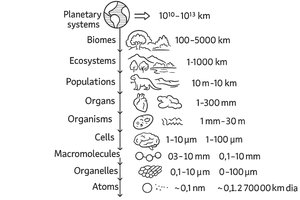
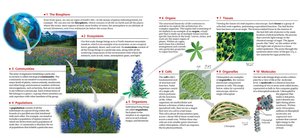
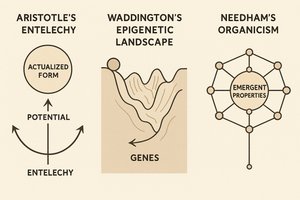
Biological systems are organized in a hierarchy, from atoms to the biosphere. Each level exhibits emergent properties that arise from the interactions and arrangement of parts.
Reductionism: Breaking down complex systems into simpler components for study.
Emergent Properties: New properties that arise at each level of organization, not present at the preceding level.
Systems Biology: Analysis of interactions among the parts of a biological system.
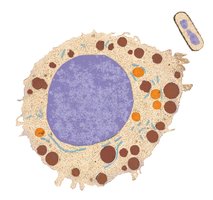
The Cell: The Basic Unit of Life
The cell is the fundamental unit of structure and function in living organisms. All cells are enclosed by a membrane that regulates the passage of materials. There are two main types of cells:
Eukaryotic Cells: Have membrane-bound organelles, including a nucleus.
Prokaryotic Cells: Lack a nucleus and other membrane-bound organelles; generally smaller and simpler.
2. Information: Genetic Expression and Transmission
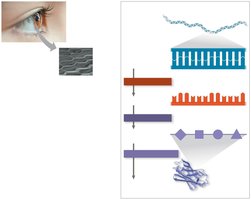
Genetic information is stored in DNA and transmitted from one generation to the next. Within cells, chromosomes contain DNA, which encodes genes—the instructions for building proteins and other molecules essential for life.
Gene: A segment of DNA that encodes information for building a specific protein or functional RNA.
Genome: The complete set of genetic material in an organism.
Gene Expression: The process by which information from a gene is used to synthesize a functional product (protein or RNA).
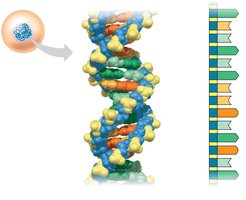
DNA is composed of four types of nucleotides: adenine (A), guanine (G), cytosine (C), and thymine (T). The sequence of these nucleotides encodes genetic information.
3. Energy and Matter: Life’s Chemical and Energy Transformations
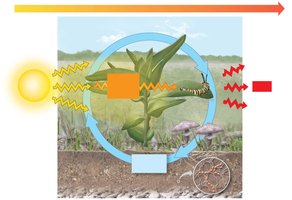
Living organisms require energy to carry out life processes. Energy flows through ecosystems, primarily entering as sunlight and exiting as heat, while matter cycles within ecosystems.
Producers: Organisms (e.g., plants) that convert light energy into chemical energy.
Consumers: Organisms that obtain energy by eating other organisms.
Decomposers: Organisms that break down dead matter, returning nutrients to the environment.
4. Interactions Within and Between Organisms
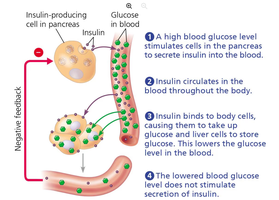
Biological systems depend on interactions between their components. These interactions regulate processes such as metabolism, development, and homeostasis.
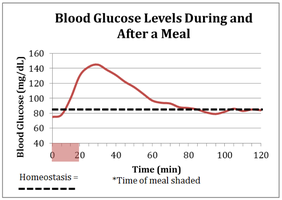
Feedback Mechanisms: Regulatory processes that maintain stability (homeostasis) or amplify responses.
Homeostasis: The maintenance of a stable internal environment.
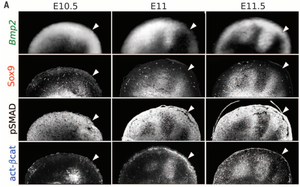
During development, cell interactions specify gene expression patterns, leading to the formation of different cell types and tissues.
5. Evolution: The Core Theme of Biology
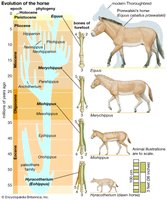
Evolution explains both the unity and diversity of life. It is the process by which species change over time through the accumulation of inherited differences, often as adaptations to different environments.
Natural Selection: The process by which individuals with advantageous traits are more likely to survive and reproduce, leading to the propagation of those traits in the population.
Descent with Modification: Species arise from common ancestors and accumulate differences over generations.
Unity and Diversity of Life
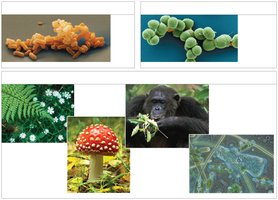
All living organisms share a common genetic code, reflecting their descent from a common ancestor. Life is classified into three domains:
Bacteria (prokaryotic, single-celled)
Archaea (prokaryotic, single-celled)
Eukarya (eukaryotic, includes plants, animals, fungi, and protists)
Biology as a Science
The Scientific Method and Inquiry
Biology is a science that seeks to uncover general truths about the natural world through inquiry and experimentation. The scientific method involves:
Making observations and asking questions
Formulating hypotheses (testable explanations)
Designing and conducting experiments
Analyzing data and drawing conclusions
Developing theories based on evidence
Controlled experiments compare an experimental group with a control group, differing in only one variable, to determine the effect of that variable.
Case Study: Investigating Coat Coloration in Mouse Populations
Researchers use the scientific method to test hypotheses about the adaptive significance of traits, such as camouflage in mice, by comparing predation rates in different environments.
Summary Table: Characteristics of Life and Biological Themes
Characteristic/Theme | Description | Example |
|---|---|---|
Order | Highly organized structure | Cellular organization |
Energy Processing | Acquisition and use of energy | Photosynthesis in plants |
Growth & Development | Consistent, regulated growth | Embryonic development |
Regulation | Maintaining internal stability | Homeostasis of blood glucose |
Reproduction | Production of offspring | Cell division, sexual reproduction |
Response to Environment | Reacting to stimuli | Plant bending toward light |
Evolutionary Adaptation | Change over generations | Darwin's finches |
Additional info: Where the original content was brief, academic context was added to clarify definitions, processes, and examples, ensuring the notes are self-contained and suitable for exam preparation.
