 Back
Chapter 1: Evolution, the Themes of Biology, and Scientific Inquiry – Study Notes
Study Guide - Smart Notes
 Tailored notes based on your materials, expanded with key definitions, examples, and context.
Biology: The Scientific Study of Life
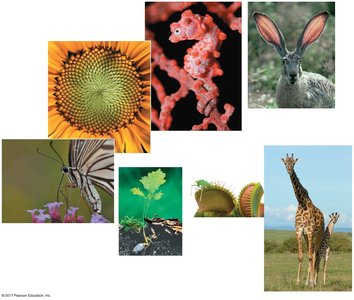
Characteristics of Life
Biology is defined as the scientific study of life. Living organisms are distinguished from nonliving things by a set of characteristics that they exhibit.
Order: Living things have highly ordered structures.
Regulation: Organisms regulate their internal environment to maintain stability (homeostasis).
Evolutionary adaptation: Populations evolve over generations to adapt to their environment.
Reproduction: Organisms reproduce, passing on genetic information to offspring.
Energy processing: Living things obtain and use energy for growth and maintenance.
Response to the environment: Organisms respond to environmental stimuli.
Growth and development: Organisms grow and develop according to inherited instructions.
Emergent Properties and Levels of Biological Organization
Emergent Properties
Emergent properties arise when components interact at higher levels of organization, resulting in new characteristics not present at lower levels. For example, a functioning bicycle emerges only when all parts are correctly assembled.
Levels of Biological Organization
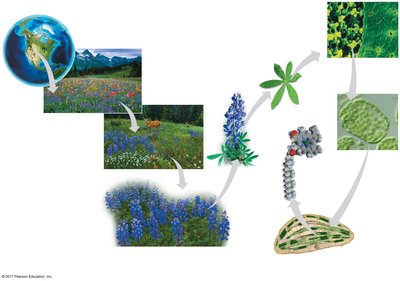
Biological systems are organized hierarchically, from the largest to the smallest scale:
Biosphere: All life on Earth and its environments.
Ecosystems: Communities of organisms and their physical environment.
Communities: All organisms in a particular ecosystem.
Populations: Individuals of the same species in a given area.
Organisms: Individual living entities.
Organs and Organ Systems: Body parts with specific functions.
Tissues: Groups of cells performing a function.
Cells: Basic unit of life.
Organelles: Functional components within cells.
Molecules: Chemical structures consisting of two or more atoms.
Reductionism and Systems Biology
Reductionism
Reductionism involves breaking down complex systems into simpler components for study, such as analyzing DNA structure to understand inheritance.
Systems Biology
Systems biology models the interactions within biological systems, examining how components work together. For example, it can predict how a drug affects multiple organs or how increased CO2 impacts the biosphere.
Interactions with the Environment
Organismal Interactions
Organisms interact with both living (biotic) and nonliving (abiotic) components of their environment, affecting and being affected by them.
Energy Transfer and Transformation
Energy Flow in Ecosystems
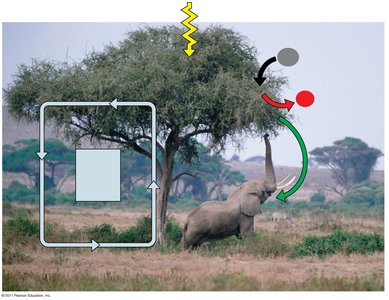
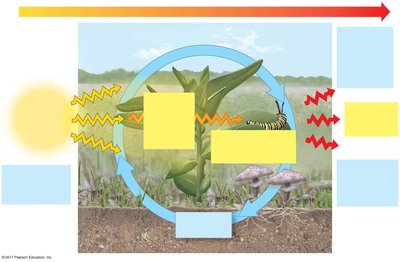
Living organisms transform energy from one form to another. Energy enters ecosystems as light, is converted to chemical energy by plants, and is used by organisms for work, eventually leaving as heat.
Photosynthesis: Plants convert sunlight to chemical energy.
Energy Flow: Energy flows through the ecosystem, while chemicals cycle within it.

Structure and Function
Correlation at All Levels
Biological structure and function are closely related. For example, a leaf's thin, flat shape maximizes light capture, and a bird's wing structure is adapted for flight.

The Cell: Basic Unit of Life
Cell Theory
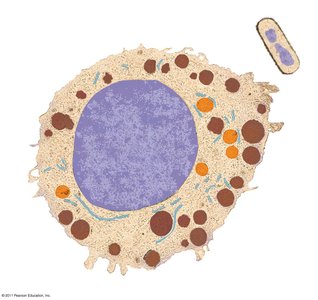
The cell is the fundamental unit of structure and function in living organisms. All cells are enclosed by a membrane and use DNA as genetic material.
Eukaryotic cells: Have membrane-bound organelles and a nucleus.
Prokaryotic cells: Lack a nucleus and membrane-bound organelles.
Heritable Information and DNA
DNA and Gene Expression
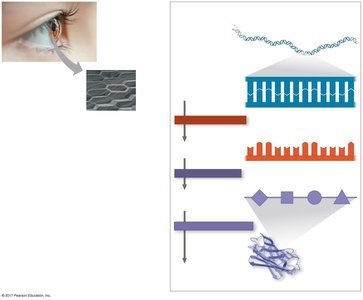
DNA contains genes, the units of inheritance. Gene expression is the process by which information from a gene is used to synthesize a functional product, such as a protein.
Transcription: DNA is transcribed into messenger RNA (mRNA).
Translation: mRNA is translated into a chain of amino acids, forming a protein.
Feedback Mechanisms
Regulation of Biological Systems
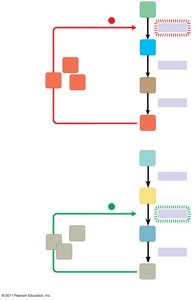
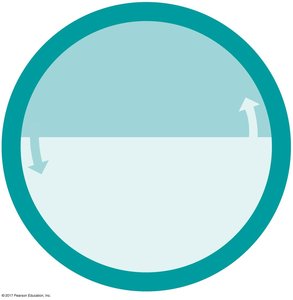
Feedback mechanisms regulate biological processes:
Negative feedback: The product inhibits the process, maintaining balance.
Positive feedback: The product enhances the process, amplifying change.
Evolution: Unity and Diversity of Life
Core Theme of Biology
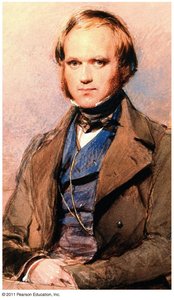
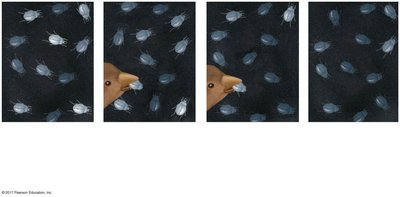
Evolution explains both the unity and diversity of life. It is the process by which species change over time through natural selection.
Natural selection: Individuals with advantageous traits survive and reproduce, increasing the frequency of those traits.
Classification of Life
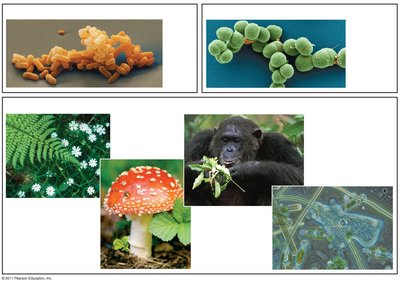
Life is classified into three domains:
Bacteria: Prokaryotic, unicellular organisms.
Archaea: Prokaryotic, often found in extreme environments.
Eukarya: Eukaryotic organisms, including plants, fungi, animals, and protists.
Unity in Diversity
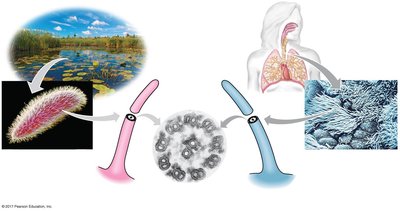
Despite diversity, all life shares common features, such as the presence of cilia in both protists and animal cells, demonstrating evolutionary unity.
Scientific Inquiry and the Scientific Method
Scientific Method
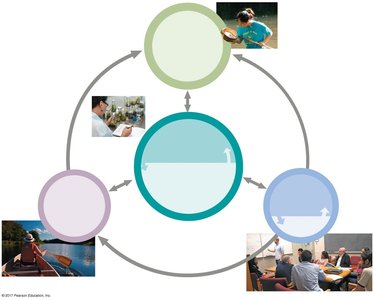
The scientific method is a systematic process for exploring questions and testing hypotheses:
Observation: Gathering information about phenomena.
Hypothesis: Formulating a testable explanation.
Prediction: Making predictions based on the hypothesis.
Experiment: Testing predictions through controlled experiments.
Analysis: Interpreting data to support or refute the hypothesis.
Types of Data
Qualitative data: Descriptions, such as behavioral observations.
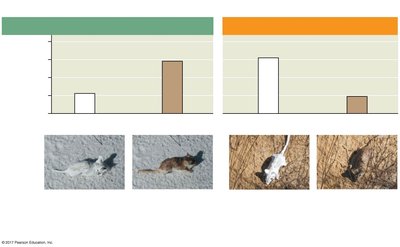
Quantitative data: Measurements, often organized in tables or graphs.

Experimental Controls and Repeatability
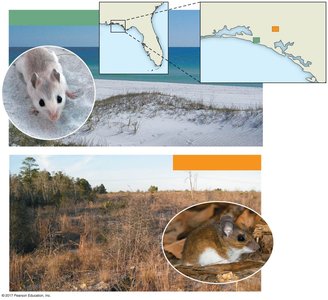
Controlled experiments compare an experimental group to a control group, differing by only one variable. Repeatability is essential for scientific validity.
Experiment vs. Hypothesis
Experiment: Activity comparing groups to test a hypothesis.
Hypothesis: Testable, falsifiable statement guiding the experiment.
Inductive and Deductive Reasoning
Inductive reasoning: Drawing general conclusions from specific observations.
Deductive reasoning: Making specific predictions from general premises.
Limits of Science
Hypotheses must be testable and falsifiable.
Supernatural explanations are outside the scope of science.
Theories in Science
Theory: Broader than a hypothesis, general, and supported by extensive evidence.
Science and Technology
Science: Understanding natural phenomena.
Technology: Applying scientific knowledge for practical purposes.
Science and technology are interdependent.
