 Back
Chapter 1: Evolution, the Themes of Biology, and Scientific Inquiry – Study Notes
Study Guide - Smart Notes
 Tailored notes based on your materials, expanded with key definitions, examples, and context.
Introduction to Biology
The Study of Life and Its Unifying Themes
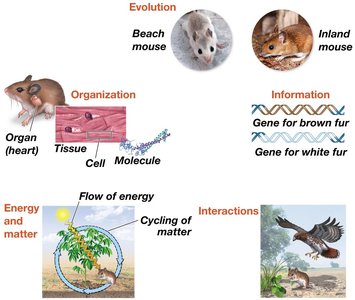
Biology is the scientific study of life, encompassing a wide range of questions about living organisms and their interactions. Life is recognized by the activities and characteristics that living things exhibit, rather than a single definition. Five unifying themes structure the study of biology: Organization, Information, Energy and Matter, Interactions, and Evolution.
Organization: Life is highly ordered, from molecules to the biosphere.
Information: Genetic information is stored and transmitted, primarily through DNA.
Energy and Matter: Living systems require energy and matter to maintain order and carry out life processes.
Interactions: Organisms interact with each other and their environment.
Evolution: The process that explains both the unity and diversity of life.
Properties of Life
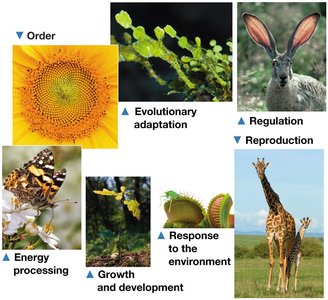
All living things share several key characteristics:
Order: Highly organized structure.
Evolutionary adaptation: Ability to adapt over generations.
Regulation: Maintenance of internal balance (homeostasis).
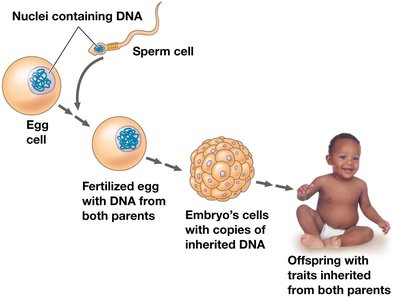
Reproduction: Ability to produce offspring using DNA.
Energy processing: Acquisition and use of energy.
Growth and development: Increase in size and complexity.
Response to the environment: Reacting to stimuli.
Levels of Biological Organization
Hierarchy of Life
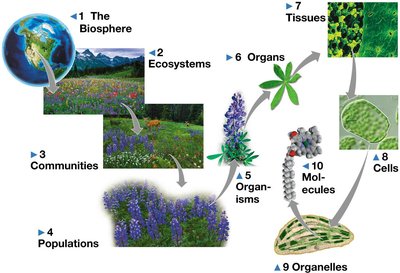
Biological organization is structured in a hierarchy, from the smallest to the largest scale:
Biosphere
Ecosystems
Communities
Populations
Organisms
Organs and Organ Systems
Tissues
Cells
Organelles
Molecules
Emergent Properties
Emergent properties arise from the arrangement and interaction of parts as complexity increases. For example, a functioning bicycle only emerges when all parts are correctly assembled. In biology, emergent properties are observed at every level of organization, and systems biology is used to study these complex interactions.
Structure and Function
There is a close relationship between structure and function at all levels of biological organization. Understanding the structure of a biological component provides insight into its function, and vice versa.
Cell Components
The Cell: Basic Unit of Life
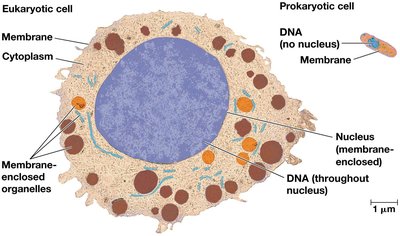
The cell is the smallest unit capable of performing all activities required for life. According to the cell theory, all living organisms are composed of cells. Cells are classified as either prokaryotic (lacking a nucleus and membrane-bound organelles) or eukaryotic (having a nucleus and organelles).
Prokaryotic cells: Simpler, smaller, no nucleus (e.g., bacteria, archaea).
Eukaryotic cells: Larger, complex, contain nucleus and organelles (e.g., plants, animals, fungi, protists).
Genetic Information and Gene Expression
DNA: The Genetic Material
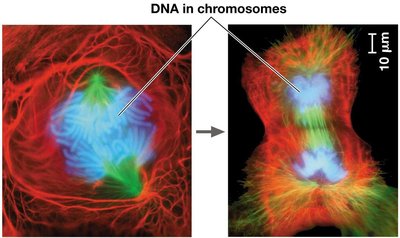
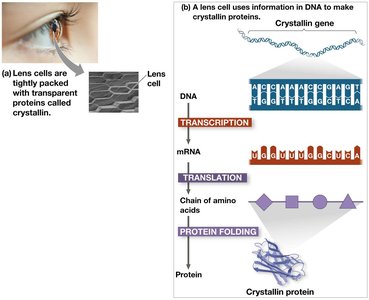
Within cells, chromosomes contain DNA (deoxyribonucleic acid), the molecule that stores genetic information. Each chromosome consists of one long DNA molecule with many genes, which are units of inheritance encoding instructions for building cellular molecules.
Molecular Structure of DNA
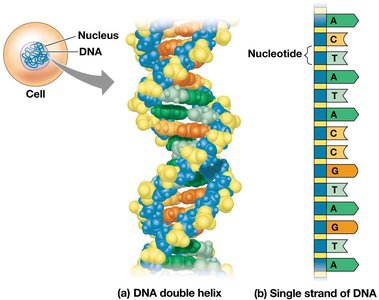
DNA is composed of two long chains forming a double helix. Each chain consists of four types of nucleotides: adenine (A), guanine (G), cytosine (C), and thymine (T). The sequence of these nucleotides encodes genetic information.
Gene Expression
Genes control protein production indirectly. The process of gene expression involves transcription of DNA into RNA, followed by translation of RNA into protein. Proteins carry out most cellular functions.
Energy and Metabolism
Energy Transfer and Transformation
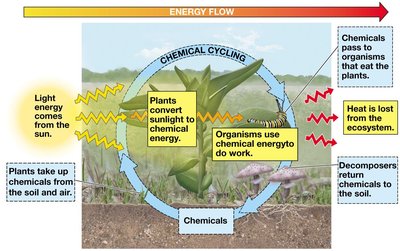
Life depends on the transfer and transformation of energy and matter. Energy from the sun is captured by producers (e.g., plants) and passed to consumers (e.g., animals). Energy flows through ecosystems, while chemicals are recycled.
Producers: Organisms that produce their own food (e.g., plants via photosynthesis).
Consumers: Organisms that obtain energy by eating other organisms.
Evolution and Diversity of Life
Evolution: The Core Theme
Evolution explains both the unity and diversity of life. Adaptations are traits that enhance survival and reproduction in specific environments. Evolution is the process of change that has transformed life on Earth.
Classification of Life
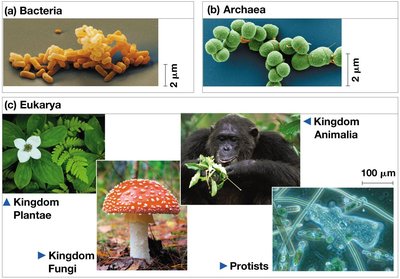
Organisms are classified into three domains:
Bacteria: Prokaryotic, unicellular organisms.
Archaea: Prokaryotic, often found in extreme environments.
Eukarya: Eukaryotic organisms, including plants, fungi, animals, and protists.
Scientific Inquiry and the Scientific Method
Nature of Scientific Inquiry
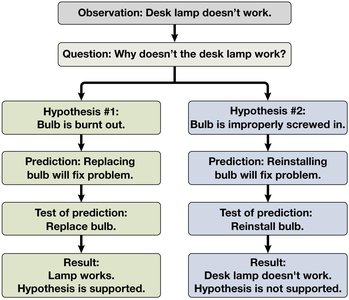
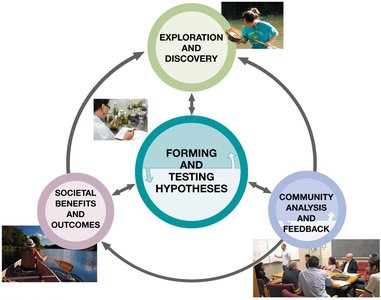
Science is a process of inquiry involving observation, hypothesis formation, and experimentation. Data can be qualitative (descriptions) or quantitative (numerical measurements). Inductive reasoning derives generalizations from observations, while deductive reasoning uses general premises to make specific predictions.

The Scientific Process
The scientific method is flexible and iterative, often involving backtracking and re-evaluation. Not all questions can be addressed by science; hypotheses must be testable and falsifiable.
Case Study: Mouse Coat Coloration
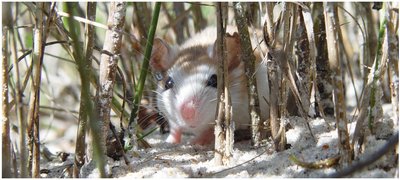
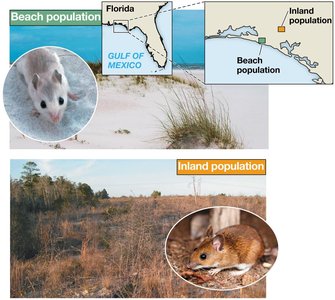
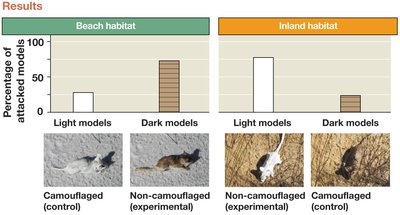
Scientific inquiry can be illustrated by investigating the adaptive significance of mouse coat coloration. Beach and inland populations of Peromyscus polionotus have different color patterns matching their habitats. Experiments showed that non-camouflaged mice were preyed upon more, supporting the hypothesis that coloration is an adaptation for camouflage.
Variables and Controls in Experiments
In controlled experiments, the independent variable is manipulated, and the dependent variable is measured. Control groups are used for comparison. When graphing, the independent variable is on the X-axis, and the dependent variable is on the Y-axis.
Theories and Laws in Science
A theory is broader than a hypothesis, supported by substantial evidence, and can generate new hypotheses. A law describes phenomena but does not explain them (e.g., law of gravity).
Science, Technology, and Society
Interdependence of Science and Technology
Science seeks to understand natural phenomena, while technology applies scientific knowledge for practical purposes. Advances in science and technology can have profound societal impacts, raising ethical, political, and cultural questions.

Diversity and Collaboration in Science
Science benefits from diverse viewpoints and collaboration. Peer review and repeatability are essential for scientific progress. Different backgrounds and perspectives enhance the robustness of scientific inquiry.
Quiz Questions (with Answers)
Question | Correct Answer |
|---|---|
1. What represents the change in blood pressure values in a drug study? | Dependent variable |
2. In an experiment, what is the dependent variable (response)? | The number of mice caught |
3. How many dark brown mice were caught in light-colored soil on a moonlit night? | 19 |
4. What combination led to the highest predation in light-colored soil? | Dark brown coat with no moon |
5. Which is necessary to do biological science? | Data |
6. Change in which level would have the farthest-reaching consequences? | Biosphere |
