 Back
Chapter 1: Evolution, the Themes of Biology, and Scientific Inquiry – Study Notes
Study Guide - Smart Notes
 Tailored notes based on your materials, expanded with key definitions, examples, and context.
Evolution, the Themes of Biology, and Scientific Inquiry
Introduction to Biology
Biology is the scientific study of life. Living organisms are recognized by a set of characteristics and processes that distinguish them from non-living matter. The study of biology reveals unifying themes that connect all forms of life, from the molecular level to the biosphere.
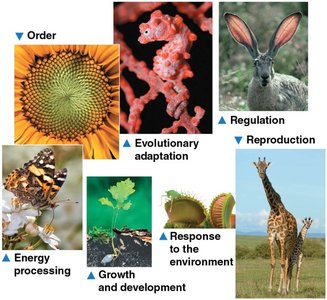
Order: Living things exhibit complex but ordered organization.
Evolutionary adaptation: Populations evolve over generations through adaptations that enhance survival and reproduction.
Regulation: Organisms regulate their internal environment to maintain a stable, constant condition (homeostasis).
Reproduction: Living things reproduce their own kind.
Energy processing: Organisms obtain and use energy to power activities.
Growth and development: Organisms grow and develop according to inherited instructions.
Response to the environment: Living things respond to environmental stimuli.
Levels of Biological Organization
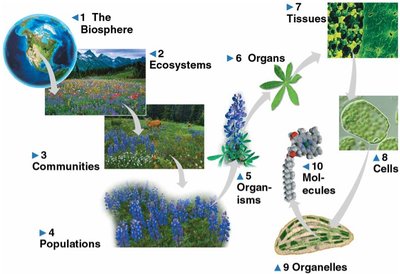
Life can be studied at different levels, from molecules to the entire planet. Each level exhibits emergent properties that arise from the arrangement and interactions of parts within a system.
Biosphere: All life on Earth and all places where life exists.
Ecosystems: All living things in a particular area, along with nonliving components.
Communities: The array of organisms inhabiting a particular ecosystem.
Populations: All individuals of a species living within the bounds of a specified area.
Organisms: Individual living things.
Organs and organ systems: Body parts that perform a specific function.
Tissues: Groups of cells that work together to perform a specialized function.
Cells: The smallest unit of organization that can perform all activities required for life.
Organelles: Functional components within cells.
Molecules: Chemical structures consisting of two or more atoms.
Emergent Properties and Systems Biology
Emergent properties arise at each level of biological organization due to the arrangement and interactions of parts. Systems biology is an approach that models the dynamic behavior of whole biological systems based on the interactions among the system's parts.
The Cell: The Fundamental Unit of Life
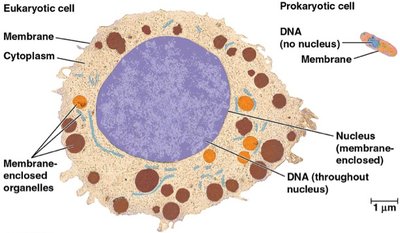
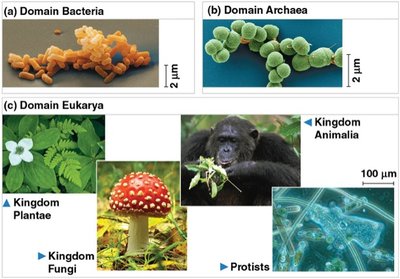
The cell is the basic unit of structure and function in living organisms. All cells are enclosed by a membrane that regulates the passage of materials between the cell and its environment. There are two main types of cells: prokaryotic and eukaryotic.
Prokaryotic cells: Lack a nucleus and membrane-bound organelles (e.g., Bacteria and Archaea).
Eukaryotic cells: Have a nucleus and membrane-enclosed organelles (e.g., plants, animals, fungi, protists).
Genetic Information and Gene Expression
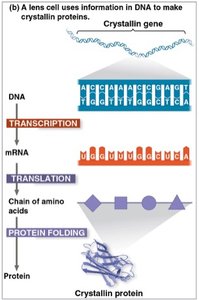
Life's processes involve the expression and transmission of genetic information. DNA (deoxyribonucleic acid) is the molecule that stores genetic information. Each chromosome contains one long DNA molecule with thousands of genes, which are the units of inheritance.
DNA Structure: DNA consists of two long chains arranged in a double helix, made up of four types of nucleotides: adenine (A), guanine (G), cytosine (C), and thymine (T).
Gene Expression: The process by which information from a gene is used to synthesize a functional gene product, usually a protein.
Central Dogma: DNA is transcribed into RNA, which is then translated into protein.
Theme: Evolution – Unity and Diversity of Life
Evolution is the core theme of biology, explaining both the unity and diversity of life. All living organisms are modified descendants of common ancestors. The process of evolution is supported by extensive scientific evidence.
Unity: All organisms share a universal genetic code (DNA) and many structural similarities.
Diversity: Evolutionary processes have led to the vast diversity of life forms.
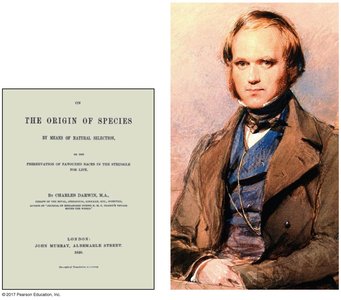
Charles Darwin and Natural Selection
Charles Darwin proposed the theory of evolution by natural selection in his 1859 book, On the Origin of Species. Natural selection is the mechanism by which populations adapt and evolve.
Individuals in a population vary in their traits, many of which are heritable.
More offspring are produced than survive, leading to competition for resources.
Individuals best suited to their environment are more likely to survive and reproduce, passing on advantageous traits.
Over time, the frequency of advantageous traits increases in the population.
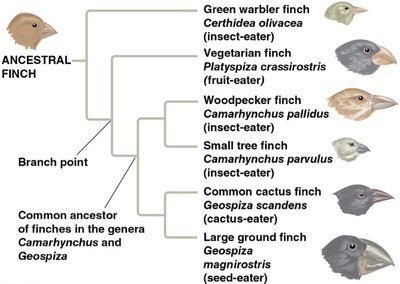
Descent with Modification and Adaptive Radiation
Descent with modification refers to the passing of traits from parent to offspring, with changes accumulating over generations. Adaptive radiation is the diversification of a group of organisms into forms filling different ecological niches, as seen in the finches of the Galápagos Islands.
Scientific Inquiry: Forming and Testing Hypotheses
Scientific inquiry involves making observations, forming hypotheses, and testing them through experiments. A hypothesis is a testable explanation for a set of observations. Experiments are designed to test predictions derived from hypotheses under controlled conditions.
Observation: Gathering data about the natural world.
Hypothesis: A tentative answer to a well-framed question, leading to predictions that can be tested.
Experiment: A scientific test carried out under controlled conditions.
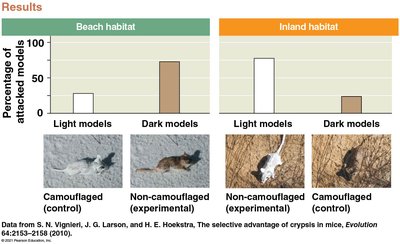
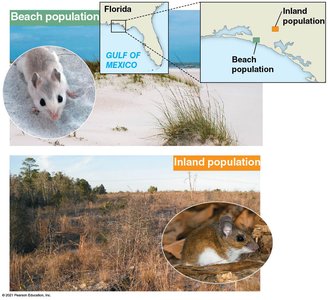
Case Study: Camouflage and Natural Selection in Mice
Researchers tested whether camouflage affects predation rates in beach and inland populations of mice. Models with coloration matching their environment (camouflaged) were attacked less frequently than non-camouflaged models, supporting the hypothesis that natural selection favors traits that enhance survival in a specific environment.
Summary Table: The Three Domains of Life
Domain | Key Characteristics | Examples |
|---|---|---|
Bacteria | Prokaryotic, unicellular, diverse metabolic types | Escherichia coli, Cyanobacteria |
Archaea | Prokaryotic, unicellular, often extremophiles | Halobacterium, Methanogens |
Eukarya | Eukaryotic, unicellular or multicellular, membrane-bound organelles | Plants, Animals, Fungi, Protists |
Additional info: The scientific method is iterative, and hypotheses that are not supported by experimental data are revised or rejected. The process of science is collaborative and builds on previous knowledge.
