 Back
Chapter 1: Evolution, the Themes of Biology, and Scientific Inquiry – Study Notes
Study Guide - Smart Notes
 Tailored notes based on your materials, expanded with key definitions, examples, and context.
Introduction to Biology
The Scope and Nature of Biology
Biology is the scientific study of life, encompassing a vast range of topics from molecular mechanisms to the interactions of organisms with their environment. Life is recognized by a set of characteristics that distinguish living things from nonliving matter.
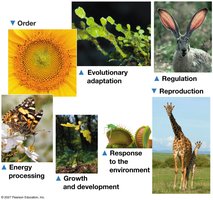
Order: Living organisms exhibit complex but ordered organization.
Evolutionary adaptation: Populations evolve over generations through adaptations that enhance survival and reproduction.
Regulation: Organisms regulate their internal environment to maintain a stable, constant condition (homeostasis).
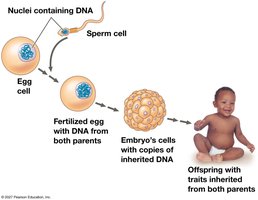
Reproduction: Living things reproduce, passing genetic information to offspring.
Energy processing: Organisms obtain and use energy to power activities.
Growth and development: Organisms grow and develop according to instructions coded by their genes.
Response to the environment: Living things respond to environmental stimuli.
Levels of Biological Organization
Hierarchy of Life
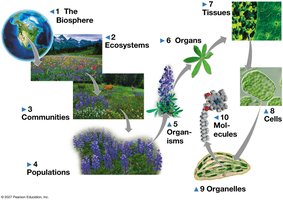
Life can be studied at different levels, from molecules to the entire biosphere. Each level exhibits emergent properties that arise from the interactions and arrangements of its parts.
Biosphere: All environments on Earth that support life.
Ecosystems: All living things in a particular area, along with nonliving components.
Communities: All organisms in an ecosystem.
Populations: All individuals of a species within a specific area.
Organisms: Individual living things.
Organs and organ systems: Body parts that perform specific functions.
Tissues: Groups of similar cells performing a function.
Cells: Fundamental unit of structure and function in living things.
Organelles: Functional components within cells.
Molecules: Chemical structures consisting of two or more atoms.
Emergent Properties
Emergent properties arise at each level of organization due to the arrangement and interactions of parts. For example, a functioning bicycle only emerges when all parts are correctly assembled. In biology, systems biology complements reductionism by analyzing interactions among parts of biological systems.
Structure and Function
There is a close relationship between structure and function at all levels of biological organization. Understanding the structure of a biological component provides insight into its function, and vice versa.
Cell Components
The Cell: Basic Unit of Life
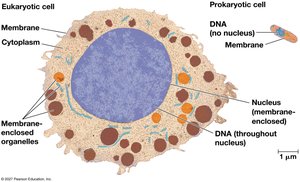
All living organisms are composed of cells, which are the basic units of structure and function. There are two main types of cells:
Eukaryotic cells: Contain membrane-enclosed organelles, including a nucleus.
Prokaryotic cells: Simpler, smaller, and lack a nucleus or other membrane-bound organelles.
Gene Expression and Genetic Information
Genetic Material and Inheritance
Within cells, chromosomes contain DNA (deoxyribonucleic acid), which holds genetic information. Genes are units of inheritance that encode instructions for building molecules within the cell. The genetic information in DNA directs the development and functioning of organisms.
Gene Expression
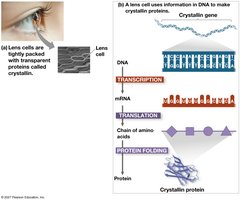
Gene expression is the process by which information from a gene is used to synthesize a functional protein. This involves transcription (DNA to mRNA) and translation (mRNA to protein), followed by protein folding.
Energy and Metabolism
Energy Transfer and Transformation
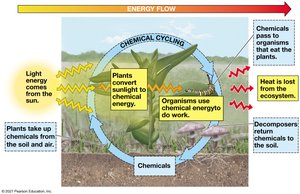
Life requires the transfer and transformation of energy and matter. Energy from the sun is captured by producers (such as plants) and passed to consumers (animals and other organisms). Chemical energy is cycled through ecosystems, while energy flows through and is eventually lost as heat.
Feedback Regulation
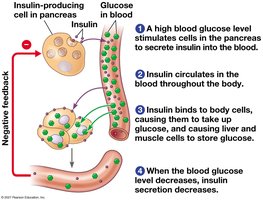
Biological processes are regulated by feedback mechanisms. Negative feedback reduces the initial stimulus, while positive feedback amplifies it. For example, insulin regulation of blood glucose is a negative feedback process.
Ecology
Organism Interactions and Ecosystems
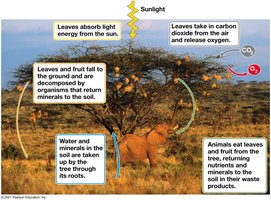
Organisms interact with each other and with their physical environment. These interactions can affect the distribution and abundance of organisms and influence the cycling of matter and flow of energy.
Evolution
The Core Theme: Evolution
Evolution is the central theme of biology, explaining both the unity and diversity of life. All living organisms are modified descendants of common ancestors. Evolution is supported by extensive evidence from many scientific fields.
Classification of Life
Organisms are classified into three domains: Bacteria, Archaea, and Eukarya. Each species is given a two-part scientific name (genus and species), such as Homo sapiens.
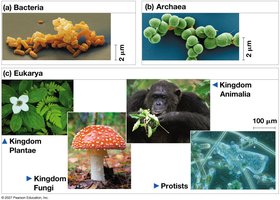
Unity and Diversity
Despite the diversity of life, there is remarkable unity, such as the universal genetic code (DNA) and similar cellular structures. Comparative anatomy and molecular evidence support evolutionary relationships.
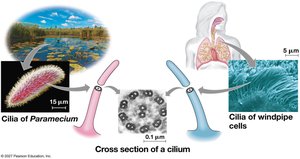
Charles Darwin and Natural Selection
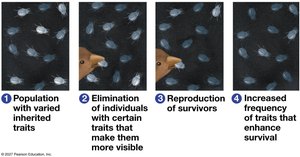
Charles Darwin proposed that species evolve through natural selection, where individuals with advantageous traits are more likely to survive and reproduce. Over generations, these traits become more common in the population.
Variation exists within populations.
More offspring are produced than can survive.
Individuals best suited to their environment survive and reproduce.
Beneficial traits increase in frequency over time.
Adaptive Radiation
Adaptive radiation is the diversification of a group of organisms into forms filling different ecological niches, as seen in Darwin's finches on the Galápagos Islands.
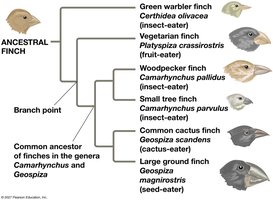
Scientific Inquiry
The Scientific Method
Science is a process of inquiry involving observation, hypothesis formation, experimentation, and analysis. Hypotheses must be testable and falsifiable. Data can be qualitative or quantitative, and reasoning can be inductive (from specific observations to generalizations) or deductive (from general premises to specific predictions).
Variables and Controls
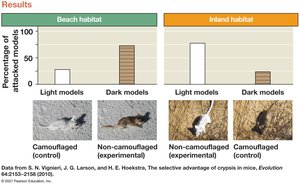
Experiments involve variables. The independent variable is manipulated, while the dependent variable is measured. Controlled experiments compare an experimental group with a control group to isolate the effect of the variable.
Theories in Science
A scientific theory is broader than a hypothesis, generates new hypotheses, and is supported by a large body of evidence.
Science, Technology, and Society
Cooperation and Communication in Science
Science advances through collaboration, peer review, and building on the work of others. Model organisms are used to study biological processes. Ethical, political, and societal considerations often accompany technological advances derived from scientific discoveries.
