 Back
Chapter 1: Evolution, Themes of Biology, and Scientific Inquiry
Study Guide - Smart Notes
 Tailored notes based on your materials, expanded with key definitions, examples, and context.
Introduction to Biology
What is Biology?
Biology is the scientific study of life. Biologists investigate the structure, function, growth, origin, evolution, and distribution of living organisms. The field is broad, encompassing all aspects of life and living processes.
Biology is a quest—an ongoing inquiry about the nature of life.
Biologists ask questions such as: How does a single cell develop into an organism?
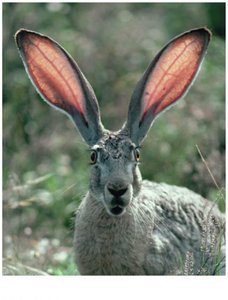
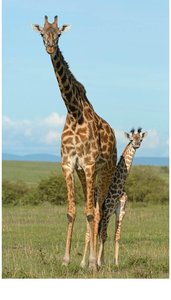
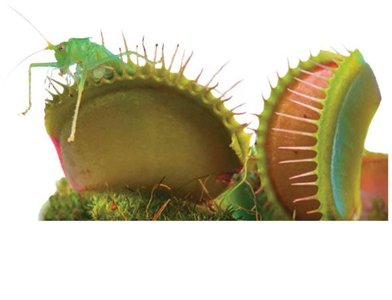
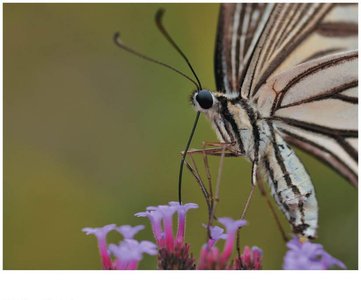
Life is recognized by what living things do, including order, regulation, evolutionary adaptation, reproduction, energy processing, response to the environment, and growth and development.
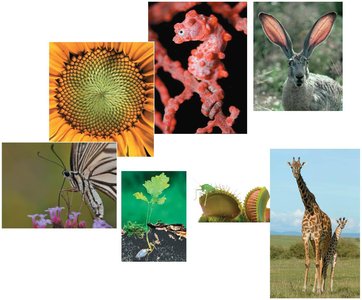
Properties of Life
Order: Living things exhibit complex but ordered organization.
Regulation: Organisms regulate their internal environment to maintain a stable, constant condition (homeostasis).
Evolutionary Adaptation: Populations evolve over generations as individuals with traits best suited to their environments have greater reproductive success.
Reproduction: Organisms reproduce their own kind.
Energy Processing: Organisms obtain and use energy to power activities.
Response to the Environment: Organisms respond to environmental stimuli.
Growth and Development: Genes control the pattern of growth and development.
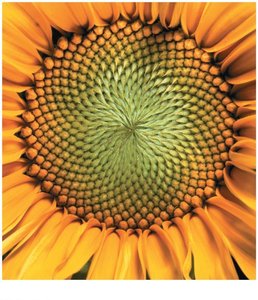
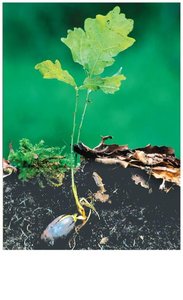
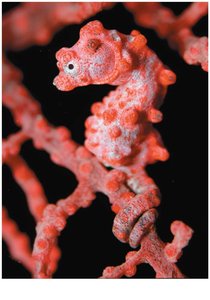
Unifying Themes in Biology
Major Themes
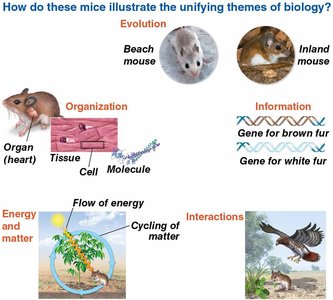
Biology is unified by several major themes that help organize our understanding of life:
Organization
Information
Energy and Matter
Interactions
Evolution
Levels of Biological Organization
Hierarchy of Life
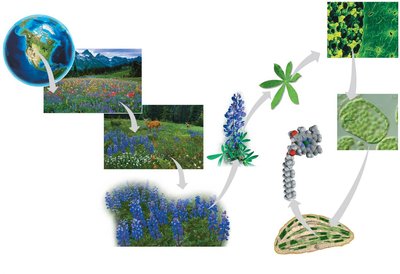
Life can be studied at different levels, from molecules to the entire living planet. This hierarchy includes:
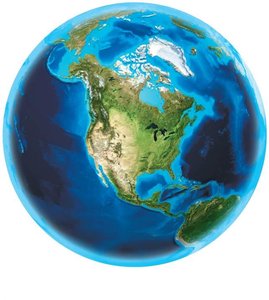
Biosphere: All life on Earth and all places where life exists.
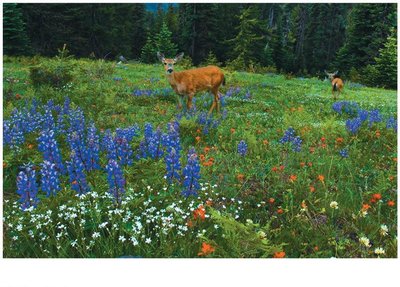
Ecosystems: All living things in a particular area, along with nonliving components.
Communities: All organisms in an ecosystem.
Populations: All individuals of a species in a specific area.
Organisms: Individual living things.
Organs and Organ Systems: Body parts made of multiple tissues with specific functions.
Tissues: Groups of cells working together for a specialized function.
Cells: Fundamental unit of structure and function in living things.
Organelles: Functional components within cells.
Molecules: Chemical structures consisting of two or more atoms.



Emergent Properties
Emergent properties arise from the arrangement and interaction of parts within a system. For example, photosynthesis occurs in an intact chloroplast, but not in a disorganized mixture of chlorophyll and other components.
Reductionism simplifies complex systems to study their components.
Systems biology analyzes interactions among parts of a biological system.
Structure and Function
At every level of the biological hierarchy, there is a correlation between structure and function. Understanding the structure of something provides insight into its function, and vice versa.
Example: The thin, flat shape of a leaf maximizes sunlight absorption for photosynthesis.
Example: The anatomy of a hummingbird allows it to hover and fly backward.
The Cell: The Basic Unit of Life
Cell Theory
The cell is the smallest unit of organization that can perform all activities required for life. All living organisms are made of cells, which are the basic units of life.
Cells are enclosed by membranes that regulate passage of materials.
There are two main types of cells: prokaryotic and eukaryotic.
Prokaryotic cells (Bacteria and Archaea) lack a nucleus and membrane-bound organelles.
Eukaryotic cells (plants, animals, fungi, protists) have a nucleus and membrane-bound organelles.
Genetic Information and Gene Expression
DNA: The Genetic Material
Within cells, chromosomes contain genetic material in the form of DNA (deoxyribonucleic acid). DNA encodes genes, which are units of inheritance that direct the development and functioning of organisms.
Each DNA molecule consists of two long chains in a double helix, made up of four types of nucleotides: A, T, C, G.
Gene expression involves transcription (DNA to RNA) and translation (RNA to protein).
All life uses the same genetic code, but differences in DNA sequences account for diversity.
Genomics and Proteomics
Genomics is the study of whole sets of genes and their interactions, while proteomics is the study of whole sets of proteins. Advances in technology and bioinformatics have enabled large-scale analysis of DNA and proteins.
Energy and Matter in Biological Systems
Energy Flow and Chemical Cycling
Life requires the transfer and transformation of energy and matter. Energy flows through ecosystems, usually entering as sunlight and exiting as heat, while chemicals cycle within ecosystems.
Producers (e.g., plants) convert sunlight to chemical energy.
Consumers obtain energy by eating other organisms.
Decomposers recycle nutrients back to the environment.
Interactions in Biological Systems
Feedback Regulation
Biological processes are often regulated by feedback mechanisms:
Negative feedback: The response reduces the initial stimulus (e.g., insulin regulation of blood glucose).
Positive feedback: The end product speeds up its own production (e.g., blood clotting).
Evolution: The Core Theme of Biology
Unity and Diversity of Life
Evolution explains both the unity and diversity of life. All organisms are modified descendants of common ancestors. Classification organizes the diversity of life into three domains: Bacteria, Archaea, and Eukarya.
Bacteria and Archaea are prokaryotic domains.
Eukarya includes protists, plants, fungi, and animals.
Species are given two-part scientific names (genus and species).
Charles Darwin and Natural Selection
Charles Darwin proposed that species evolve through natural selection, where individuals with advantageous traits are more likely to survive and reproduce. Over time, this leads to adaptation and the emergence of new species.
Populations vary in traits, many of which are heritable.
More offspring are produced than survive, leading to competition.
Individuals best suited to their environment are more likely to survive and reproduce.
Scientific Inquiry
The Process of Science
Science is a way of knowing, based on inquiry and evidence. The scientific method involves making observations, forming hypotheses, and testing them through experiments.
Hypothesis: A testable explanation for an observation.
Experiment: A controlled test of a hypothesis.
Data: Recorded observations, which can be qualitative or quantitative.
Inductive reasoning: Drawing generalizations from specific observations.
Deductive reasoning: Making specific predictions from general premises (if...then logic).
Variables and Controls
In experiments, the independent variable is manipulated, and the dependent variable is measured. A control group is used for comparison.
Theories in Science
A scientific theory is broader than a hypothesis, supported by a large body of evidence, and can generate new hypotheses.
Science, Technology, and Society
Impact and Ethics
Science seeks to understand natural phenomena, while technology applies scientific knowledge for practical purposes. Advances in science and technology can have profound effects on society, raising ethical, political, and cultural questions.
Diversity in Science
Science benefits from diverse viewpoints and collaboration. The inclusion of different perspectives leads to more robust and innovative scientific progress.
