 Back
Chapter 1: Evolution, Themes of Biology, and Scientific Inquiry – Study Notes
Study Guide - Smart Notes
 Tailored notes based on your materials, expanded with key definitions, examples, and context.
Chapter 1: Evolution, the Themes of Biology, and Scientific Inquiry
Introduction to Biology
Biology is the scientific study of life, focusing on understanding living organisms and the processes that govern life. Rather than simply memorizing facts, biologists ask questions and seek to uncover unifying themes that organize biological information for deeper understanding and long-term retention.
Biology: The science of life and living organisms.
Scientific Inquiry: The process of asking questions and seeking answers through observation and experimentation.
Themes: Overarching concepts that help organize and connect biological knowledge.
Seven Characteristics of Life
Life is recognized by a set of characteristics that living things exhibit. These features distinguish living organisms from non-living matter.
Order: Highly organized structure, such as cells and tissues.
Evolutionary adaptation: Ability to change over generations in response to the environment.
Regulation: Maintenance of internal balance (homeostasis).
Reproduction: Ability to produce offspring.
Response to environment: Reacting to stimuli.
Growth and development: Increase in size and complexity.
Energy processing: Obtaining and using energy for life processes.
Theme 1: Organization
Levels of Biological Organization
Life can be studied at different scales, from the molecular level to the entire biosphere. Each level exhibits emergent properties not present at lower levels.
Biosphere: All environments on Earth that support life.
Ecosystem: All living and nonliving things in a particular area.
Community: All organisms in an ecosystem.
Population: All individuals of a species in a specific area.
Organism: An individual living thing.
Organs: Specialized body parts made up of tissues.
Tissue: Groups of similar cells performing a function.
Cell: The fundamental unit of structure and function in life.
Organelles: Functional components within cells.
Molecules: Chemical structures consisting of atoms.
Two approaches to studying biology:
Reductionism: Breaking down complex systems into simpler components.
Emergent Properties: New properties that arise at each level of organization.
Structure and Function
There is a close correlation between the structure of biological components and their function. Understanding structure helps explain how things work in biology.
The Cell: The Basic Unit of Life
Cells are the smallest units capable of all life’s functions. All cells share certain features but can be classified into two main types:
All cells have: A membrane, DNA, ribosomes, and cytosol.
Eukaryotic cells: Have internal membrane-bound organelles, including a nucleus; generally larger.
Prokaryotic cells: Lack internal membranes and a nucleus; generally smaller.
Theme 2: Information
DNA and Genes
DNA (deoxyribonucleic acid) is the molecule that stores genetic information. Genes are segments of DNA that encode instructions for building proteins, which carry out most cellular functions.
DNA Structure: Double helix composed of four nucleotides (A, G, C, T).
Gene Expression: The process by which information from a gene is used to synthesize a functional product (protein).
The Central Dogma of molecular biology describes the flow of genetic information:
DNA is transcribed into RNA.
RNA is translated into protein.
Theme 3: Energy and Matter
Energy Flow and Matter Cycling
All living organisms require energy to carry out life processes. Energy flows through ecosystems, primarily entering as sunlight and leaving as heat, while matter cycles within ecosystems.
Producers: Convert light energy to chemical energy (e.g., plants).
Consumers: Obtain energy by eating other organisms.
Matter: Cycles between living and nonliving components of ecosystems.
Theme 4: Interactions
Feedback Mechanisms
Biological systems regulate themselves through feedback mechanisms:
Negative feedback: The accumulation of an end product slows the process that produces it (e.g., regulation of blood glucose).
Positive feedback: The accumulation of an end product speeds up its own production (e.g., blood clotting).
Theme 5: Evolution
Evolution: The Core Theme of Biology
Evolution explains both the unity and diversity of life. It is the process by which species change over time through descent with modification and natural selection.
Evolution: The process of change that has transformed life on Earth.
Natural Selection: The mechanism by which evolution occurs, as described by Charles Darwin.
Key observations by Darwin:
Individuals in a population vary in their traits, many of which are heritable.
More offspring are produced than survive, leading to competition.
Species are generally suited to their environment.
Key inferences:
Individuals best suited to their environment are more likely to survive and reproduce.
Over time, advantageous traits become more common in the population.
Evolution occurs at the population level and is not goal-oriented; it is driven by environmental factors.
Classifying the Diversity of Life
Biologists classify life to organize the diversity of organisms. Scientific names use a binomial system (Genus species), and life is grouped into three domains:
Domain Bacteria: Prokaryotic, unicellular.
Domain Archaea: Prokaryotic, unicellular.
Domain Eukarya: Eukaryotic; includes Kingdom Plantae, Fungi, Animalia, and Protists.
Scientific Inquiry
The Scientific Method
Science is a process of discovery that involves forming and testing hypotheses through observation, experimentation, and analysis.
Observation: Gathering information about the natural world.
Question: Asking why or how something occurs.
Hypothesis: A testable explanation for an observation.
Prediction: What you expect to happen if the hypothesis is correct.
Experiment: Testing the prediction.
Analysis: Interpreting the results to support or refute the hypothesis.
Hypotheses must be testable and falsifiable. A single experiment cannot prove a hypothesis, but can provide support or evidence against it.
Variables and Controls
Experiments use variables and controls to ensure valid results:
Independent variable: The factor manipulated by the experimenter.
Dependent variable: The outcome measured in the experiment.
Control variables: Factors kept constant to prevent unwanted influence.
Control group: A group not exposed to the experimental treatment, used for comparison.
Types of Data
Qualitative data: Descriptive observations (e.g., color, behavior).
Quantitative data: Numerical measurements (e.g., length, frequency).
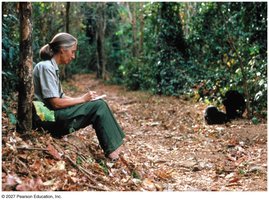
Theories in Science
In science, a theory is a broad explanation supported by a large body of evidence. Theories can generate new hypotheses and are subject to revision as new evidence emerges.
Theory: Broader than a hypothesis, supported by extensive evidence.
Can be modified or rejected based on new research.
Science, Technology, and Society
Science seeks to understand the natural world, while technology applies scientific knowledge for practical purposes. Both influence society and can raise ethical questions.
Science: Focuses on discovery and understanding.
Technology: Focuses on invention and application.
Both are interdependent and impact society.
