 Back
Chapter 1: Exploring Life – Foundations of Biology
Study Guide - Smart Notes
 Tailored notes based on your materials, expanded with key definitions, examples, and context.
Chapter 1: Exploring Life
Introduction to Biology
Biology is the scientific study of life, encompassing the structure, function, growth, origin, evolution, and distribution of living organisms. It seeks to understand the unifying themes and diversity of life on Earth.
Emergent Properties of Life
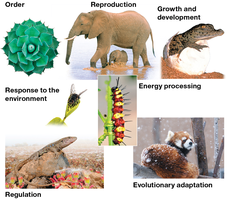
Living organisms exhibit a set of properties that distinguish them from nonliving matter. These emergent properties arise from the complex interactions of simpler components at each level of biological organization.
Order: Living things exhibit complex but ordered organization.
Reproduction: Organisms reproduce their own kind, ensuring the continuity of life.
Growth & Development: Inherited information carried by genes controls the pattern of growth and development.
Energy Processing: Organisms obtain and use energy to power their activities and chemical reactions.
Response to Environment: Living things respond to environmental stimuli.
Regulation (Homeostasis): Organisms regulate their internal environment to maintain conditions suitable for life.
Evolutionary Adaptation: Populations evolve over generations as individuals with traits best suited to their environment have greater reproductive success.
Levels of Biological Organization
Life is organized into a hierarchy, with each level building on the one below it. This hierarchy ranges from the biosphere to atoms.
Biosphere → Ecosystems → Communities → Populations → Organisms → Organs & Organ Systems → Tissues → Cells → Organelles → Molecules → Atoms
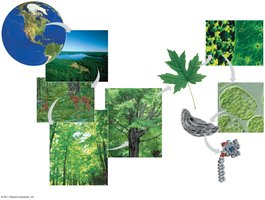
Emergent properties result from the arrangement and interaction of parts within a system, and are not present at the preceding level.
Properties of Life in Detail
Reproduction
Reproduction is the process by which organisms produce offspring, ensuring the continuation of their species. According to the principle of biogenesis, all life arises from pre-existing life.
Biogenesis: "All life arises from other life."
Individuals reproduce their own kind, passing genetic information to the next generation.
Growth & Development
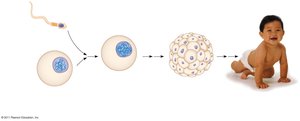
Growth and development are controlled by inherited DNA, which directs the formation of new cells and the overall pattern of development from a single cell to a multicellular organism.
Energy Processing
All living organisms require energy to maintain order, grow, and reproduce. Energy is acquired from the environment and transformed to power cellular processes.
Producers (e.g., plants) absorb light energy and convert it to chemical energy through photosynthesis.
Consumers obtain energy by eating other organisms.
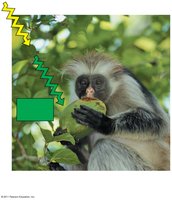
Response to Environment
Organisms detect and respond to changes in their environment, which is essential for survival and reproduction.
Regulation (Homeostasis)
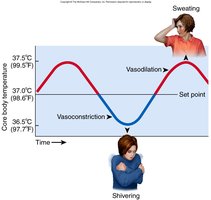
Homeostasis is the maintenance of a stable internal environment despite changes in external conditions. This is often achieved through negative feedback mechanisms.
Example: Human thermoregulation—when body temperature rises, blood vessels dilate and sweating occurs; when it falls, blood vessels constrict and shivering occurs.
Diversity and Unity of Life
Categorizing the Diversity of Life: The Domains
All life is classified into three domains based on cellular organization and genetics:
Bacteria
Archaea
Eukarya
The Kingdoms of Domain Eukarya
Domain Eukarya is divided into four major kingdoms:
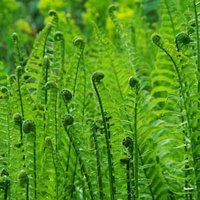
Kingdom Plantae: Multicellular, photosynthetic organisms.
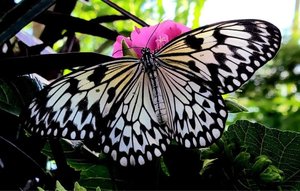
Kingdom Animalia: Multicellular organisms that ingest organic matter.
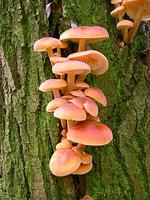
Kingdom Fungi: Mostly multicellular organisms that absorb nutrients from organic matter.
Kingdom Protista: A diverse group of eukaryotes that do not fit into the other three kingdoms.
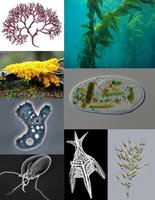
Taxonomy: Categorizing the Diversity of Life
Taxonomy is the science of naming, defining, and classifying organisms into groups based on shared characteristics. This hierarchical system reflects evolutionary relationships.
Unity & Diversity
All living organisms share a common ancestry, but have diversified over time through evolution. New species arise when populations become reproductively isolated, and species change over time due to natural selection and other evolutionary forces.
Variations in Energy Acquisition
The multicellular kingdoms differ in how they acquire energy:
Kingdom | Energy Acquisition | Example |
|---|---|---|
Plantae | Photosynthetic autotrophs (capture light energy, make food from CO2 & H2O) | Ferns, trees |
Fungi | Chemo-heterotrophs (absorb organic matter) | Mushrooms |
Animalia | Chemo-heterotrophs (ingest other organisms) | Lions, humans |
Information Flow & Evolution
Information Flow & Reproduction
Life is continuous through the transmission of genetic information (DNA) from one generation to the next. DNA encodes the instructions for the structure and function of living things.
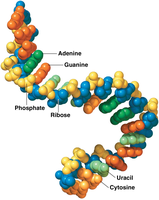
The central dogma of molecular biology describes the flow of genetic information:
DNA → RNA → Protein
Evolution: The Core Theme of Biology
Evolution explains both the unity and diversity of life. Populations change over time due to differential survival and reproduction (natural selection), leading to adaptation and speciation.
Natural Selection: Individuals with advantageous traits are more likely to survive and reproduce, passing those traits to the next generation.
Interactions and Energy Flow in Ecosystems
Energy Flow and Nutrient Cycling
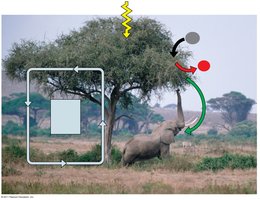
Energy flows through ecosystems, entering as sunlight and exiting as heat, while chemical nutrients cycle among living and nonliving components.
Producers convert solar energy to chemical energy.
Consumers obtain energy by eating producers or other consumers.
Decomposers recycle nutrients back to the environment.
Organisms Interact with Their Environment
All organisms interact with both living (biotic) and nonliving (abiotic) components of their environment. These interactions affect both the organisms and their environment.
Humans have greatly modified their environment through agriculture, domestication, and use of fossil fuels, impacting global climate.
The Process of Science
The Scientific Method
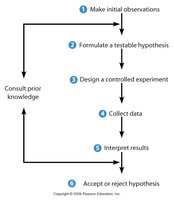
Science is an active, iterative process for understanding the natural world. The scientific method involves making observations, forming hypotheses, conducting experiments, and drawing conclusions.
Make initial observations
Formulate a testable hypothesis
Design a controlled experiment
Collect data
Interpret results
Accept or reject hypothesis
Hypotheses and Theories
A hypothesis is a tentative answer to a question, based on observations and must be testable and falsifiable. A theory is a broad explanation supported by a large body of evidence and has predictive power.
Example: The Theory of Plate Tectonics explains the distribution of species, earthquakes, and mountain ranges.
Controlled Experiments
Controlled experiments manipulate one variable (independent variable) while keeping others constant, allowing scientists to test hypotheses and draw conclusions about cause and effect.
Control group: No treatment, serves as a baseline.
Treatment group: Receives the experimental variable.
Results are analyzed to accept or reject the hypothesis.
Systems Biology and Model Organisms
Systems biology studies complex interactions within biological systems, often using model organisms to test specific variables in well-understood contexts.
Helps predict how changes in one part of a system affect the whole.
Discovery Science and Databases
Discovery science involves collecting and analyzing large amounts of data to find patterns and generate new hypotheses. Modern biology relies on databases in genomics, proteomics, and other fields for reproducible, peer-reviewed data.
From Hypothesis to Theory
After extensive testing and validation, a hypothesis may become a scientific theory, which must have broad application and withstand repeated challenges.
Summary
Biology explores the properties, diversity, and unity of life.
Life is organized hierarchically and exhibits emergent properties.
Evolution is the central theme explaining the diversity of life.
The scientific method is the foundation of biological inquiry.
“Nothing in biology makes sense, except in the light of evolution.” – T. Dobzhansky
