 Back
Chapter 1: Human Biology, Science, and Society – Study Notes
Study Guide - Smart Notes
 Tailored notes based on your materials, expanded with key definitions, examples, and context.
Introduction to Biology
What is Biology?
Biology is the scientific study of living things, derived from the Greek words bios (life) and logia (study). It examines organisms and their interactions with each other and their environment. The field encompasses a wide range of topics, from molecular biology to ecology, and is foundational to understanding life processes.
The Characteristics of Life
Defining Life
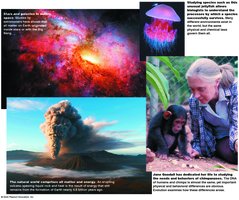
Living things possess several unique properties that distinguish them from nonliving matter. These characteristics are used to define what is considered 'alive' in biology.
Molecular Composition: Living organisms have a distinct molecular makeup, often involving complex organic molecules.
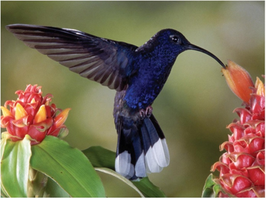
Energy and Raw Materials: All living things require energy (such as from food or sunlight) and raw materials for growth and maintenance.
Cellular Organization: Life is composed of cells, the basic unit of structure and function.
Homeostasis: The ability to maintain a stable internal environment despite external changes.
Response to Environment: Organisms can sense and respond to stimuli in their surroundings.
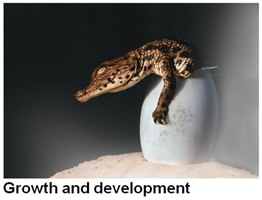
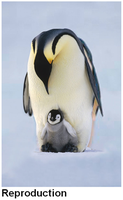
Growth and Reproduction: Living things grow and reproduce, passing genetic information to offspring.
Evolution: Populations of organisms evolve over time through genetic changes.
Classification of Living Things
Domains and Kingdoms
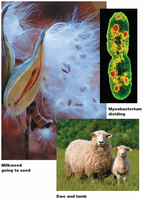
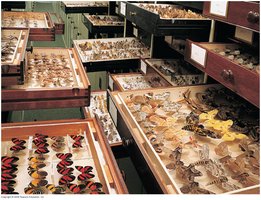
Living organisms are classified based on shared characteristics. The broadest classification divides life into three domains:
Domain Bacteria: Prokaryotic, unicellular organisms lacking a membrane-bound nucleus.
Domain Archaea: Prokaryotic, unicellular organisms, often found in extreme environments, also lacking a membrane-bound nucleus.
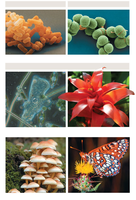
Domain Eukarya: Eukaryotic organisms with a membrane-bound nucleus, includes four kingdoms: Protista, Animalia, Fungi, and Plantae.
Kingdoms of Domain Eukarya
Protista: Unicellular and simple multicellular eukaryotes (e.g., protozoa, algae, slime molds).
Plantae: Multicellular, eukaryotic, photosynthetic organisms.
Animalia: Multicellular, eukaryotic, heterotrophic organisms.
Fungi: Eukaryotic decomposers (e.g., molds, yeasts, mushrooms).
Fundamental Criteria for Classification
Presence or Absence of a Nucleus: Prokaryotes (Bacteria and Archaea) lack a nucleus; Eukaryotes (Eukarya) have a nucleus.
Number of Cells: Organisms may be unicellular or multicellular.
Type of Metabolism: Includes autotrophic (self-feeding, e.g., photosynthesis) and heterotrophic (feeding on others).
Taxonomic Hierarchy
Organisms are classified into increasingly specific groups:
Species → Genus → Family → Order → Class → Phylum → Kingdom
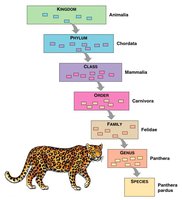
Classification of Humans (Homo sapiens)
Domain: Eukarya
Kingdom: Animalia
Phylum: Chordata
Class: Mammalia
Order: Primates
Family: Hominidae
Genus: Homo
Species: sapiens
Defining Features of Humans
Unique Human Traits
Bipedalism: Ability to stand upright and walk on two legs.
Large Brain: Relative to body size, humans have a large brain.
Complex Language: Capacity for both spoken and written language.
Opposable Thumbs: Ability to grasp objects between thumb and fingers.
Levels of Biological Organization
Hierarchy of Life
Biological organization is structured in a hierarchy, with new properties emerging at each level:
Atom → Molecule → Cell → Tissue → Organ → Organ System → Organism → Population → Community → Ecosystem → Biosphere
The Scientific Method
Science as a Process
Science is both a body of knowledge and a process for acquiring that knowledge. The scientific method is a systematic approach to investigating natural phenomena.
Steps in the Scientific Method
Observe and Generalize: Use inductive reasoning to make generalizations based on observations.
Formulate a Hypothesis: Develop a tentative, testable statement about the natural world.
Make a Testable Prediction: Use deductive reasoning to create specific, testable "if...then" statements.
Experiment or Observe: Test predictions through carefully planned experiments or observations.
Modify Hypothesis: Adjust the hypothesis and repeat steps as necessary based on results.
Variables in Experiments
Independent Variable: The factor manipulated by the scientist (e.g., dosage of a drug).
Dependent Variable: The factor measured or observed (e.g., blood pressure).
Controlled Experiments
Controlled experiments involve dividing subjects into experimental and control groups, equalizing all other variables, and measuring outcomes to test the effect of the independent variable.
Scientific Theory
A scientific theory is a powerful, broad explanation for a wide range of observations, supported by extensive testing and evidence.
Theories may be revised or refuted as new information emerges.
Examples: Evolution, Cell Theory.
Evaluating Scientific Information
Sources of Scientific Information
Reliable Sources: Peer-reviewed journals, science magazines, nonfiction books, reputable news websites.
Less Reliable Sources: Social media platforms, anecdotal evidence.
Critical Thinking in Science
Become a skeptic and question information.
Learn to read graphs and appreciate statistics.
Distinguish anecdotes from scientific evidence.
Separate facts from conclusions.
Understand the difference between correlation and causation.
The Role of Science in Society
Science and Society
Science improves technology and the human condition.
Science has limits and cannot answer all questions.
Science helps us make informed choices.
