 Back
Chapter 1: Humans in the World of Biology – Study Notes
Study Guide - Smart Notes
 Tailored notes based on your materials, expanded with key definitions, examples, and context.
Chapter 1: Humans in the World of Biology
Basic Characteristics of All Living Things
All living organisms share a set of fundamental characteristics that distinguish them from non-living matter. Understanding these traits is essential for studying biology.
Contain the molecules of life: All living things are composed of four major macromolecules: nucleic acids, proteins, carbohydrates, and lipids.
Composed of cells: The cell is the smallest unit of life, and all living things are made up of one or more cells. Cells arise from preexisting cells.
Grow and reproduce: Living things grow and are capable of reproduction, passing genetic information to the next generation.
Use energy and raw materials: Organisms obtain and use energy to carry out metabolism, which includes all chemical reactions within cells.
Respond to their environment: All living things can sense and react to changes in their surroundings.
Maintain homeostasis: Homeostasis is the maintenance of a relatively constant and self-correcting internal environment.
Have adaptive traits: Organisms possess traits that enhance survival and reproduction in their environment.
Populations evolve: Over generations, populations of organisms adapt and evolve in response to environmental changes.
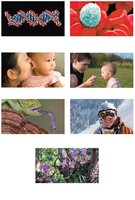
Example: Humans, plants, and bacteria all share these characteristics, though they may express them differently.
Evolution: A Unifying Theme in Biology
Evolution explains the diversity of life and the relationships among organisms. Classification systems reflect evolutionary relationships.
Organization of living organisms: Organisms with the greatest similarities are grouped together.
Three domains of life:
Domain Bacteria: Unicellular, prokaryotic organisms.
Domain Archaea: Unicellular, prokaryotic organisms, often found in extreme environments.
Domain Eukarya: Eukaryotic cells with a membrane-bound nucleus; includes protists, fungi, plants, and animals.
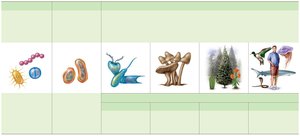
Example: Humans belong to Domain Eukarya, Kingdom Animalia.
Levels of Biological Organization
Biological systems are organized into a hierarchy, from the smallest chemical units to the entire biosphere.
Atom: The smallest unit of matter that cannot be broken down further.
Molecule: Chemical components of cells, formed by atoms bonded together.
Organelle: Specialized structures within cells that perform specific functions.
Cell: The basic unit of life.
Tissue: Groups of similar cells performing the same function.
Organ: Structures composed of two or more tissues working together.
Organ system: Groups of organs that perform a common function.
Individual: A single organism.
Population: Individuals of the same species living in a common area.
Community: Populations of different species interacting in a shared environment.
Ecosystem: A community and its physical environment.
Biosphere: All ecosystems on Earth where life exists.
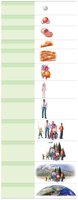
Example: The human body is an individual composed of organ systems, which are made of organs, tissues, cells, and so on.
The Scientific Method
The scientific method is a systematic approach to investigating questions and acquiring knowledge in biology.
Observation: Make careful observations and ask questions.
Hypothesis: Formulate a testable explanation for the observations.
Prediction: State what will happen if the hypothesis is correct (often in "if-then" format).
Experiment: Design and conduct experiments with control and experimental groups. The independent variable is the factor being tested.
Conclusion: Analyze results to determine if they support the hypothesis. Consider statistical significance.
Theory: A broad explanation supported by repeated experiments.
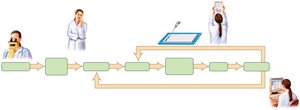
Example: Testing whether eating oatmeal lowers cholesterol by comparing an experimental group (eats oatmeal) to a control group (eats Farina).
Types of Reasoning in Science
Inductive reasoning: Accumulating facts through observation to develop hypotheses.
Deductive reasoning: Making general statements and drawing specific conclusions, often using "if-then" logic.
Clinical Trials and Experimental Design
Experiments involving humans and medicines follow strict protocols to ensure safety and reliability.
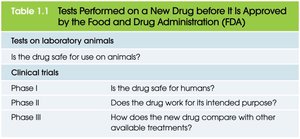
Preclinical testing: New drugs are first tested on laboratory animals.
Clinical trials: Human studies are conducted in phases, with control groups receiving a placebo.
Double-blind study: Neither researchers nor participants know who receives the treatment, reducing bias.
Epidemiological studies: Examine patterns in large populations.
Phase | Purpose |
|---|---|
Animal testing | Is the drug safe for use on animals? |
Phase I | Is the drug safe for humans? |
Phase II | Does the drug work for its intended purpose? |
Phase III | How does the new drug compare with other available treatments? |
Critical Thinking to Evaluate Scientific Claims
Critical thinking is essential for analyzing scientific information and making informed decisions.
Ask questions: Evaluate the source and reliability of information.
Peer review: Scientists publish in peer-reviewed journals for validation.
Be skeptical: Not all information online is accurate; check sources and evidence.
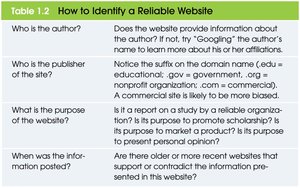
Question | How to Evaluate |
|---|---|
Who is the author? | Check for author information and credentials. |
Who is the publisher? | Look for reputable domains (.edu, .gov, .org). |
What is the purpose? | Determine if the site promotes scholarship, products, or opinions. |
When was it posted? | Check for recent and corroborating information. |
Summary
List the characteristics of life.
Describe evolutionary relationships and classification systems.
Define population, community, ecosystem, and biosphere.
Design experiments using the scientific method.
