 Back
Chapter 1: Humans in the World of Biology – Study Notes
Study Guide - Smart Notes
 Tailored notes based on your materials, expanded with key definitions, examples, and context.
Chapter 1: Humans in the World of Biology
Basic Characteristics of All Living Things
All living organisms share a set of fundamental characteristics that distinguish them from non-living matter. Understanding these traits is essential for studying biology.
Contain the molecules of life: All living things are composed of four major macromolecules: nucleic acids, proteins, carbohydrates, and lipids.
Composed of cells: The cell is the smallest unit of life. All cells arise from preexisting cells.
Growth and reproduction: Living things grow and are capable of reproduction, passing genetic information to the next generation.
Use energy and raw materials: Organisms carry out metabolism, which includes all chemical reactions within their cells.
Respond to their environment: All living things can sense and react to changes in their surroundings.
Maintain homeostasis: Homeostasis is the maintenance of a relatively constant internal environment.
Have adaptive traits: These traits enhance survival and reproductive success in a given environment.
Populations evolve: Over generations, populations adapt and evolve in response to environmental pressures.
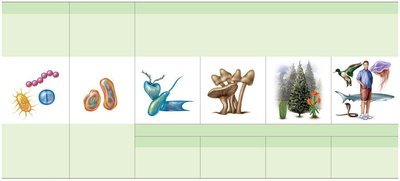
Evolution: A Unifying Theme in Biology
Evolution explains both the diversity and unity of life. Classification systems reflect evolutionary relationships among organisms.
Classification: Organisms with the greatest similarities are grouped together. The current system recognizes three domains:
Domain Bacteria: Unicellular, prokaryotic organisms.
Domain Archaea: Unicellular, prokaryotic organisms, often found in extreme environments.
Domain Eukarya: Eukaryotic cells with a membrane-bound nucleus and internal compartments. Includes kingdoms: Protists, Fungi, Plants, and Animals.
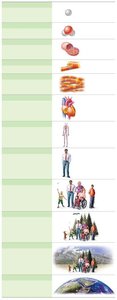
Levels of Biological Organization
Biological systems are organized into a hierarchy, from the simplest chemical level to the most complex ecological systems.
Atom: The smallest unit of matter that cannot be broken down further.
Molecule: Chemical components of cells.
Organelle: Specialized structures within cells that perform specific functions.
Cell: The basic unit of life.
Tissue: Groups of similar cells performing the same function.
Organ: Structures composed of two or more tissues working together.
Organ system: Two or more organs working together to perform a function.
Individual: A single organism made of organ systems.
Population: Individuals of the same species living in a common area.
Community: Populations of different species interacting in a common area.
Ecosystem: A community and its physical environment.
Biosphere: All ecosystems on Earth where life is found.
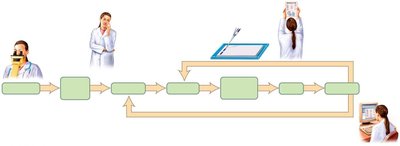
The Scientific Method
The scientific method is a systematic, logical approach to answering questions and solving problems in science.
Observation: Make careful observations and ask questions.
Hypothesis: Formulate a testable explanation for the observations.
Prediction: State what you expect to happen if the hypothesis is correct (often in "if-then" format).
Experiment: Design and conduct an experiment with a control group and an experimental group. The independent variable is the factor being tested.
Conclusion: Analyze results to determine if they support the hypothesis. Consider statistical significance.
Revision: If results do not support the hypothesis, revise it and test again.
Theory: A well-supported explanation for a broad range of observations, based on repeated experimentation.
Example: Does Eating Oatmeal Lower Cholesterol?
Question: Does eating oatmeal lower cholesterol?
Hypothesis: Eating oatmeal lowers blood cholesterol.
Prediction: If oatmeal consumption lowers cholesterol, then a person’s cholesterol level will decrease after eating oatmeal daily for 6 weeks.
Experiment: Experimental group eats 1 oz oatmeal/day; control group eats 1 oz Farina/day.
Analysis: Compare cholesterol levels between groups over time.
Types of Reasoning in Science
Inductive reasoning: Accumulating facts through observation to draw general conclusions or develop hypotheses.
Deductive reasoning: Making specific predictions based on general statements (often using "if-then" logic).
Clinical Trials and Experimental Design
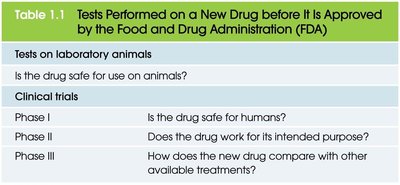
Preclinical testing: New drugs are first tested on laboratory animals to assess safety.
Clinical trials: Human studies are conducted in phases:
Phase | Purpose |
|---|---|
Phase I | Is the drug safe for humans? |
Phase II | Does the drug work for its intended purpose? |
Phase III | How does the new drug compare with other available treatments? |
Placebo: An inactive substance used to reduce bias in experiments.
Double-blind study: Neither researchers nor participants know who receives the treatment, minimizing bias.
Epidemiological studies: Examine patterns in large populations to identify correlations.
Critical Thinking to Evaluate Scientific Claims
Critical thinking is essential for analyzing scientific information and making informed decisions.
Ask questions: Always question the source and validity of information.
Evaluate data: Assess the quality and reliability of evidence.
Peer review: Scientific findings are published in peer-reviewed journals for validation by other experts.
Online information: Not all online sources are accurate or reliable. Remain skeptical and evaluate the credibility of sources.
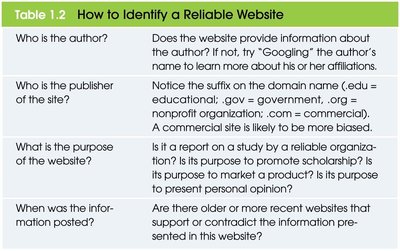
Checklist for evaluating websites:
Question | What to look for |
|---|---|
Who is the author? | Does the site provide information about the author? Search for their credentials. |
Who is the publisher? | Check the domain suffix (.edu, .gov, .org, .com) for reliability. |
What is the purpose? | Is the site for scholarship, product promotion, or opinion? |
When was it posted? | Are there more recent sources that support or contradict the information? |
Summary: Key Learning Objectives
List the characteristics of life.
Describe how evolutionary relationships are reflected in classification systems.
Define and give examples of population, community, ecosystem, and biosphere.
Design an experiment using the scientific method, including control and experimental groups.
