 Back
Chapter 1: Introduction – Evolution and the Foundations of Biology (Campbell Biology in Focus, 3rd Edition)
Study Guide - Smart Notes
 Tailored notes based on your materials, expanded with key definitions, examples, and context.
Introduction: Evolution and the Foundations of Biology
Overview: Inquiring About Life
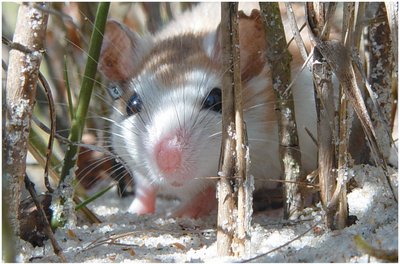
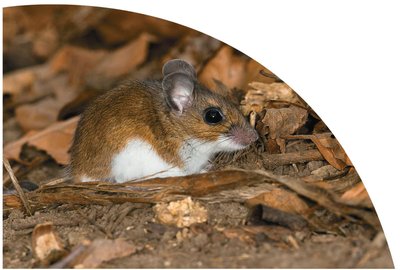
Biology is the scientific study of life, focusing on the diversity and unity of living organisms. Adaptations, such as the coloration of beach and inland mice, are the result of evolutionary processes that enable organisms to survive in their environments. Evolution is the central, unifying principle of biology, explaining both the similarities and differences among living things.
Adaptation: Traits that enhance an organism's ability to survive and reproduce in a particular environment.
Evolution: The process of change in populations of organisms over generations, leading to the diversity of life.
Biological Inquiry: Biologists ask questions about development, behavior, and interactions among organisms.
Concept 1.1: The Study of Life Reveals Unifying Themes
Unifying Themes in Biology
To organize the vast information in biology, several unifying themes are emphasized:
Organization
Information
Energy and Matter
Interactions
Evolution
Levels of Biological Organization
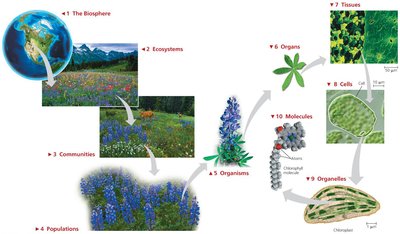
Life is structured in a hierarchy, from molecules to the biosphere. Each level exhibits emergent properties, which arise from the arrangement and interaction of parts within a system.
Reductionism: Breaking down complex systems into simpler components for study.
Systems Biology: Analyzing interactions among parts of a biological system.
Structure and Function
There is a close relationship between structure and function at all levels of biological organization. Understanding the structure of a biological component provides insight into its function.
The Cell: Basic Unit of Life
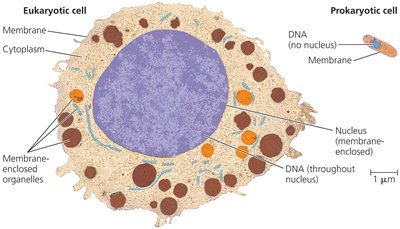
The cell is the fundamental unit of structure and function in living organisms. There are two main types of cells:
Prokaryotic Cells: Lack a nucleus and membrane-bound organelles; generally smaller (e.g., Bacteria, Archaea).
Eukaryotic Cells: Have a nucleus and membrane-bound organelles; generally larger (e.g., plants, animals, fungi, protists).
Genetic Information and Gene Expression
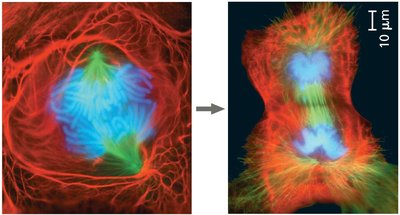
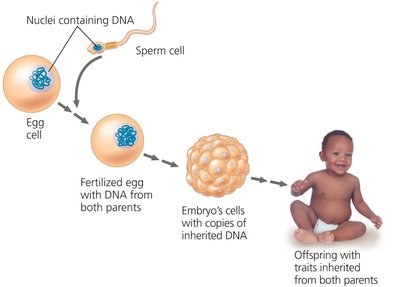
Genetic information is stored in DNA, which is organized into chromosomes. Genes are units of inheritance that direct the development and functioning of organisms by encoding proteins.
Gene Expression: The process by which information from a gene is used to synthesize a functional product, typically a protein.
DNA Structure and Function
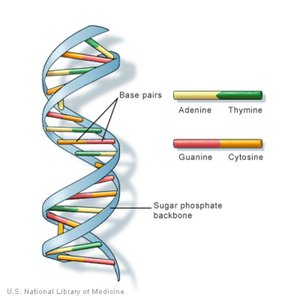
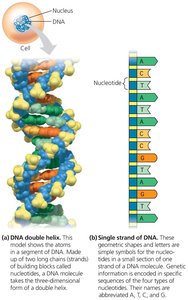
DNA is a double helix composed of four types of nucleotides: adenine (A), thymine (T), cytosine (C), and guanine (G). The sequence of these nucleotides encodes genetic information.
Gene Expression Pathway
Genes control protein production indirectly through the intermediary molecule RNA. The process involves transcription (DNA to RNA) and translation (RNA to protein).
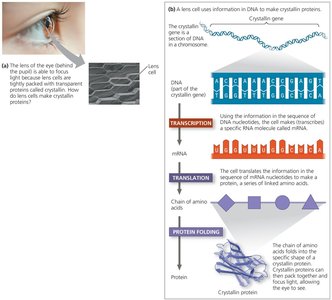
Genomics and Proteomics
Genomics is the study of whole sets of genes and their interactions, while proteomics focuses on the entire set of proteins produced by an organism. High-throughput technology and bioinformatics are essential tools for analyzing large biological datasets.
Energy and Matter in Biological Systems
Life depends on the transfer and transformation of energy and matter. Energy flows through ecosystems, entering as sunlight and exiting as heat, while chemical elements are recycled.
Producers: Organisms (e.g., plants) that convert solar energy into chemical energy.
Consumers: Organisms that obtain energy by eating other organisms.
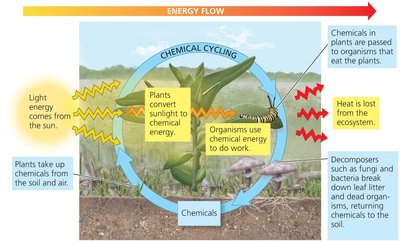
Interactions in Biological Systems
Organisms interact with each other and with their physical environment. These interactions can be mutually beneficial, competitive, or harmful, and they shape the structure and dynamics of populations, communities, and ecosystems.
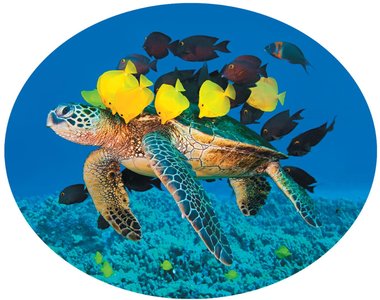
Impact of Climate Change
Human activities have increased atmospheric CO2, raising global temperatures and causing climate change. This has significant effects on organisms and ecosystems, leading to shrinking populations and altered habitats.

Concept 1.2: Evolution Accounts for the Unity and Diversity of Life
Evolution as the Core Theme
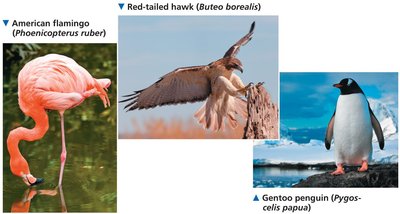
Evolution explains both the unity and diversity of life. Similar traits among species are due to common ancestry, while differences arise from evolutionary changes after divergence.
Classification of Life
Life is classified into three domains based on genetic and cellular differences:
Bacteria: Prokaryotic, diverse, and widespread.
Archaea: Prokaryotic, often found in extreme environments.
Eukarya: Eukaryotic, includes kingdoms Plantae, Fungi, and Animalia.
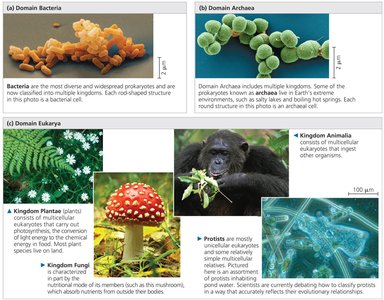
Unity in Diversity
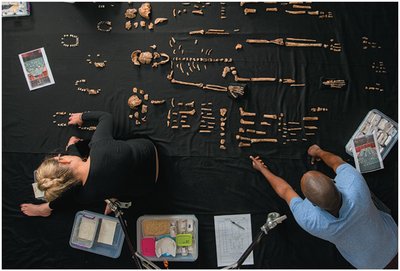
Despite the diversity of life, all organisms share fundamental characteristics, such as the genetic code. Fossil evidence documents the evolutionary history of life.
Charles Darwin and Natural Selection
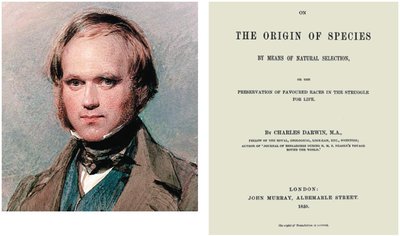
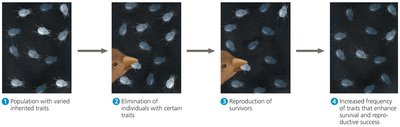
Charles Darwin's theory of natural selection explains how evolution leads to adaptation and speciation. Key observations include variation in traits, overproduction of offspring, and differential survival and reproduction.
Natural Selection: The process by which individuals with advantageous traits survive and reproduce more successfully, leading to the accumulation of those traits in the population.
The Tree of Life
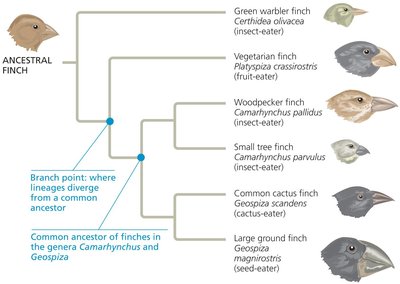
Evolutionary relationships among species are depicted as branching trees, illustrating descent with modification from common ancestors. For example, the finches of the Galápagos Islands evolved from a common ancestor through adaptive radiation.
Concept 1.3: Scientific Inquiry and Hypothesis Testing
The Scientific Process
Science is a systematic approach to understanding the natural world through observation, hypothesis formation, and experimentation. Inquiry involves searching for explanations of natural phenomena.
Data Collection and Analysis
Qualitative Data: Descriptive observations (e.g., animal behavior).
Quantitative Data: Numerical measurements, often organized in tables or graphs.
Reasoning in Science
Inductive Reasoning: Drawing general conclusions from specific observations.
Deductive Reasoning: Making specific predictions based on general premises.
Hypotheses and Experiments
A hypothesis is a testable explanation for an observation. Experiments are designed to test hypotheses under controlled conditions. Variables are manipulated to observe their effects, and control groups are used for comparison.
Independent Variable: The factor manipulated by the researcher.
Dependent Variable: The factor measured in response to changes in the independent variable.
Theories in Science
A scientific theory is broader than a hypothesis, supported by a large body of evidence, and can generate new hypotheses. Theories are central to scientific understanding and progress.
Science as a Social Process
Science is collaborative and builds on previous discoveries. Scientists work in teams, share results, and rely on peer review. Technology and science are interdependent, with advances in one often driving progress in the other.
