 Back
Chapter 1: Learning About Life – Foundations of Biology
Study Guide - Smart Notes
 Tailored notes based on your materials, expanded with key definitions, examples, and context.
Introduction to Biology
What is Biology?
Biology is the scientific study of life. It seeks to understand the structure, function, growth, origin, evolution, and distribution of living organisms. Curiosity about the natural world and living things is a fundamental human trait, driving scientific inquiry and discovery.
Health Literacy: Biology helps individuals make informed decisions about health, nutrition, and disease prevention.
Environmental Awareness: Understanding biodiversity, climate change, and sustainability is rooted in biology.
Scientific Literacy: Biology enables critical evaluation of scientific information in the media.
Career Readiness: Biological knowledge is valuable in many professions, including healthcare, education, and research.
Ethical Decision-Making: Biology informs debates on genetic engineering, vaccines, and other societal issues.
Critical Thinking: The scientific method fosters reasoning and problem-solving skills.

The Scientific Method and Process of Science
Studying Scientifically
Science is a systematic way of learning about the natural world through observation and experimentation. The process is objective and evidence-based, not reliant on opinions or beliefs.
Observation: Careful examination of natural events.
Question: Asking how or why something happens.
Hypothesis: A testable explanation for an observation.
Experimentation: Testing hypotheses through controlled experiments or further observation.
Data Collection: Gathering and analyzing evidence objectively.
Conclusion: Drawing conclusions based on evidence.
Repetition: Repeating experiments to verify results.
Example of the Scientific Process
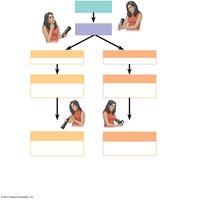
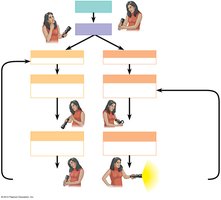
Consider a flashlight that does not work:
Observation: The flashlight does not turn on.
Hypothesis 1: The batteries are dead.
Hypothesis 2: The bulb is burned out.
Prediction: If the batteries are replaced and the flashlight works, the hypothesis is supported.
Experiment: Replace batteries or bulb and observe the result.
Communication and Peer Review
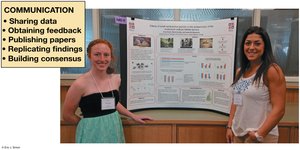
Scientists share their findings through meetings, seminars, and publications. Before publication, studies undergo peer review, where other experts evaluate the work for accuracy and reliability. This process ensures the quality and trustworthiness of scientific knowledge.
Hypotheses, Theories, and Facts
Definitions
Hypothesis: A specific, testable explanation for an observation.
Theory: A broad explanation supported by extensive evidence, capable of generating new hypotheses. Theories can change if new evidence arises.
Fact: A statement shown to be true based on current evidence; can be tested and verified.
Science aims to use facts and evidence to understand, explain, and predict natural phenomena.
Controlled Experiments
Key Terms
Variable: The factor that is changed or tested in an experiment.
Controlled Experiment: An experiment with two groups that differ by only one variable.
Control Group: Does not receive the treatment; serves as a baseline.
Experimental Group: Receives the treatment being tested.
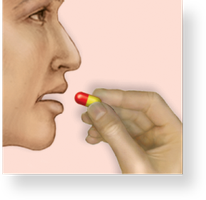
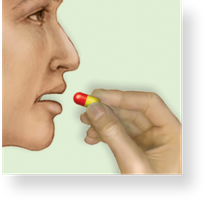
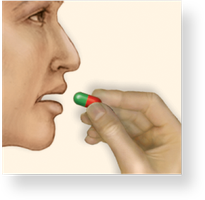
Placebo: A fake treatment used to control for psychological effects.
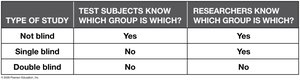
Double-Blind Experiment: Neither participants nor researchers know who receives the treatment, reducing bias.
Example: Testing Antibiotics for Ulcer Treatment
Control group receives placebo.
Experimental Group A receives Antibiotic A.
Experimental Group B receives Antibiotic B.
Assignment to groups is random to reduce bias.
Results are measured objectively (e.g., by endoscopy).

Types of Blind Studies
Type of Study | Test Subjects Know Which Group? | Researchers Know Which Group? |
|---|---|---|
Not blind | Yes | Yes |
Single blind | No | Yes |
Double blind | No | No |
Evaluating Scientific Claims
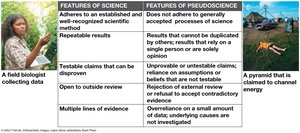
Pseudoscience vs. Science
Pseudoscience: Claims that appear scientific but do not follow the scientific method (e.g., fad diets, horoscopes).
Anecdotal Evidence: Personal stories are not reliable scientific evidence.
Peer Review: Reliable science is published in peer-reviewed journals.
Features of Science | Features of Pseudoscience |
|---|---|
Adheres to established scientific method | Does not adhere to accepted processes |
Repeatable results | Results not reproducible by others |
Testable claims | Unprovable or untestable claims |
Open to outside review | Rejection of external review |
Multiple lines of evidence | Overreliance on limited evidence |
The Properties of Life
Eight Properties Shared by All Living Things
Order: Organized structure.
Cells: Composed of one or more cells.
Growth and Development: Change over time.
Energy Processing: Obtain and use energy.
Regulation: Maintain stable internal conditions (homeostasis).
Response to Environment: React to changes.
Reproduction: Produce offspring.
Evolution: Populations change over generations.
All eight properties must be present for something to be considered alive.
Major Themes in Biology
Five Unifying Themes
Structure and Function: The form of a biological structure is closely related to its function.
Information Flow: The transfer and use of information (e.g., genetic information in DNA).
Energy and Matter Pathways: Life depends on the transformation of energy and cycling of matter.
Interactions within Biological Systems: Organisms interact with each other and their environment, leading to emergent properties.
Evolution: The process that explains the unity and diversity of life.
Structure and Function
Biological structures are adapted to their functions. For example, the shape of red blood cells allows them to efficiently transport oxygen.
Information Flow
Genetic information is stored in DNA and guides the development and functioning of organisms. Information flow is essential for processes such as homeostasis and inheritance.
Energy and Matter Pathways
All living things require energy to perform work. Most energy on Earth originates from the sun and is captured by producers through photosynthesis. Energy flows through ecosystems, while matter is recycled.
Interactions and Emergent Properties
Complex properties arise from the interactions of simpler components. For example, individual neurons cannot think, but together they produce consciousness.
Evolution
Evolution explains both the similarities and differences among living organisms. It is driven by natural selection, where inherited traits that enhance survival and reproduction become more common in a population over generations.
Natural Selection: The process by which advantageous traits increase in frequency.
Adaptation: Inherited traits that improve survival and reproduction.
Example: Antibiotic resistance in bacteria is a result of natural selection.
Levels of Biological Organization
Life is organized into hierarchical levels:
Molecules & Atoms
Cells
Tissues
Organs
Organisms
Ecosystems
Biosphere
Changes at one level can affect other levels.
Summary Table: Key Concepts
Concept | Definition | Example |
|---|---|---|
Hypothesis | Testable explanation for an observation | "Dead batteries cause flashlight failure" |
Theory | Broad explanation supported by evidence | Cell theory, theory of evolution |
Fact | Statement shown to be true by evidence | Water boils at 100°C at sea level |
Control Group | Group not receiving treatment | Plants with no fertilizer |
Experimental Group | Group receiving treatment | Plants with fertilizer |
Additional info: This chapter provides the foundation for understanding the scientific method, the nature of scientific inquiry, and the core themes that will be explored throughout a General Biology course.
