 Back
BackChapter 1: Learning About Life – The Process and Themes of Biology
Study Guide - Smart Notes
 Tailored notes based on your materials, expanded with key definitions, examples, and context.
Introduction to Biology
What is Biology?
Biology is the scientific study of life. It seeks to understand the structure, function, growth, origin, evolution, and distribution of living organisms. The discipline is grounded in the scientific method, which distinguishes it from other ways of interpreting the world.
The Process of Science
Overview of Scientific Inquiry
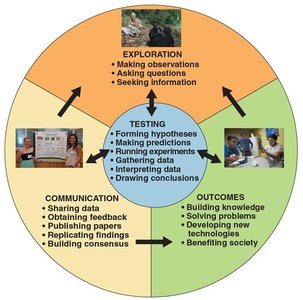
Science is an approach to understanding the natural world based on inquiry—searching for information, evidence, explanations, and answers to specific questions. Scientists focus on phenomena that can be observed and measured.
Exploration: Making observations, asking questions, and seeking information.
Testing: Forming hypotheses, making predictions, running experiments, gathering and interpreting data, and drawing conclusions.
Communication: Sharing data, obtaining feedback, publishing papers, replicating findings, and building consensus.
Outcomes: Building knowledge, solving problems, developing new technologies, and benefiting society.
Exploration and Hypothesis Formation
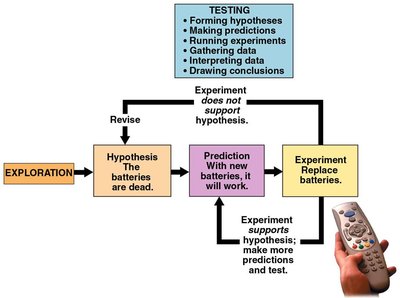
Scientific inquiry often begins with exploration—observing the world and asking questions. These questions lead to the formation of a hypothesis, a proposed explanation for a set of observations. A valid hypothesis must be testable and falsifiable.
Testing Hypotheses
Testing involves making predictions and conducting experiments or further observations. The results will either support or not support the hypothesis, leading to further refinement or new hypotheses.
Communication and Peer Review
Scientists communicate their findings through scientific literature, seminars, and publications. Before publication, research undergoes peer review by impartial experts, ensuring quality and reliability.
Hypotheses, Theories, and Facts
Theory: A comprehensive, well-substantiated explanation, broader than a hypothesis, supported by a large body of evidence. Theories can be refined or abandoned if new evidence arises.
Fact: Information considered objectively true based on current evidence. Facts can be verified and are distinct from opinions.
Controlled Experiments
Controlled experiments compare two or more groups that differ only in one variable. Key terms include:
Variables: Factors that change in an experiment.
Control group: Lacks or does not receive the specific factor being tested.
Experimental group: Receives the specific factor being tested.
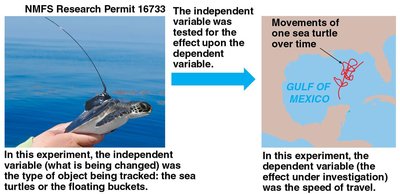
Independent variable: The factor manipulated by the researcher.
Dependent variable: The response or effect measured in the experiment.
Example: Do Baby Turtles Swim?
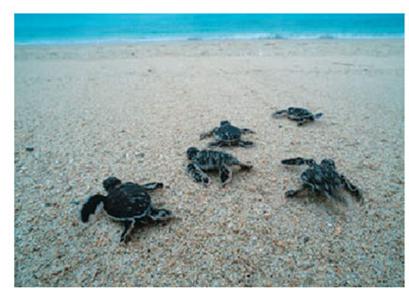
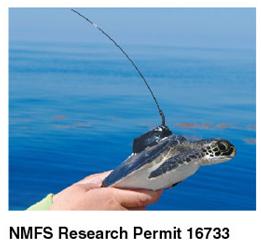
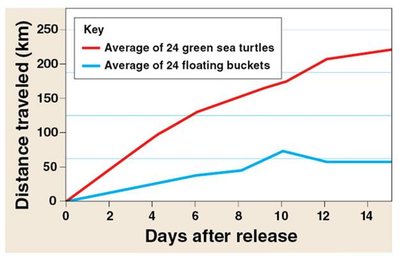
Researchers attached satellite trackers to green sea turtles to determine if they swim or drift in ocean currents. The turtles moved faster and along different tracks than drifting buckets, indicating active swimming.
Blind and Double-Blind Studies
To reduce bias, experiments may use placebos and blinding:
Type of Study | Test Subjects Know? | Researchers Know? |
|---|---|---|
Not blind | Yes | Yes |
Single blind | No | Yes |
Double blind | No | No |
The gold standard for medical trials is a double-blind, placebo-controlled study.
Evaluating Scientific Claims
Science vs. Pseudoscience
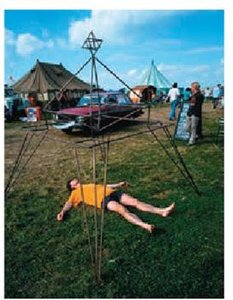
Pseudoscience is any field falsely presented as scientific. It often relies on anecdotal evidence, untestable claims, and lacks peer review. Recognizing pseudoscience is crucial for critical thinking.
Features of Science | Features of Pseudoscience |
|---|---|
Adheres to scientific method | Does not adhere to accepted processes |
Repeatable results | Results cannot be duplicated; rely on opinion |
Testable, disprovable claims | Unprovable, untestable claims |
Open to outside review | Rejects external review |
Multiple lines of evidence | Overreliance on limited data |
Source Reliability Checklist
Is the information current?
Is the source primary?
Are the authors qualified and identifiable?
Are references cited?
Was the information peer reviewed?
Is the information unbiased?

The Properties of Life
Characteristics of Living Things
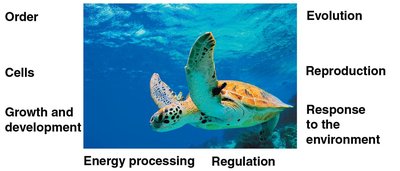
Life is generally defined by the simultaneous presence of several properties:
Order
Cells
Growth and development
Energy processing
Regulation
Response to the environment
Reproduction
Evolution
Major Themes in Biology
1. The Relationship of Structure to Function
Biological structures are closely related to their functions at all levels, from molecules to organisms. For example, the branched structure of lungs increases surface area for gas exchange, and the shape of red blood cells facilitates oxygen transport.
2. Information Flow
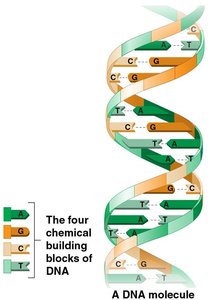
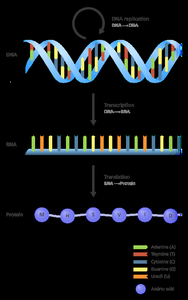
Life depends on the flow of information, such as genetic instructions in DNA. Genes are hereditary units composed of DNA sequences, which are passed from one generation to the next. The four chemical building blocks of DNA are adenine (A), guanine (G), cytosine (C), and thymine (T).
3. Pathways That Transform Energy and Matter
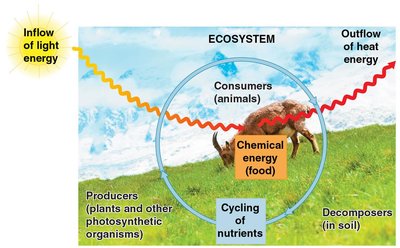
All living things require energy for movement, growth, and reproduction. Most ecosystems are powered by sunlight, with energy flowing through the system and eventually lost as heat. Nutrients cycle within the ecosystem.
4. Interactions Within Biological Systems
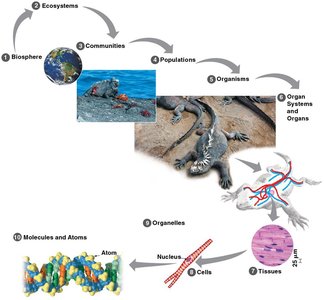
Life is organized into a hierarchy, from molecules and cells to the biosphere. At each level, new properties emerge due to the arrangement and interactions of parts. These are called emergent properties.
5. Evolution
Evolution explains both the unity and diversity of life. Evidence includes similarities among living and fossil organisms, common cellular processes, and the universal structure of DNA. Evolution is the process by which life changes over time, leading to the diversity of organisms observed today.
