 Back
BackChapter 1: Scope of Microbiology – Foundations, Tools, and Applications
Study Guide - Smart Notes
 Tailored notes based on your materials, expanded with key definitions, examples, and context.
Scope of Microbiology
Introduction to Microbiology
Microbiology is the scientific study of microorganisms, which are organisms too small to be seen with the naked eye. This field encompasses a wide range of organisms, including bacteria, viruses, fungi, protozoa, and algae. The development of microbiology as a science began with the invention of the microscope, which allowed scientists to visualize and study these previously unseen forms of life.
Microorganisms include bacteria, viruses, fungi, protozoa, and algae.
Microbiology employs various techniques for visualization, identification, and functional analysis of microbes.
The science originated with the invention of the microscope in the late 16th and early 17th centuries.
Origins of Microbiology and Microscopy
Microscopy and Its Founding Fathers
The development of microscopy was pivotal for the birth of microbiology. Early pioneers such as Zaccharias and Hans Janssen, Robert Hooke, and Antony van Leeuwenhoek made significant contributions to the design and use of microscopes.
Zaccharias and Hans Janssen (circa 1590): Invented the first compound microscope, consisting of a simple tube with lenses at each end.
Robert Hooke (1635–1703): Improved the compound microscope and published Micrographia, containing detailed drawings of microscopic observations.
Antony van Leeuwenhoek (1632–1723): Known as the father of microscopy and microbiology, he observed and described "animalcules" (protozoans and bacteria).
Significant Events in Microbiology
Throughout history, key discoveries have shaped the field of microbiology, from the invention of microscopes to the development of vaccines and the understanding of infectious diseases.
Name | Year | Event |
|---|---|---|
Zaccharias and Hans Janssen | 1590 | Invention of the first compound microscope |
Robert Hooke | 1665 | Explores living and nonliving matter with a compound microscope |
Antony van Leeuwenhoek | 1676 | Describes bacteria and protozoan "animalcules" with simple microscopes |
Edward Jenner | 1796 | Introduces smallpox vaccination |
Louis Pasteur | 1861 | Completes experiments that show without doubt that spontaneous generation does not occur |
Robert Koch | 1876 | Develops anthrax as a model for germ theory |
Alexander Fleming | 1929 | Discovers penicillin |
Craig Venter, Hamilton Smith, Claire Fraser | 1995 | Produces the first complete genome sequence of a microorganism |
Types of Microscopes
Light Microscopes
Light microscopes use visible light and optical lenses to magnify specimens. They can be simple or compound, with the final magnification being the product of the ocular and objective lenses. Specialized types include dissection, bright-field, dark-field, and phase-contrast microscopes.
Compound Light Microscope: Uses multiple lenses for higher magnification.
Dissection/Stereomicroscope: Low power, for observing larger objects in three dimensions.
Bright-field Microscope: Bright background, specimen often stained.
Dark-field Microscope: Bright specimen on a dark background, useful for live, unstained samples.
Phase-Contrast Microscope: Enhances contrast in transparent specimens, ideal for observing living cells.
Fluorescence microscopes use ultraviolet light to excite fluorescent stains, allowing visualization of specific structures or molecules.
Confocal microscopes use lasers to produce sharp, three-dimensional images by focusing on different planes within a specimen.
Electron Microscopes
Electron microscopes use beams of electrons for much higher resolution than light microscopes. Two main types are:
Transmission Electron Microscope (TEM): Electrons pass through thin sections, revealing internal structures in two dimensions.
Scanning Electron Microscope (SEM): Electrons scan the surface, producing detailed three-dimensional images.
Atomic Force Microscopes
Atomic force microscopes (AFM) and other scanning probe microscopes use a physical probe to scan surfaces at the atomic level, generating topographic images without the need for metallic coatings.
Theory of Spontaneous Generation and Pasteurization
Spontaneous Generation
The theory of spontaneous generation (abiogenesis) proposed that life could arise from nonliving matter. This idea was challenged and ultimately disproven through experiments by Redi, Spallanzani, and Pasteur.
Francesco Redi: Showed that maggots come from fly eggs, not spontaneously from meat.
Lazzaro Spallanzani: Demonstrated that sealed, boiled broth did not develop microorganisms.
Louis Pasteur: Used swan-necked flasks to show that microorganisms do not arise spontaneously but come from the environment.
Pasteurization
Pasteurization is a process developed by Louis Pasteur to reduce the number of viable microorganisms in food and beverages, such as wine, by heating them to a specific temperature (e.g., 55°C) without sterilizing the product.
Germ Theory of Disease and Koch’s Postulates
Germ Theory of Disease
The germ theory of disease states that specific microorganisms cause specific diseases. This concept was developed through the work of scientists such as Pasteur, Semmelweis, Lister, and Koch.
Ignaz Semmelweis: Linked hand hygiene to reduced maternity infections.
Joseph Lister: Introduced aseptic techniques in surgery.
Robert Koch: Established experimental criteria (Koch’s postulates) to link specific microbes to specific diseases.
Koch’s Postulates
The microbe must be present in every case of the disease and absent from healthy organisms.
The microbe must be isolated and grown in pure culture.
The cultured microbe must cause the same disease when introduced into a healthy host.
The same microbe must be re-isolated from the experimentally infected host.
Geological Origin and Evolution
Microorganisms are among the earliest forms of life on Earth, with prokaryotes dating back 3.5 to 4 billion years and eukaryotes appearing around 2.2 billion years ago. Phylogeny, based on genetic sequencing, reveals three domains of life: Bacteria, Archaea, and Eukarya.
Classification of Microorganisms
Prokaryotes vs. Eukaryotes
Prokaryotes: Lack membrane-bound organelles; include Bacteria and Archaea.
Eukaryotes: Possess membrane-bound organelles; include algae, fungi, protozoans, plants, and animals.
Other: Viruses (acellular), viroids (plant pathogens), and prions (infectious proteins).
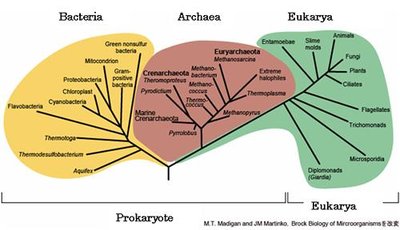
Taxonomy
Taxonomy is the science of classifying organisms into hierarchical groups (taxa) based on similarities. The main ranks are domain, kingdom, phylum, class, order, family, genus, and species. Binomial nomenclature assigns each organism a two-part scientific name (Genus species), e.g., Escherichia coli.
Microorganisms in Health and Disease
Biofilms
Biofilms are communities of microorganisms encased in a self-produced matrix, often found on medical devices and natural surfaces. They can contribute to persistent infections and are resistant to antibiotics.
Device | Microorganisms |
|---|---|
Hip prosthesis | Coagulase-negative staphylococci, Enterococcus spp., Pseudomonas aeruginosa, Staphylococcus aureus |
Urinary catheter | Staphylococcus epidermidis, Klebsiella pneumoniae, Pseudomonas aeruginosa |
Venous catheter | Candida albicans, Staphylococcus aureus |
Foodborne and Waterborne Diseases
Microorganisms can cause diseases transmitted through contaminated food and water. Preventive measures include proper hygiene, water treatment, and food safety practices.
Disease | Organism | Transmission | Signs and Symptoms |
|---|---|---|---|
Cholera | Vibrio cholerae | Contaminated water, raw seafood | Watery diarrhea, dehydration |
Escherichia coli infection | E. coli | Fecal-oral route, undercooked meat | Bloody diarrhea, cramps |
Hepatitis A | Norwalk virus | Contaminated food/water | Fever, nausea, vomiting |
Applied Microbiology
Human Uses of Microorganisms
Food Production: Microbes are used in the production of yogurt, cheese, bread, and alcoholic beverages.
Pharmaceuticals: Production of antibiotics (e.g., penicillin), hormones, and vaccines.
Bioremediation: Use of microbes to degrade environmental pollutants, such as petroleum spills.
Bioconversion: Conversion of organic matter into alternative fuels (e.g., methane, ethanol).
Microbial Forensics: Application of microbiology in legal and epidemiological investigations, including bioterrorism.
