 Back
Chapter 1: The Themes of Biology – Foundations and Principles
Study Guide - Smart Notes
 Tailored notes based on your materials, expanded with key definitions, examples, and context.
Introduction to Biology
What is Biology?
Biology is the scientific study of life and living organisms. It encompasses a wide range of topics, from molecular biology to ecology, and seeks to understand the structure, function, growth, origin, evolution, and distribution of living things.
Biology comes from the Greek words 'bios' (life) and 'logos' (study).
It investigates the characteristics and processes that define living organisms.
What is Life?
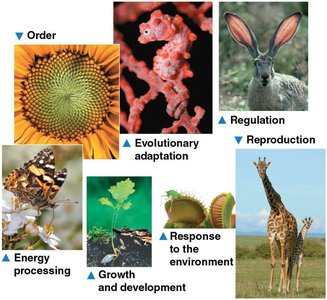
Life is defined by a set of characteristics that distinguish living organisms from non-living matter. These characteristics are often summarized as the themes of biology.
Order: Living things have a complex, organized structure.
Evolutionary adaptation: Organisms adapt to their environment through evolution.
Regulation: Living things regulate their internal environment (homeostasis).
Reproduction: Organisms reproduce to pass on genetic information.
Energy processing: Living things obtain and use energy.
Growth and development: Organisms grow and develop according to genetic instructions.
Response to the environment: Living things respond to stimuli.
Themes of Biology
Theme 1: Living Organisms Have DNA
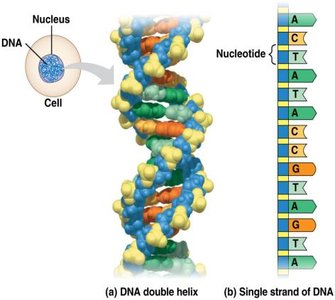
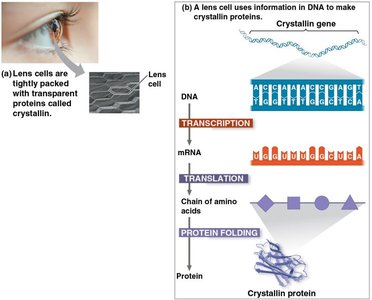
DNA (deoxyribonucleic acid) is the molecule that encodes the instructions for life. Genes are units of inheritance, and the genome is the complete set of DNA in an organism.
DNA: Composed of nucleotides; forms a double helix structure.
Gene: A segment of DNA that codes for a specific protein.
Genome: The entire set of genetic material in an organism.
All living organisms use essentially the same genetic code.
Theme 2: Organization/Order
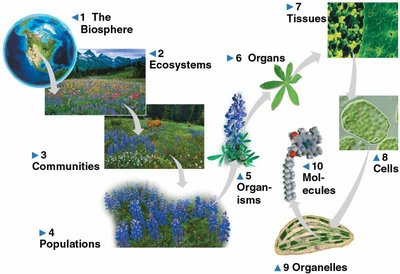
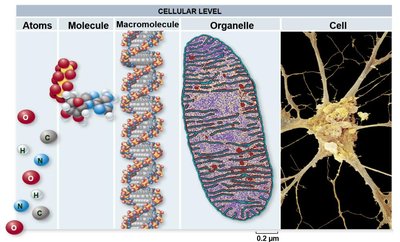
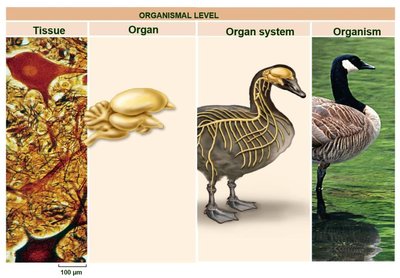
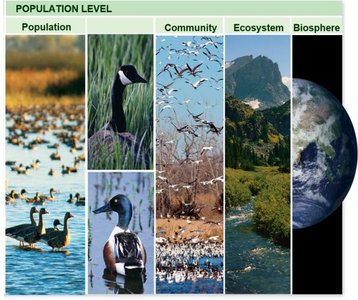
Biological systems are organized hierarchically, from atoms to the biosphere. Structure and function are closely related, and emergent properties arise from interactions among system components.
Hierarchy of Organization: Atoms → Molecules → Macromolecules → Organelles → Cells → Tissues → Organs → Organ Systems → Organisms → Populations → Communities → Ecosystems → Biosphere
Emergent Properties: New properties arise at each level due to interactions among components.
Systems Biology: Analysis of interactions within biological systems.
Structure determines function: The shape and arrangement of biological structures influence their function.
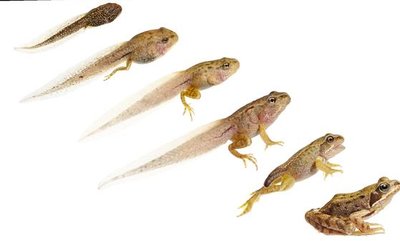
Theme 3: Living Organisms Grow and Develop
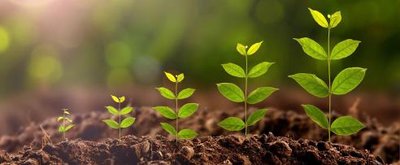
Growth refers to an increase in size, while development involves the differentiation of cells into specialized structures.
Growth: Increase in size and mass.
Development: Process by which cells become specialized.
Theme 4: Living Organisms Respond and Regulate
Organisms respond to environmental stimuli and regulate their internal environment through homeostasis. Feedback mechanisms help maintain stability.
Homeostasis: Maintenance of a stable internal environment.
Negative feedback: Response reduces the initial stimulus.
Positive feedback: Response amplifies the initial stimulus.
Ecosystem: Community interactions including abiotic factors.
Theme 5: Living Organisms Adapt and Evolve
Evolution is the process by which living organisms change over time, driven by natural selection. Life is classified into three domains: Bacteria, Archaea, and Eukarya.
Evolution: Modification of organisms over generations.
Natural Selection: Differential survival and reproduction of individuals with advantageous traits.
Three Domains of Life:
Bacteria: Prokaryotic, single-celled, no membrane-bound organelles.
Archaea: Prokaryotic, often live in extreme environments.
Eukarya: Eukaryotic, includes protists, plants, fungi, and animals.
Classification: Domain → Kingdom → Phylum → Class → Order → Family → Genus → Species
Theme 6: Living Organisms Are Made Up of Cells
The cell theory states that all living organisms are composed of cells, which are the basic units of structure and function. Cells can be prokaryotic or eukaryotic.
Cell Theory: All living things are made of cells.
Prokaryotic Cells: No nucleus, no membrane-bound organelles.
Eukaryotic Cells: Nucleus and membrane-bound organelles.
Theme 7: Living Organisms Obtain and Use Energy
Organisms acquire energy to perform work and maintain order. Energy flows through ecosystems, entering as light and exiting as heat, while chemicals cycle within ecosystems.
Metabolism: All chemical reactions in an organism.
Producers: Organisms that make their own food (e.g., plants).
Consumers: Organisms that feed on other organisms.
Energy flow: Sunlight → Producers → Consumers → Heat
Chemical cycling: Chemicals are recycled within ecosystems.
Theme 8: Living Organisms Reproduce
Reproduction is essential for the continuation of life. It can be asexual (offspring are clones of the parent) or sexual (offspring inherit genetic material from two parents).
Asexual Reproduction: One parent, identical offspring.
Sexual Reproduction: Two parents, genetic variation in offspring.
Summary Table: Levels of Biological Organization
Level | Description |
|---|---|
Atom | Smallest unit of matter |
Molecule | Group of atoms bonded together |
Macromolecule | Large complex molecules (e.g., DNA, proteins) |
Organelle | Specialized structure within a cell |
Cell | Basic unit of life |
Tissue | Group of similar cells performing a function |
Organ | Structure composed of tissues |
Organ System | Group of organs working together |
Organism | Individual living thing |
Population | Group of organisms of the same species |
Community | Populations of different species in an area |
Ecosystem | Community plus abiotic factors |
Biosphere | All ecosystems on Earth |
Additional info: The notes expand on brief points from the original material, providing definitions, examples, and context for each theme. Images included are directly relevant to the explanation of each paragraph, reinforcing key concepts in biological organization, DNA, cell structure, evolution, and energy flow.
