 Back
Chapter 1: Themes in Biology & Scientific Inquiry – General Biology I Study Notes
Study Guide - Smart Notes
 Tailored notes based on your materials, expanded with key definitions, examples, and context.
Chapter 1: Themes in Biology & Scientific Inquiry
Introduction to Biology
Biology is the scientific study of life, encompassing a vast array of living organisms and their behaviors. Life is recognized by certain characteristics, including order, reproduction, growth and development, response to the environment, energy processing, regulation, and adaptation.
Order: Living things exhibit complex organization.
Reproduction: Organisms reproduce their own kind.
Growth & Development: Organisms grow and develop according to inherited instructions.
Response to Environment: Living things respond to stimuli.
Energy Processing: Organisms obtain and use energy.
Regulation: Internal conditions are regulated to maintain life.
Adaptation: Organisms evolve adaptations to their environment.
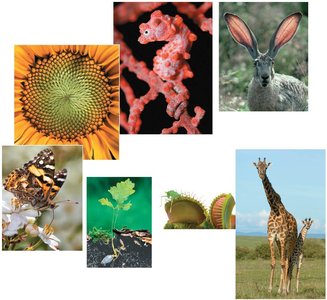
The Four Unifying Themes of Biology
Biology is organized around four major themes: Organization, Information, Energy & Matter, and Interactions. These themes help unify the study of life across its enormous scope.
Organization: Life is structured at multiple levels, from molecules to the biosphere.
Information: Genetic information is stored, copied, and transmitted.
Energy & Matter: Energy is transferred and transformed; matter cycles within ecosystems.
Interactions: Organisms interact with each other and their environment.
Theme: Organization
Levels of Biological Organization
Biological organization ranges from the molecular level to the biosphere. Each level exhibits emergent properties that arise from the arrangement and interaction of parts.
Molecules → Organelles → Cells → Tissues → Organs → Organisms → Populations → Communities → Ecosystems → Biosphere
Emergent Properties: New properties arise at each level due to the complexity and interaction of components.
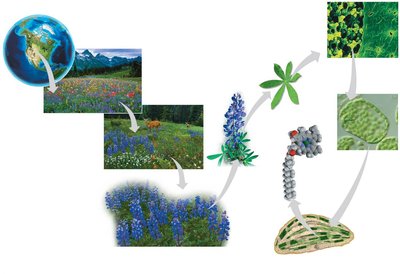
Structure and Function
There is a correlation between structure and function at every level of biological hierarchy. Understanding structure provides insight into function, and vice versa.
Example: Leaves are thin and flat to maximize light capture; bird wings are shaped for flight.
The Cell: Basic Unit of Life
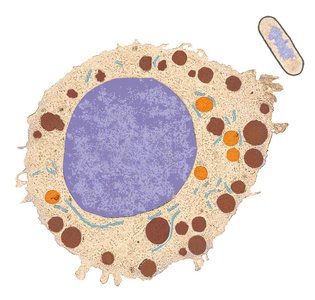
The cell is the smallest unit capable of performing all functions required for life. Cells are enclosed by membranes that regulate material passage.
Prokaryotic Cells: Lack membrane-bound organelles and nucleus (e.g., bacteria, archaea).
Eukaryotic Cells: Have membrane-bound organelles and nucleus (e.g., plants, animals, fungi, protists).
Theme: Information
Genetic Information and Its Expression
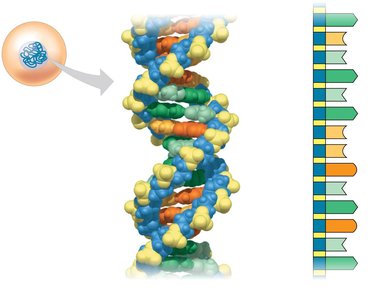
Life’s processes involve the transmission and expression of genetic information. Chromosomes contain DNA, which encodes genes—the units of inheritance.
Gene Transmission: Passing genetic code to offspring.
Gene Expression: Using genetic code to produce cellular products.
DNA Structure: Double helix composed of nucleotides (A, G, C, T).
Central Dogma: DNA is transcribed into RNA, which is translated into protein.
Genomics and Proteomics
Genomics is the study of entire sets of genes (genomes) in one or more species. Proteomics studies the full set of proteins (proteome) expressed by a cell, tissue, or organism.
Bioinformatics: Computational tools for processing large volumes of genetic data.
High-throughput Technology: Enables rapid analysis of DNA sequences.
Theme: Energy & Matter
Energy Transformation and Chemical Cycling
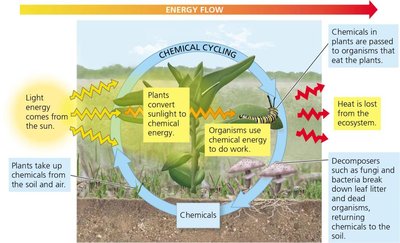
Life depends on the input and transformation of energy. Producers convert sunlight to chemical energy, which is transferred to consumers. Matter cycles within ecosystems.
Producers: Organisms (mainly plants) that generate chemical energy from sunlight.
Consumers: Organisms that feed on other organisms or their remains.
Chemical Cycling: Chemicals are used and recycled within ecosystems.
Theme: Interactions
Interactions Within Organisms
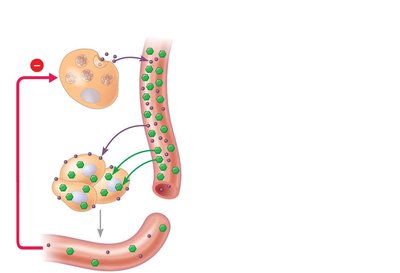
Components within organisms interact through signaling, transport, and regulation. Feedback mechanisms help maintain homeostasis.
Negative Feedback: Product buildup reduces or stops production of initial stimulus.
Positive Feedback: Product buildup increases production of initial stimulus.
Example: Insulin regulation of blood glucose.
Interactions Within Ecosystems
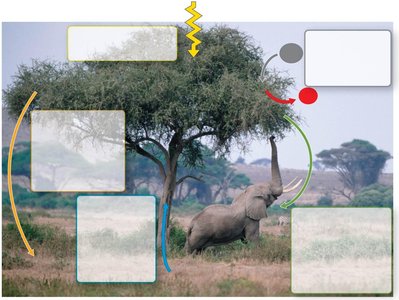
Organisms interact with each other and their environment. These interactions can be beneficial (symbiotic) or harmful (parasitic, predatory).
Continuous Interaction: Organisms affect and are affected by physical factors in their environment.
Taxonomy: Classifying the Diversity of Life
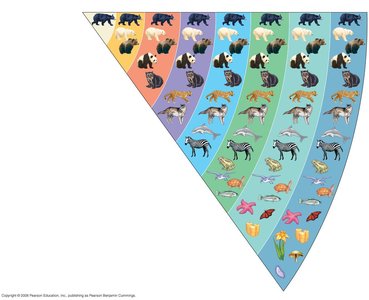
Taxonomy is the branch of biology that names and classifies species into increasingly broad groups. Each species is given a two-part name: genus and species.
Example: Homo sapiens (human species).
Hierarchy: Species → Genus → Family → Order → Class → Phylum → Kingdom → Domain.
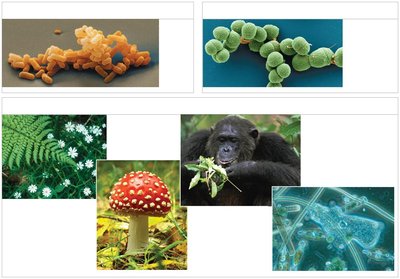
The Three Domains of Life
Organisms are divided into three domains: Bacteria, Archaea, and Eukarya. Eukarya contains four kingdoms: Plantae, Fungi, Animalia, and Protists.
Bacteria: Prokaryotic, diverse group.
Archaea: Prokaryotic, often found in extreme environments.
Eukarya: Eukaryotic, includes plants, fungi, animals, and protists.
Scientific Inquiry and the Process of Science
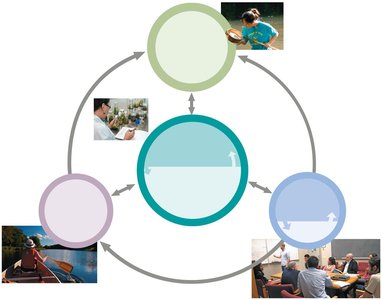
The goal of science is to understand natural phenomena through observation, hypothesis formation, and testing. Science relies on both discovery and correction of prior knowledge.
Observation: Gathering data (qualitative or quantitative).
Hypothesis: Reasoned explanation leading to testable prediction.
Deductive Reasoning: General to specific; logically undeniable.
Inductive Reasoning: Specific to general; predictive probability.

Testing Hypotheses
Hypotheses must be testable and falsifiable. Experimental design is crucial, including understanding variables and controls.
Independent Variable: Manipulated by researchers.
Dependent Variable: Measured response.
Controlled Variables: Factors kept constant.
Control Group: Experiment run without altering independent variable.
Analysis and Interpretation
Results require statistical analysis, often expressed as probability (p-value). Experiments must be repeatable, and findings shared for peer review and replication.
p-value: Probability of outcome occurring by chance; typically p < 0.05 is considered significant.
Replication: Number of repeated experiments (n).


Theories in Science
A scientific theory is broader in scope than a hypothesis and supported by a large body of evidence. Theories can be modified or rejected if new data conflict with them.
Example: Theory of gravity.
Peer Review: Essential for validating scientific claims.
Interdisciplinary Research: Increasingly important due to complexity of scientific questions.
Key Terms and Definitions
Biology: Scientific study of life.
Emergent Properties: New properties arising from arrangement and interaction of parts.
Genomics: Study of whole sets of genes.
Proteomics: Study of whole sets of proteins.
Bioinformatics: Use of computational tools to process biological data.
Taxonomy: Classification of organisms.
Producer vs Consumer: Producers generate energy; consumers use it.
Negative vs Positive Feedback: Mechanisms regulating biological processes.
Prokaryotic vs Eukaryotic: Cell types distinguished by presence of nucleus and organelles.
DNA, Gene Transmission, Gene Expression, Chromosome, Genes: Fundamental concepts in genetics.
Summary Table: Domains and Kingdoms of Life
Domain | Kingdoms | Cell Type | Nutrition |
|---|---|---|---|
Bacteria | None | Prokaryotic | Varied |
Archaea | None | Prokaryotic | Varied (often extremophiles) |
Eukarya | Plantae, Fungi, Animalia, Protists | Eukaryotic | Photosynthesis, absorption, ingestion |
Additional info:
These notes expand on brief points from the original material, providing academic context and definitions for clarity.
Images included are directly relevant to the explanation of each paragraph, reinforcing key concepts.
