 Back
Chapter 10: The Structure and Function of DNA – Study Notes
Study Guide - Smart Notes
 Tailored notes based on your materials, expanded with key definitions, examples, and context.
Chapter 10: The Structure and Function of DNA
Introduction to DNA
Deoxyribonucleic acid (DNA) is the hereditary material in almost all living organisms. It stores genetic information, enabling the transmission of traits from one generation to the next. The discovery of DNA's structure was a pivotal moment in biology, providing insight into how genetic information is stored, replicated, and expressed.
The History of DNA
Discovery Timeline
1890s: Nucleic acids identified in cells.
1940s: Genes recognized as units of inheritance, located on chromosomes composed of protein and nucleic acid.
1950s: DNA established as the molecule of inheritance, but its structure remained unknown.
The central question became: How does DNA transmit information from one generation to the next?
The Double Helix Discovery
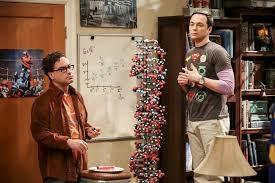
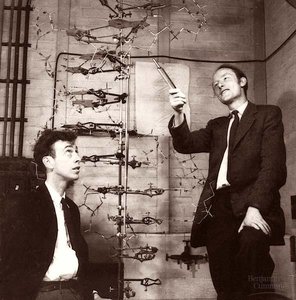
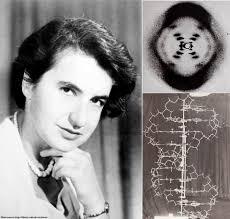
Understanding the three-dimensional structure of DNA was crucial to explaining its function. The double helix model, proposed by James Watson and Francis Crick in 1953, revolutionized biology. Their work was based on collaborative efforts, including Rosalind Franklin's X-ray diffraction images.
Watson and Crick: Proposed the double helix structure and won the Nobel Prize in 1962.
Rosalind Franklin: Provided critical X-ray crystallography data.
Modern Genomics
The Human Genome Project
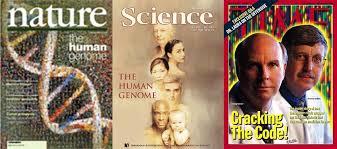
The sequencing of the human genome marked a new era in biology. Two major efforts—one public (NIH) and one private (Celera Genomics)—collaborated and competed to sequence the entire human genome.
Shotgun Sequencing: A rapid method used by private companies.
Whole Genome Sequencing: The public project, funded by taxpayers, cost $2.7 billion.
Completion: Announced in 2000, with co-publications in major scientific journals.
DNA and RNA Structure
Nucleic Acids and Nucleotides
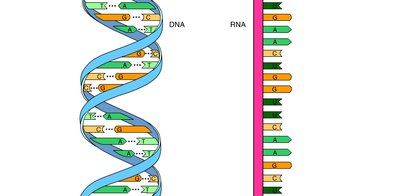
DNA and RNA are nucleic acids composed of long chains of nucleotides. Each nucleotide consists of a sugar, a phosphate group, and a nitrogenous base. The sugar-phosphate backbone forms the structural framework of nucleic acids.
DNA Bases: Adenine (A), Thymine (T), Cytosine (C), Guanine (G)
RNA Bases: Adenine (A), Uracil (U), Cytosine (C), Guanine (G)
Base Pairing: In DNA, A pairs with T, and C pairs with G.
The Double Helix
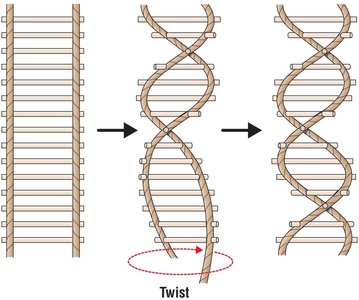
The structure of DNA resembles a twisted ladder, known as a double helix. The sugar-phosphate backbones form the sides, while the nitrogenous bases form the rungs, connected by hydrogen bonds.
Antiparallel Strands: The two DNA strands run in opposite directions.
Helical Twist: The ladder twists into a right-handed helix.
DNA Replication
Mechanism of Replication
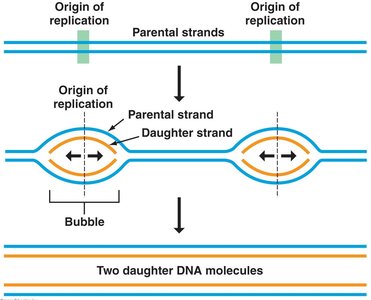
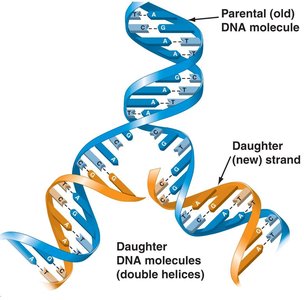
DNA replication is the process by which a cell copies its DNA before cell division. The process is semi-conservative: each new DNA molecule consists of one old (parental) strand and one newly synthesized strand.
Origin of Replication: Replication begins at specific sites and proceeds in both directions.
Enzymes: Numerous enzymes, including DNA polymerase and helicase, are involved in unwinding the helix and synthesizing new strands.
Accuracy: DNA replication is highly accurate, with an error rate of about 1 in 1 billion bases.
DNA Repair and Mutations
DNA can be damaged by environmental factors such as ultraviolet (UV) light. Specialized enzymes can repair many types of DNA damage. However, errors that escape repair become mutations, which can have various effects on the organism.
Mutations: Changes in the nucleotide sequence of DNA.
Causes: Errors in replication, physical or chemical mutagens.
Consequences: Mutations can be beneficial, harmful, or neutral, depending on their nature and location.

The Flow of Genetic Information
From DNA to Protein
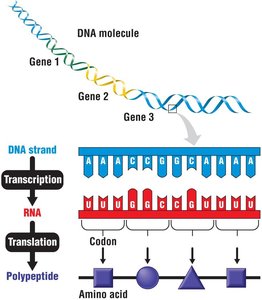
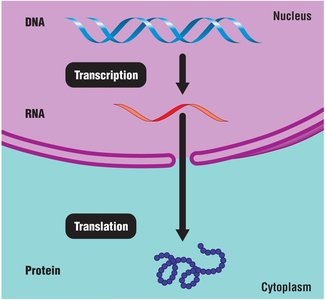
The genetic information in DNA is used to direct the synthesis of proteins, which determine an organism's phenotype. This process occurs in two main stages: transcription and translation.
Transcription: The process by which a gene's DNA sequence is copied to make an RNA molecule.
Translation: The process by which the RNA sequence is used to build a protein.
Genotype vs. Phenotype: The genotype is the genetic makeup; the phenotype is the observable traits.
Summary Table: DNA vs. RNA
Feature | DNA | RNA |
|---|---|---|
Sugar | Deoxyribose | Ribose |
Bases | A, T, C, G | A, U, C, G |
Strands | Double-stranded | Single-stranded |
Location | Nucleus (eukaryotes) | Nucleus & cytoplasm |
Function | Genetic blueprint | Protein synthesis |
Key Terms and Concepts
DNA (Deoxyribonucleic Acid): The molecule that stores genetic information.
RNA (Ribonucleic Acid): A nucleic acid involved in protein synthesis.
Nucleotide: The building block of nucleic acids, consisting of a sugar, phosphate, and base.
Double Helix: The spiral structure of DNA.
Replication: The process of copying DNA before cell division.
Mutation: A change in the DNA sequence.
Transcription: The synthesis of RNA from a DNA template.
Translation: The synthesis of protein from an RNA template.
Genotype: The genetic makeup of an organism.
Phenotype: The observable traits of an organism.
