 Back
BackChapter 10: The Structure and Function of DNA – Mini-Textbook Study Notes
Study Guide - Smart Notes
 Tailored notes based on your materials, expanded with key definitions, examples, and context.
DNA: Structure and Replication
Introduction to DNA
Deoxyribonucleic acid (DNA) is the hereditary material in almost all living organisms. It stores genetic information, can be copied, and is passed from generation to generation. The discovery of DNA as the vehicle for genetic information was solidified by the Hershey-Chase experiment.
Genetic Information: DNA contains instructions for building proteins, which determine an organism's traits.
Replication: DNA can be duplicated, ensuring genetic continuity.
Hershey-Chase Experiment: Demonstrated that DNA, not protein, is the genetic material in phages.

DNA and RNA Structure
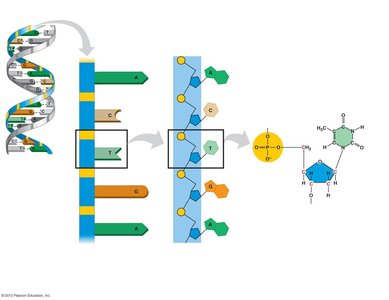
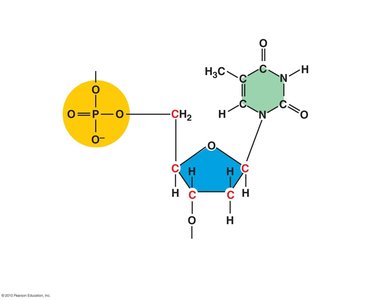
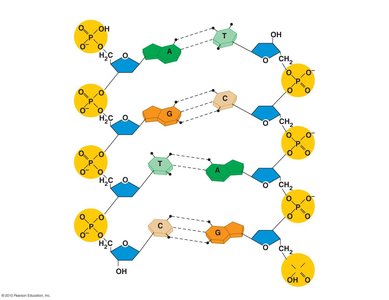
DNA and RNA are nucleic acids composed of nucleotides. Each nucleotide consists of a phosphate group, a five-carbon sugar, and a nitrogenous base. The nucleotides are joined by a sugar-phosphate backbone, and nucleic acid synthesis occurs in the 5' to 3' direction.
DNA Nucleotides: Adenine (A), Thymine (T), Cytosine (C), Guanine (G)
RNA Nucleotides: Adenine (A), Uracil (U), Cytosine (C), Guanine (G)
Sugar: DNA contains deoxyribose; RNA contains ribose.
Discovery of the Double Helix
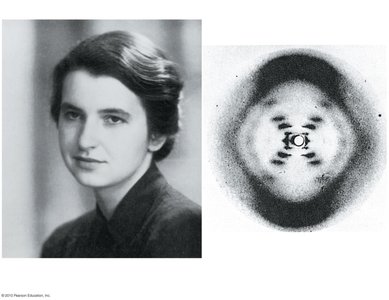
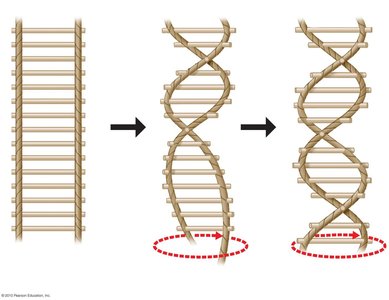
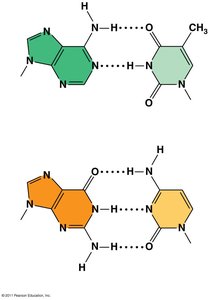
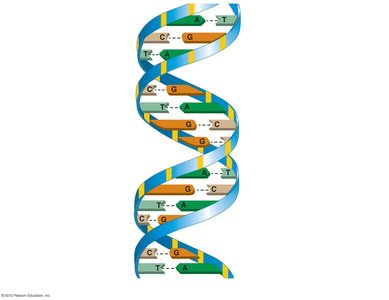
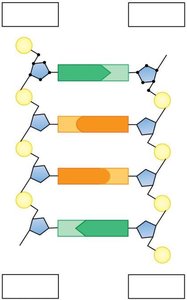
James Watson and Francis Crick, using Rosalind Franklin's X-ray crystallography data, determined that DNA is a double helix. The structure resembles a twisted ladder, with sugar-phosphate backbones as the sides and base pairs as the rungs.
Base Pairing: A pairs with T, C pairs with G via hydrogen bonds.
Double Helix: The two strands are antiparallel and complementary.
Base Pairing Rules and Chargaff's Rule
Base pairing in DNA is specific: Adenine pairs with Thymine, and Cytosine pairs with Guanine. In RNA, Adenine pairs with Uracil. Chargaff's rule states that the amount of A equals T, and the amount of C equals G in DNA.
Example: If DNA is 35% A, it is also 35% T; the remaining 30% is split equally between C and G (15% each).
DNA Replication
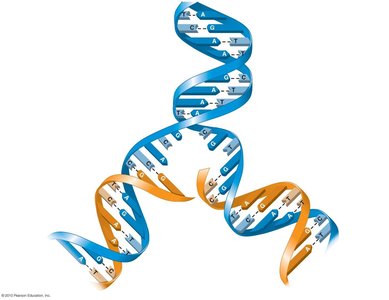
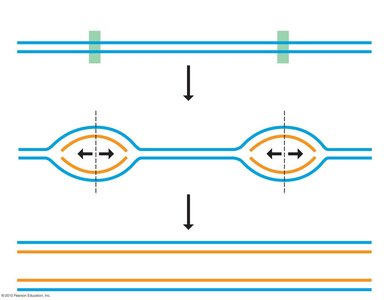
DNA replication is the process by which a cell duplicates its DNA before cell division. The process is semiconservative, meaning each new DNA molecule consists of one old strand and one new strand.
Enzymes: DNA polymerases synthesize new DNA strands and repair damaged DNA. DNA ligase joins DNA fragments.
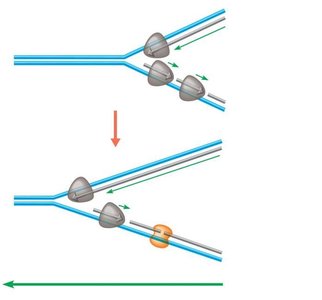
Directionality: DNA synthesis occurs in the 5' to 3' direction, adding nucleotides to the free 3' end.
Origins of Replication: Replication begins at specific sites and proceeds in both directions, forming replication bubbles.
Leading and Lagging Strands: The leading strand is synthesized continuously; the lagging strand is synthesized in fragments (Okazaki fragments).





The Flow of Genetic Information: From DNA to RNA to Protein
Genotype and Phenotype
The genotype is the genetic makeup (DNA sequence), while the phenotype is the observable traits. Proteins, encoded by genes, determine phenotype.
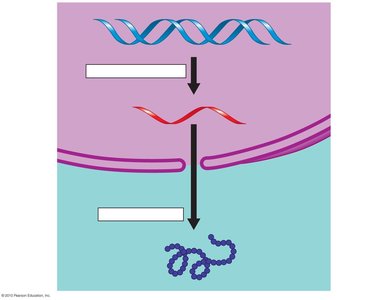
Central Dogma: Information flows from DNA to RNA (transcription) and from RNA to protein (translation).
The Genetic Code
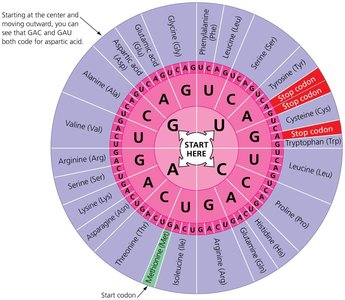
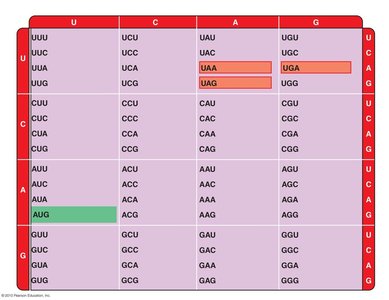
The genetic code is a set of rules by which information encoded in RNA is translated into proteins. Each codon (triplet of RNA bases) codes for one amino acid. There are 64 codons: 61 code for amino acids, and 3 are stop codons.
Codon: A sequence of three RNA bases that specifies an amino acid.
Universality: The genetic code is nearly universal among organisms.
Transcription: From DNA to RNA
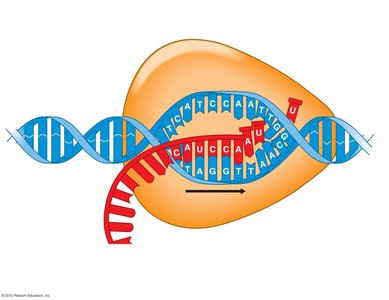
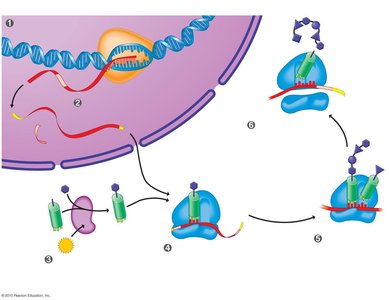
Transcription is the synthesis of RNA from a DNA template. It involves three main steps: initiation, elongation, and termination.
Initiation: RNA polymerase binds to the promoter region and begins RNA synthesis.
Elongation: The RNA strand grows as nucleotides are added.
Termination: RNA polymerase reaches a terminator sequence and detaches, releasing the RNA transcript.
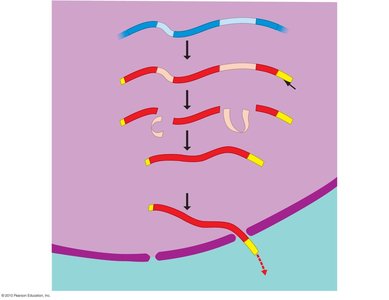
RNA Processing (Eukaryotes): Addition of a 5' cap and poly-A tail, removal of introns, and splicing of exons to form mature mRNA.

Translation: From RNA to Protein
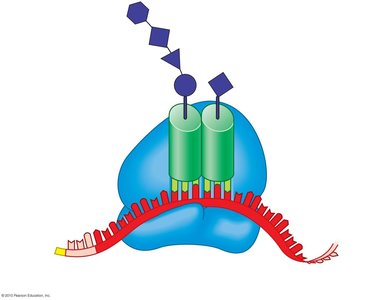
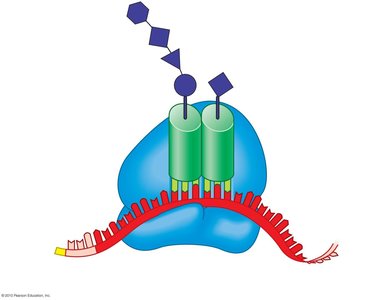
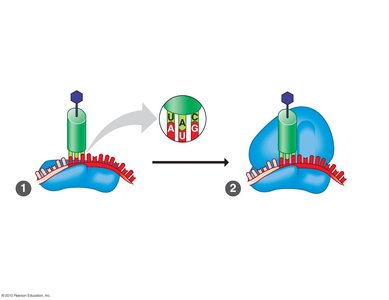
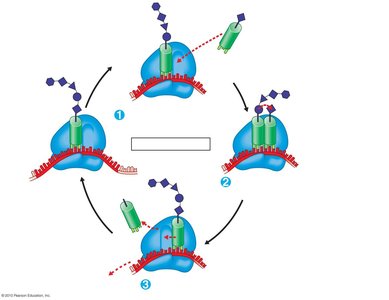
Translation is the process by which ribosomes synthesize proteins using mRNA as a template. It requires mRNA, tRNA, ribosomes, enzymes, and ATP.
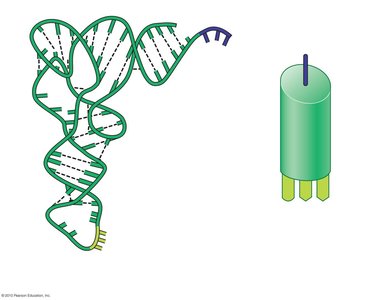
tRNA: Transfers amino acids to the ribosome and matches them to the mRNA codon via its anticodon.
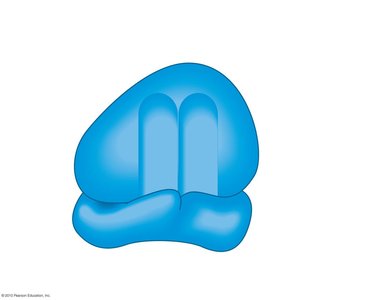
Ribosomes: Organelles composed of rRNA and proteins; they coordinate mRNA and tRNA during translation.
Phases: Initiation (assembly of ribosome, mRNA, and initiator tRNA), elongation (amino acids added), and termination (release at stop codon).


Mutations and Their Consequences
Types of Mutations
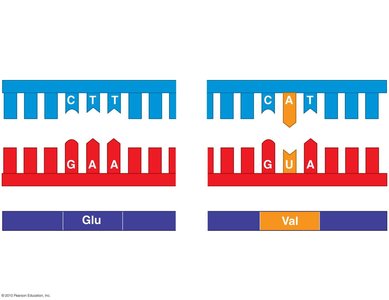
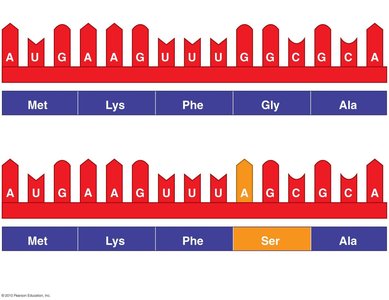
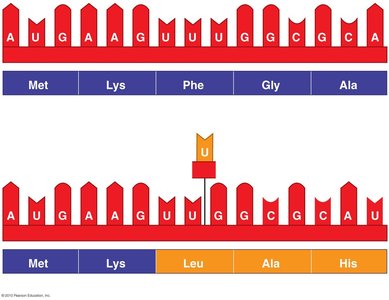
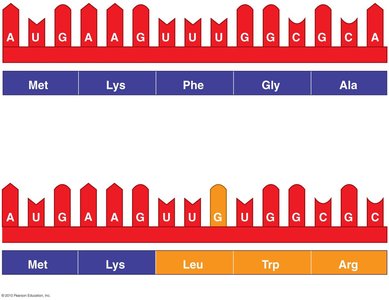
A mutation is any change in the nucleotide sequence of DNA. Mutations can affect a single nucleotide or large regions of a chromosome. They can be caused by errors in replication or by mutagens (physical or chemical agents).
Base Substitution: Replacement of one base by another; may change one amino acid (e.g., sickle cell anemia: Glu → Val).
Nucleotide Deletion: Loss of a nucleotide; can cause a frameshift, altering the reading frame.
Nucleotide Insertion: Addition of a nucleotide; can also cause a frameshift.
Frameshift Mutation: Insertions or deletions that change the reading frame, often with severe effects.
Viruses and Other Noncellular Infectious Agents
Viruses
Viruses are noncellular infectious agents that possess genetic material (DNA or RNA) but cannot reproduce independently. Bacteriophages (phages) are viruses that infect bacteria.
Lytic Cycle: Phage replicates within the host, causing cell lysis and release of new phages.
Lysogenic Cycle: Phage DNA integrates into the host genome and is replicated with it; can later enter the lytic cycle.


Animal and Plant Viruses
Animal viruses can have RNA or DNA genomes and may acquire a membranous envelope from the host. Plant viruses can stunt growth and reduce yields, spreading through wounds or vectors.
Retroviruses: RNA viruses (e.g., HIV) that use reverse transcriptase to synthesize DNA from RNA.
Prevention: No cures for most viral diseases; prevention is key.
Viroids and Prions
Viroids are small, circular RNA molecules that infect plants. Prions are misfolded proteins that cause neurodegenerative diseases in animals and humans (e.g., mad cow disease, Creutzfeldt-Jakob disease).
Symptoms of Prion Diseases: Dementia, memory loss, impaired movement.
Major Biological Themes Illustrated
Information Flow: The genetic code is universal, showing the flow of information from DNA to RNA to protein.
Structure and Function: The shape of molecules like tRNA is related to their function in translation.
Evolution: The universality of the genetic code and the emergence of new viruses highlight evolutionary processes.
Summary Table: DNA vs. RNA
Feature | DNA | RNA |
|---|---|---|
Sugar | Deoxyribose | Ribose |
Strands | Double | Single |
Nitrogenous Bases | A, T, C, G | A, U, C, G |
Function | Genetic storage | Protein synthesis, regulation |
