 Back
Bio 100 LEC Chapter 13 Module 1-2
Study Guide - Smart Notes
 Tailored notes based on your materials, expanded with key definitions, examples, and context.
Chapter 13: Meiosis and Sexual Life Cycles
Genes and Chromosomes
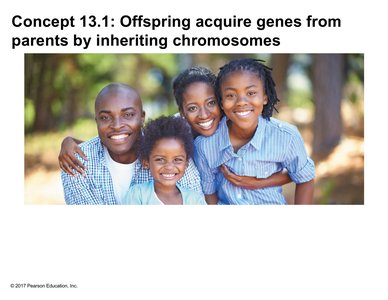
Inheritance is the biological process by which offspring acquire genes from their parents. Genes, which are segments of DNA, serve as the fundamental units of heredity and are responsible for the transmission of traits from one generation to the next. These genes are organized into chromosomes, which are found in the nuclei of eukaryotic cells.
Genes: Discrete units of hereditary information composed of DNA sequences.
Chromosomes: Structures within the cell nucleus that contain genetic material; humans have 46 chromosomes in somatic cells.
Gametes: Specialized reproductive cells (sperm and eggs) that carry genes to the next generation.
Somatic Cells: All body cells except gametes and their direct precursors; typically diploid (2n).
Locus (plural: loci): The specific location of a gene on a chromosome.
Modes of Reproduction
Asexual Reproduction
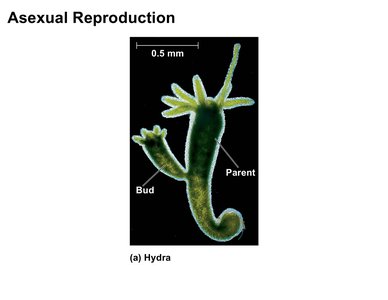
Asexual reproduction involves a single parent passing all of its genetic information to its offspring without the fusion of gametes. The offspring are genetically identical to the parent, resulting in clones. This process is efficient but limits genetic diversity, which can be a disadvantage in changing environments.
Example: Hydra reproduces asexually by budding, producing genetically identical offspring.
Advantages: Rapid population increase, no need for a mate.
Disadvantages: Low genetic variation, reduced adaptability to environmental changes.
Sexual Reproduction
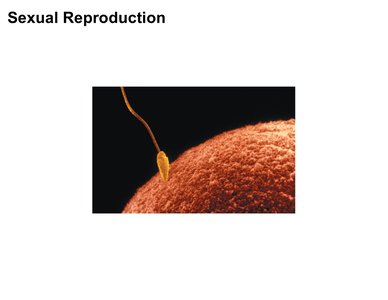
Sexual reproduction involves the fusion of two gametes (sperm and egg), each contributing half of the genetic material to the offspring. This process results in genetically unique individuals and promotes genetic diversity within a population.
Genetic Variation: Offspring inherit a combination of genes from both parents, leading to variation in traits.
Fertilization: The union of sperm and egg to form a zygote, restoring the diploid chromosome number.
Chromosome Sets and Karyotypes
Chromosome Number and Organization
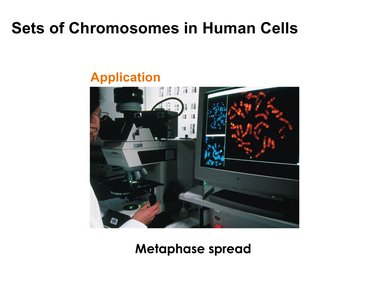
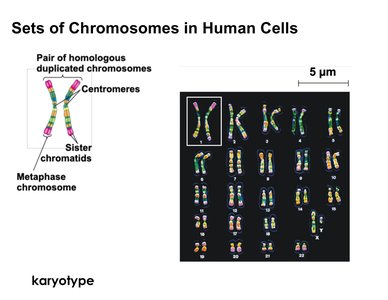
Human somatic cells contain 46 chromosomes, organized into 23 pairs. Of these, 22 pairs are autosomes and one pair is sex chromosomes (XX for females, XY for males). Chromosomes in a pair are called homologous chromosomes—they have the same length, centromere position, and gene loci, but may carry different alleles.
Diploid (2n): Cells with two sets of chromosomes (one from each parent).
Haploid (n): Cells with one set of chromosomes (gametes).
Karyotype: An organized profile of an individual's chromosomes, useful for detecting chromosomal abnormalities.
Homologous and Non-Homologous Chromosomes
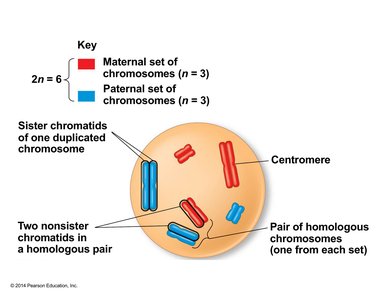
Homologous chromosomes are similar in structure and gene content but may have different alleles. Non-homologous chromosomes differ in length, centromere position, and gene content. The distinction between homologous and non-homologous chromosomes is crucial for understanding meiosis and genetic inheritance.
Sister chromatids: Identical copies of a chromosome, connected at the centromere, formed during DNA replication.
Non-sister chromatids: Chromatids from homologous chromosomes, not identical but similar in gene content.
Sexual Life Cycles and Meiosis
Alternation of Meiosis and Fertilization
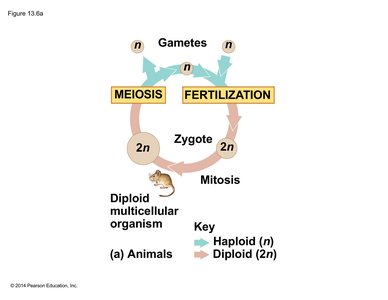
Sexual life cycles involve the alternation between diploid and haploid stages. Meiosis reduces the chromosome number by half, producing haploid gametes. Fertilization restores the diploid state by combining two haploid gametes. The timing and prominence of these stages vary among different organisms.
Life Cycle: The sequence of stages in the reproductive history of an organism, from conception to the production of offspring.
In animals: The diploid phase dominates; meiosis produces gametes directly.
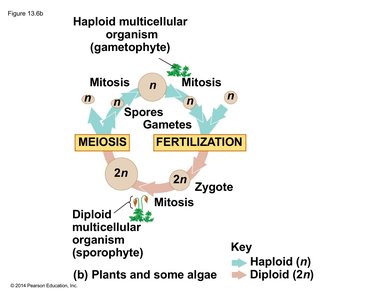
In plants and some algae: There is an alternation of generations, with both multicellular diploid (sporophyte) and multicellular haploid (gametophyte) stages.
Human Life Cycle
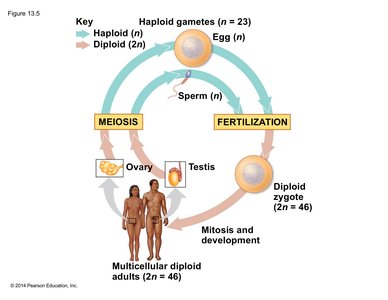
In humans, the life cycle alternates between diploid and haploid phases. Diploid adults (2n = 46) produce haploid gametes (n = 23) via meiosis. Fertilization of gametes forms a diploid zygote, which develops into a new multicellular diploid organism through mitosis.
Meiosis: Reduces chromosome number from diploid to haploid, ensuring genetic continuity across generations.
Fertilization: Restores diploid chromosome number and initiates development of a new organism.
Animal and Plant Life Cycles
While animals and plants both alternate between diploid and haploid stages, the details differ:
Animals: Meiosis produces gametes; fertilization produces a diploid zygote; mitosis produces the multicellular diploid organism.
Plants (Alternation of Generations): The diploid sporophyte produces haploid spores by meiosis. Spores grow into haploid gametophytes by mitosis. Gametophytes produce gametes by mitosis. Fertilization produces a diploid zygote, which grows into a new sporophyte.
Summary Table: Key Terms and Concepts
Term | Definition | Example/Notes |
|---|---|---|
Gene | Unit of heredity; segment of DNA | Determines traits such as eye color |
Chromosome | DNA molecule with associated proteins | Humans have 46 in somatic cells |
Gamete | Reproductive cell (sperm or egg) | Haploid (n); produced by meiosis |
Somatic Cell | Non-reproductive body cell | Diploid (2n); 46 chromosomes in humans |
Homologous Chromosomes | Chromosome pairs with same genes | One from each parent |
Karyotype | Ordered display of chromosomes | Used to detect chromosomal abnormalities |
Meiosis | Cell division reducing chromosome number by half | Produces gametes in animals, spores in plants |
Fertilization | Fusion of gametes to form a zygote | Restores diploid state |
