 Back
BackChapter 13: Meiosis – Mechanisms and Significance in Genetic Variation
Study Guide - Smart Notes
 Tailored notes based on your materials, expanded with key definitions, examples, and context.
Meiosis: Introduction and Overview
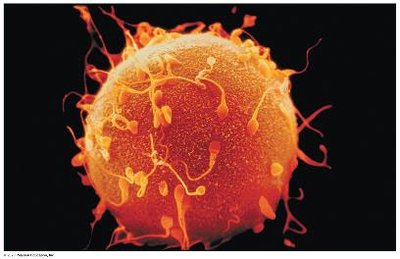
Sexual Reproduction and Gametes
Sexual reproduction involves the fusion of specialized reproductive cells called gametes (sperm and egg). This process restores the diploid chromosome number in offspring and introduces genetic diversity. The process by which gametes are produced is called meiosis.
Gametes: Haploid cells (1N) containing one set of chromosomes.
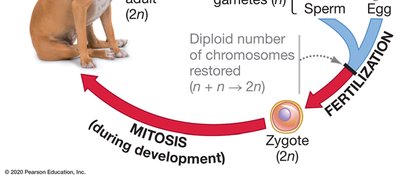
Fertilization: The union of two gametes (sperm + egg) to form a diploid (2N) zygote.
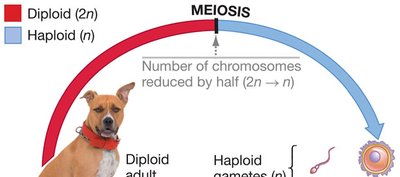
Meiosis: Specialized nuclear division that reduces chromosome number by half, producing haploid gametes from diploid cells.
Chromosome Number and Structure
Chromosome Types and Karyotypes
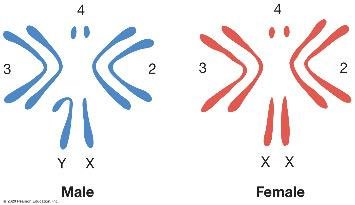
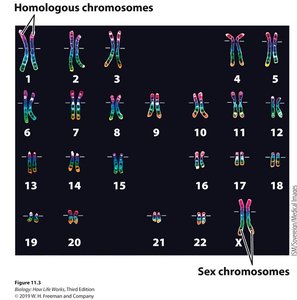
Chromosomes are structures made of DNA and proteins that carry genetic information. Organisms have a characteristic number of chromosomes, which can be visualized in a karyotype—an ordered display of chromosomes from a cell.
Sex Chromosomes: Determine the sex of an individual (e.g., XX for females, XY for males in humans).
Autosomes: Non-sex chromosomes; present in pairs in both sexes.
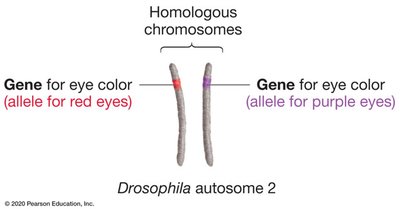
Homologous Chromosomes (Homologs): Chromosome pairs with the same genes but possibly different alleles.
Gene: A DNA segment that codes for a trait.
Allele: Different versions of a gene.
Locus (plural: loci): The physical location of a gene on a chromosome.
Chromosome Replication and Terminology
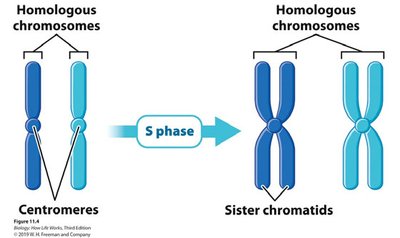
Before cell division, chromosomes are replicated, resulting in two identical sister chromatids joined at a centromere. Key terms are summarized below:
Term | Definition | Example/Comment |
|---|---|---|
Chromosome | Structure made up of DNA and proteins; carries hereditary information | Eukaryotes have linear chromosomes |
Sex chromosome | Chromosome associated with sex | Humans: X and Y |
Autosome | Any chromosome other than a sex chromosome | Humans: 1–22 |
Unreplicated chromosome | One double-helical DNA molecule | |
Replicated chromosome | Two identical DNA molecules (sister chromatids) | |
Sister chromatids | Identical copies in a replicated chromosome |
Genes, Alleles, and Homologs
Homologous chromosomes carry the same genes at the same loci, but may have different alleles. For example, in Drosophila melanogaster, the gene for eye color may have alleles for red or purple eyes.
Ploidy and Chromosome Sets
Haploid, Diploid, and Polyploid States
Ploidy refers to the number of sets of chromosomes in a cell:
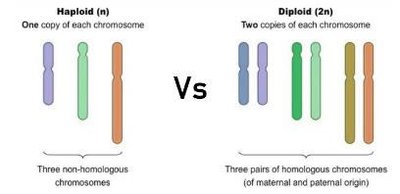
Haploid (n): One set of chromosomes (e.g., gametes).
Diploid (2n): Two sets of chromosomes (e.g., somatic cells).
Polyploid: More than two sets of chromosomes (common in plants).
Humans are diploid (2n = 46), with gametes being haploid (n = 23).
Key Terminology: Chromosome Structure and Number
Term | Definition | Example/Comment |
|---|---|---|
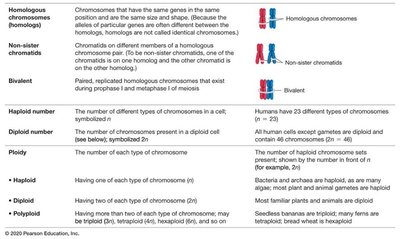
Homologous chromosomes | Same genes, same loci, possibly different alleles | |
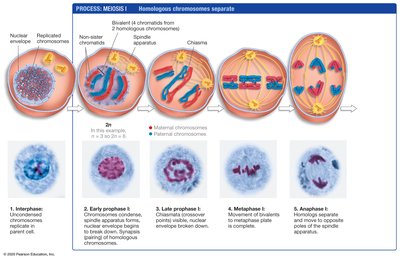
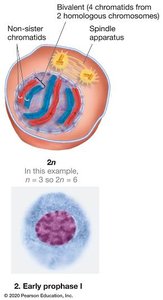
Non-sister chromatids | Chromatids from different homologs | |
Bivalent | Paired homologous chromosomes during meiosis I | |
Haploid number (n) | Number of different chromosome types | Humans: n = 23 |
Diploid number (2n) | Total chromosomes in diploid cell | Humans: 2n = 46 |
Ploidy | Number of chromosome sets | Diploid, triploid, etc. |
Overview of Meiosis
Purpose and Process
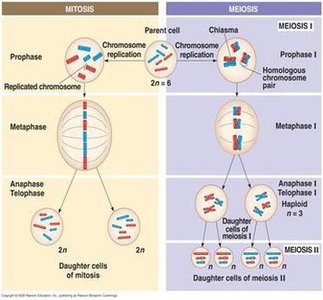
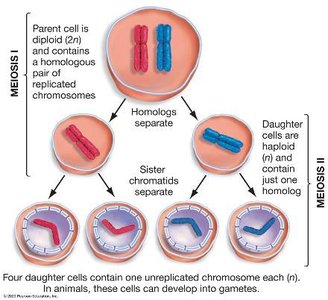
Meiosis consists of two sequential divisions (Meiosis I and II) that produce four genetically unique haploid cells from one diploid parent cell. Each daughter cell contains half the chromosome number of the parent and is genetically distinct due to crossing over and independent assortment.
Meiosis I: Homologous chromosomes separate (reductional division).
Meiosis II: Sister chromatids separate (similar to mitosis).
Animal Life Cycle and Gametogenesis
Fertilization and Zygote Formation
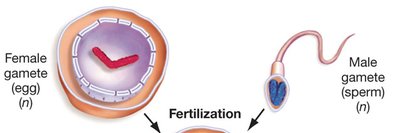
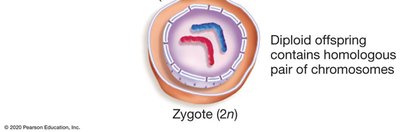
In animals, meiosis produces gametes, which fuse during fertilization to form a diploid zygote. The zygote undergoes mitosis to develop into a multicellular organism.
Gametogenesis: Formation of gametes via meiosis.
Fertilization: Fusion of haploid gametes to restore diploid state.
Zygote: The first diploid cell of a new organism.
Mechanisms of Meiosis
Meiosis I: Separation of Homologous Chromosomes
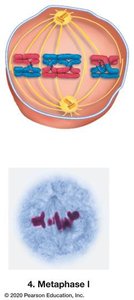
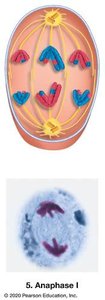
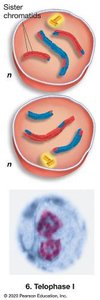
Meiosis I is characterized by the pairing and separation of homologous chromosomes, resulting in two haploid cells with replicated chromosomes.
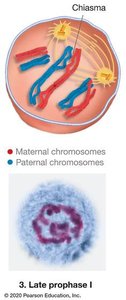
Prophase I: Homologous chromosomes pair (synapsis) and exchange genetic material (crossing over).
Metaphase I: Homologous pairs align at the metaphase plate.
Anaphase I: Homologs are pulled to opposite poles.
Telophase I and Cytokinesis: Two haploid cells are formed.
Meiosis II: Separation of Sister Chromatids
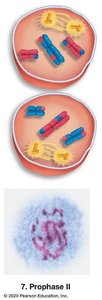
Meiosis II resembles mitosis, where sister chromatids are separated, resulting in four haploid cells, each with a unique genetic composition.
Prophase II: Chromosomes condense, spindle forms.
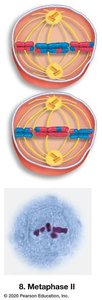
Metaphase II: Chromosomes align at the metaphase plate.
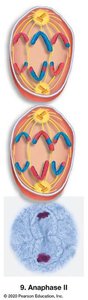
Anaphase II: Sister chromatids separate to opposite poles.
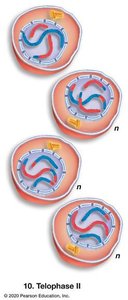
Telophase II and Cytokinesis: Four haploid cells are produced.
Genetic Variation in Meiosis
Sources of Genetic Variation
Meiosis introduces genetic diversity through two main mechanisms:
Crossing Over: Exchange of genetic material between non-sister chromatids during prophase I, resulting in recombinant chromosomes.
Independent Assortment: Random alignment and separation of homologous chromosomes during metaphase I, leading to different combinations of maternal and paternal chromosomes in gametes.
Random Fertilization: The combination of gametes from two parents further increases genetic diversity.
These mechanisms ensure that each gamete, and thus each offspring, is genetically unique.
Errors in Meiosis and Chromosomal Disorders
Nondisjunction and Aneuploidy
Errors during meiosis, such as nondisjunction, can result in gametes with abnormal chromosome numbers. This can lead to disorders such as Down syndrome (trisomy 21), Edwards syndrome (trisomy 18), Patau syndrome (trisomy 13), Turner syndrome (XO), and Klinefelter syndrome (XXY).
Nondisjunction: Failure of homologous chromosomes (meiosis I) or sister chromatids (meiosis II) to separate properly.
Aneuploidy: Presence of an abnormal number of chromosomes (e.g., n+1 or n-1).
Trisomy: Three copies of a chromosome (e.g., trisomy 21).
Monosomy: Only one copy of a chromosome (e.g., Turner syndrome).
Maternal Age and Meiosis Errors
The likelihood of meiotic errors increases with maternal age, as primary oocytes are arrested in prophase I from embryonic development until ovulation, increasing the risk of nondisjunction over time.
Comparison: Mitosis vs. Meiosis
Feature | Mitosis | Meiosis |
|---|---|---|
Number of divisions | 1 | 2 |
Pairing of homologs | No | Yes |
Crossover events | No | Yes |
Daughter cells | 2, genetically identical (2n) | 4, genetically unique (n) |
Summary
Meiosis is essential for sexual reproduction, reducing chromosome number and generating genetic diversity.
Genetic variation arises from crossing over, independent assortment, and random fertilization.
Errors in meiosis can lead to chromosomal disorders, with increased risk associated with maternal age.
