 Back
Chapter 15: Chromosomal Basis of Inheritance – Study Notes
Study Guide - Smart Notes
 Tailored notes based on your materials, expanded with key definitions, examples, and context.
Chromosomal Basis of Inheritance
Locating Genes Along Chromosomes
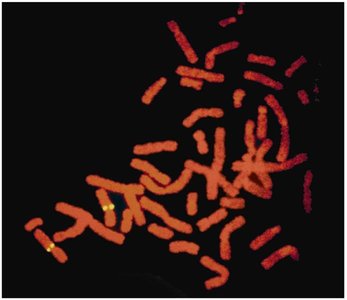
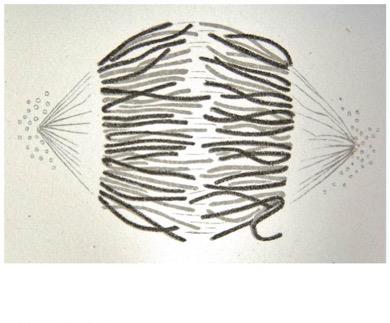
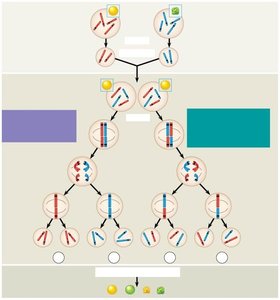
Genes, once abstract hereditary factors proposed by Mendel, are now known to be located on chromosomes. The development of microscopy allowed cytologists to observe mitosis and meiosis, revealing parallels between chromosome behavior and Mendel’s laws. The chromosome theory of inheritance, developed by Sutton and Boveri in 1902, states that genes are carried on chromosomes, which undergo segregation and independent assortment during meiosis.
Chromosome Theory of Inheritance: Genes are located on chromosomes, and their behavior during meiosis explains Mendel’s laws.
Mendel’s Laws: Law of Segregation (alleles separate during gamete formation) and Law of Independent Assortment (genes on different chromosomes assort independently).
Morgan’s Fruit Fly Experiments
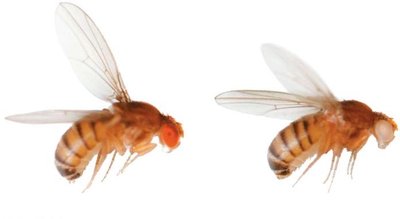
Thomas Hunt Morgan provided the first solid evidence linking a specific gene to a specific chromosome using Drosophila melanogaster (fruit fly). Fruit flies are ideal for genetic studies due to their short generation time, high offspring number, and only four pairs of chromosomes. Morgan discovered mutant phenotypes, such as white eyes, and demonstrated that the gene for eye color was located on the X chromosome, supporting the chromosome theory of inheritance and identifying X-linkage.
Wild Type: The normal phenotype commonly found in nature.
Mutant Phenotype: Traits alternative to the wild type, such as white eyes in fruit flies.
X-Linkage: Genes located on the X chromosome exhibit unique inheritance patterns.
The Chromosomal Basis of Sex
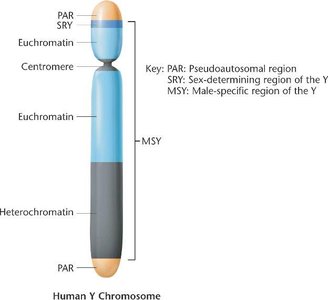
In humans and other mammals, sex is determined by two types of sex chromosomes: X and Y. Females have two X chromosomes, while males have one X and one Y. The Y chromosome contains the SRY gene, which triggers testis development. Short segments at the ends of the Y chromosome (PARs) are homologous with the X chromosome, allowing pairing during meiosis.
Sex Chromosomes: X (larger) and Y (smaller).
SRY Gene: Sex-determining region on the Y chromosome responsible for male development.
PARs: Pseudoautosomal regions allow X and Y chromosomes to pair during meiosis.
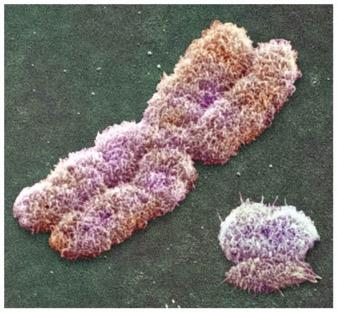
Sex-Linked Genes and Inheritance Patterns
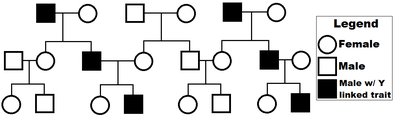
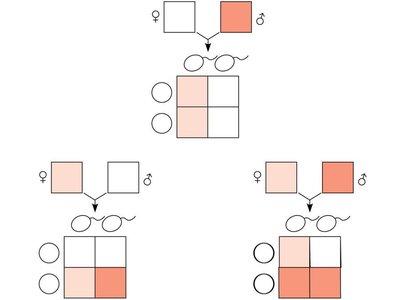
Genes located on sex chromosomes are called sex-linked genes. Y-linked genes are found only on the Y chromosome, while X-linked genes are found on the X chromosome. X-linked recessive disorders are more common in males, as they only need one copy of the allele to express the trait. Examples include color blindness, Duchenne muscular dystrophy, and hemophilia.
Sex-Linked Genes: Genes located on either X or Y chromosome.
Y-Linked Genes: Only ~200 genes, mostly related to sex determination.
X-Linked Genes: About 1,100 genes, many unrelated to sex.
Hemizygous: Males have only one X chromosome, so a single recessive allele can cause a disorder.
X Inactivation in Female Mammals
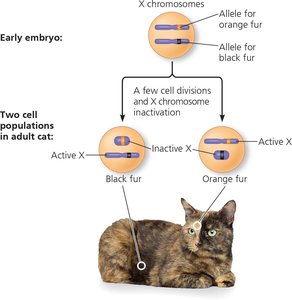
Female mammals inherit two X chromosomes, but one is randomly inactivated in each cell during embryonic development, forming a Barr body. This results in females being mosaics for X-linked genes, with some cells expressing the maternal X and others the paternal X.
Barr Body: Inactivated X chromosome in female cells.
Mosaicism: Females have two populations of cells, each expressing a different X chromosome.
Linked Genes and Genetic Recombination
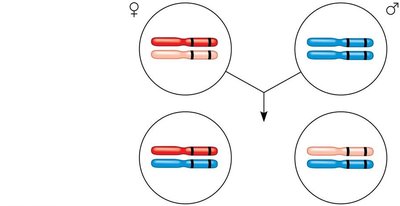
Genes located near each other on the same chromosome are called linked genes and tend to be inherited together. Morgan’s experiments with fruit flies showed that linked genes do not assort independently, but crossing over during meiosis can produce recombinant offspring with new combinations of traits.
Linked Genes: Genes located close together on the same chromosome.
Genetic Recombination: Production of offspring with combinations of traits different from either parent.
Crossing Over: Exchange of genetic material between homologous chromosomes during meiosis.
Alterations of Chromosome Number and Structure
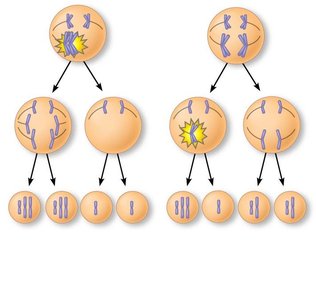
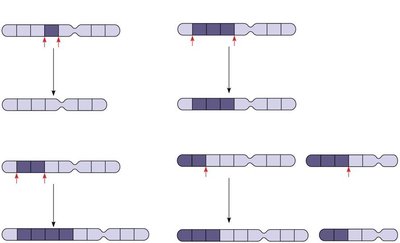
Chromosomal alterations can cause genetic disorders. Nondisjunction occurs when chromosomes fail to separate properly during meiosis, resulting in gametes with abnormal chromosome numbers. Aneuploidy is the presence of an abnormal number of chromosomes, while polyploidy is the presence of more than two complete sets. Structural changes include deletion, duplication, inversion, and translocation.
Nondisjunction: Failure of chromosome pairs to separate during meiosis.
Aneuploidy: Abnormal number of chromosomes (e.g., monosomic, trisomic).
Polyploidy: More than two complete sets of chromosomes (common in plants).
Chromosome Structural Changes: Deletion (removes segment), Duplication (repeats segment), Inversion (reverses segment), Translocation (moves segment to another chromosome).
Human Disorders Due to Chromosomal Alterations
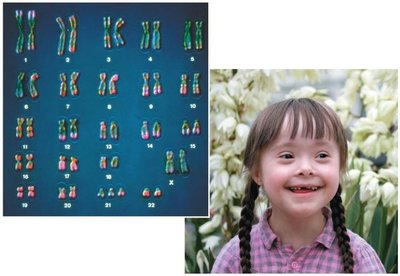
Chromosomal alterations are associated with various disorders. Down syndrome (trisomy 21) results from three copies of chromosome 21. Aneuploidy of sex chromosomes leads to conditions such as Klinefelter syndrome (XXY), Turner syndrome (X0), and others. Structural changes can cause syndromes like cri du chat and certain cancers (e.g., chronic myelogenous leukemia due to translocation).
Down Syndrome: Trisomy 21, associated with intellectual disability and characteristic physical features.
Klinefelter Syndrome: XXY males, often with reproductive issues.
Turner Syndrome: X0 females, sterile.
Cri du Chat Syndrome: Deletion in chromosome 5, severe intellectual and physical disability.
Chronic Myelogenous Leukemia: Caused by translocation between chromosomes 9 and 22.
Exceptions to Standard Mendelian Inheritance
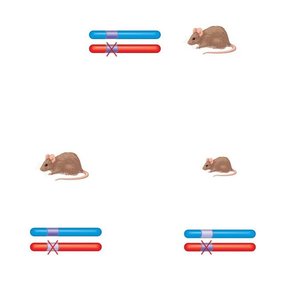
Some inheritance patterns deviate from Mendel’s laws. Genomic imprinting involves silencing of certain genes depending on the parent of origin, often due to methylation. Extranuclear inheritance involves genes located in organelles su ch as mitochondria and chloroplasts, which are inherited maternally.
Genomic Imprinting: Phenotype depends on which parent passed the allele; involves methylation of cytosine nucleotides.
Extranuclear Genes: Genes found in mitochondria and chloroplasts, inherited from the mother.
Organelle Inheritance: Defects in mitochondrial genes can cause diseases affecting muscular and nervous systems.

Key Terms and Definitions
Chromosome: Structure carrying genetic material, composed of DNA and proteins.
Sex-linked gene: Gene located on a sex chromosome (X or Y).
Y-linked gene: Gene located on the Y chromosome.
X-linked gene: Gene located on the X chromosome.
Barr body: Inactivated X chromosome in female cells.
Parental types: Offspring with phenotypes matching either parent.
Recombinant types: Offspring with new combinations of traits.
Nondisjunction: Failure of chromosome pairs to separate during meiosis.
Aneuploidy: Abnormal number of chromosomes.
Monosomic: Zygote with only one copy of a chromosome.
Trisomic: Zygote with three copies of a chromosome.
Polyploidy: More than two complete sets of chromosomes.
Genomic imprinting: Silencing of genes depending on parent of origin.
Methylation: Addition of -CH3 groups to DNA, affecting gene expression.
Summary Table: Chromosomal Alterations and Associated Disorders
Alteration | Description | Example Disorder |
|---|---|---|
Aneuploidy | Abnormal chromosome number | Down syndrome (trisomy 21), Turner syndrome (X0) |
Polyploidy | More than two sets of chromosomes | Common in plants |
Deletion | Loss of chromosome segment | Cri du chat syndrome |
Duplication | Repeat of chromosome segment | Some developmental disorders |
Inversion | Reversal of segment orientation | May cause infertility |
Translocation | Segment moves to another chromosome | Chronic myelogenous leukemia |
Additional info:
Random fertilization and crossing over during meiosis greatly increase genetic variation.
Polyploidy is rare in animals but common in plants, often resulting in more normal phenotypes than aneuploidy.
Genomic imprinting and organelle inheritance are important exceptions to Mendelian genetics, affecting embryonic development and certain diseases.
