 Back
Chapter 15: The Chromosomal Basis of Inheritance - Study Notes
Study Guide - Smart Notes
 Tailored notes based on your materials, expanded with key definitions, examples, and context.
Chapter 15: The Chromosomal Basis of Inheritance
Concept 15.1: Mendelian Inheritance and Chromosome Theory
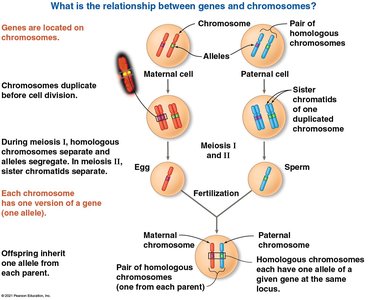
Mendel's principles of inheritance were initially theoretical, but later research revealed that chromosomes are the physical carriers of genetic information. The chromosome theory of inheritance was developed by Sutton, Boveri, and others, and was experimentally confirmed by Thomas Hunt Morgan using fruit flies (Drosophila melanogaster).
Chromosome Theory of Inheritance: Genes are located on chromosomes, and the behavior of chromosomes during meiosis accounts for inheritance patterns.
Experimental Evidence: Morgan's studies with fruit flies provided the first solid evidence linking specific genes to specific chromosomes.
Model Organism: Drosophila melanogaster is ideal for genetic studies due to its short generation time, many offspring, and only four pairs of chromosomes.
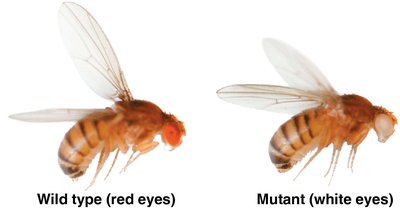
Wild Type vs. Mutant Phenotypes: Wild type refers to the normal phenotype; mutant phenotypes are alternatives, such as white eyes instead of red.
Correlating Gene Behavior with Chromosome Behavior
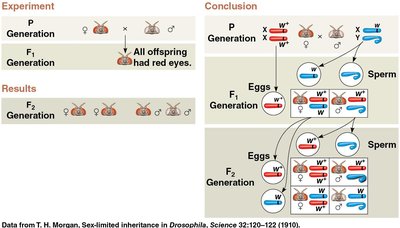
Morgan's experiments showed that the white-eyed trait in fruit flies was linked to the X chromosome, supporting the chromosome theory of inheritance.
Experimental Cross: Mating white-eyed males with red-eyed females produced all red-eyed F1 offspring; F2 generation showed a 3:1 ratio, but only males had white eyes.
Conclusion: The white-eyed allele is located on the X chromosome.
Concept 15.2: Sex-Linked Genes and Patterns of Inheritance
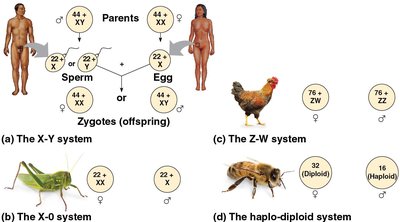
Sex-linked genes are located on sex chromosomes and exhibit unique inheritance patterns. The X-Y system is common in mammals, but other systems exist in different organisms.
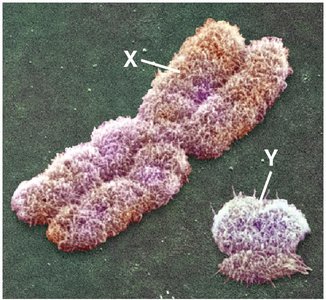
Sex Chromosomes: X and Y chromosomes determine sex in mammals; XX is female, XY is male.
Other Systems: X-O system (insects), Z-W system (birds), haplo-diploid system (bees).
SRY Gene: Located on the Y chromosome, responsible for testis development.
Sex-Linked Genes: Genes on X or Y chromosomes; X-linked genes are more numerous.
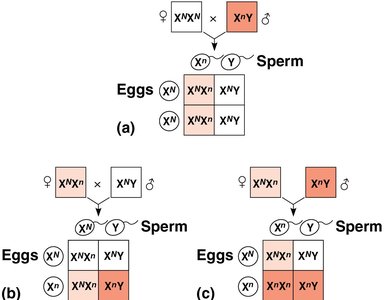
Inheritance of X-Linked Genes
X-linked genes follow specific inheritance patterns. Recessive X-linked traits are more common in males because they have only one X chromosome.
Expression of X-Linked Traits: Females need two copies of the allele; males need only one.
Common Disorders: Color blindness, Duchenne muscular dystrophy, hemophilia.
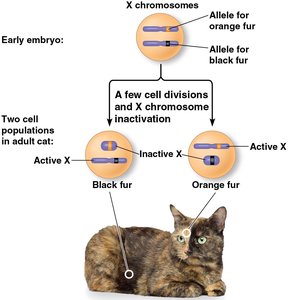
X Inactivation in Female Mammals
In female mammals, one X chromosome in each cell is randomly inactivated, forming a Barr body. This leads to mosaicism for X-linked traits.
Barr Body: Inactive X chromosome in female cells.
XIST Gene: Controls X inactivation.
Mosaicism: Heterozygous females express both alleles in different cells.
Concept 15.3: Linked Genes and Genetic Recombination
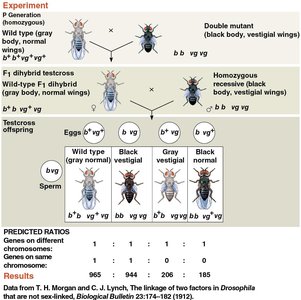
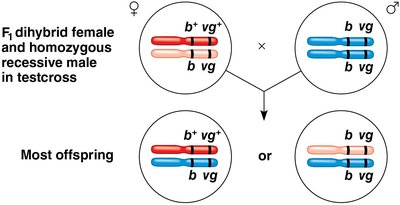
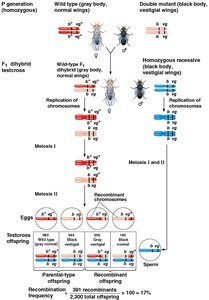
Genes located close together on the same chromosome tend to be inherited together (linked genes). Morgan's experiments with fruit flies demonstrated linkage and recombination.
Linked Genes: Genes on the same chromosome that do not assort independently.
Genetic Recombination: Production of offspring with new combinations of traits.
Crossing Over: Physical exchange of chromosome segments during meiosis creates recombinant chromosomes.
Mapping Genes Using Recombination Data
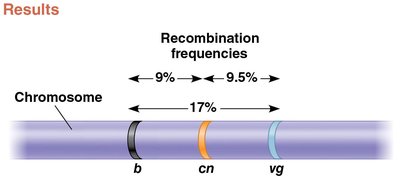
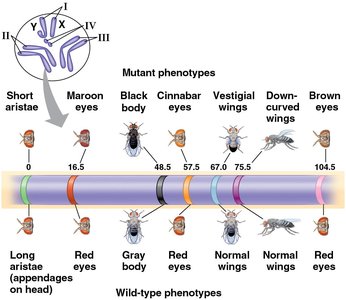
Alfred Sturtevant developed genetic maps based on recombination frequencies. The farther apart two genes are, the higher the probability of crossing over.
Linkage Map: Ordered list of genetic loci based on recombination frequencies.
Map Units: One map unit = 1% recombination frequency.
Genetically Unlinked Genes: Genes far apart on the same chromosome can behave as if on different chromosomes.
Concept 15.4: Chromosomal Alterations and Genetic Disorders
Alterations in chromosome number or structure can cause genetic disorders. These changes often lead to developmental issues or spontaneous abortions in animals, but are more tolerated in plants.
Nondisjunction: Failure of chromosome pairs to separate properly during meiosis, leading to abnormal chromosome numbers.
Aneuploidy: Abnormal number of chromosomes (e.g., monosomy, trisomy).
Polyploidy: More than two complete sets of chromosomes; common in plants.
Structural Alterations: Deletion, duplication, inversion, and translocation of chromosome segments.
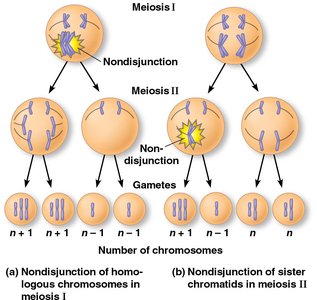
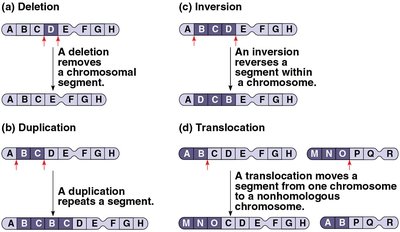
Human Disorders Due to Chromosomal Alterations
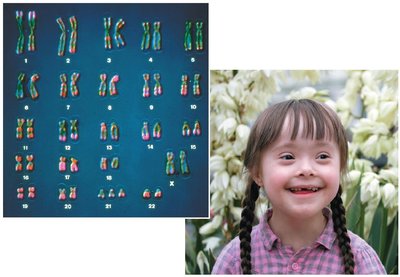
Some chromosomal alterations result in syndromes that allow survival, such as Down syndrome (trisomy 21), Klinefelter syndrome (XXY), Turner syndrome (X0), and others. Structural changes can cause disorders like cri du chat and certain cancers.
Down Syndrome: Caused by trisomy 21; frequency increases with maternal age.
Klinefelter Syndrome: Extra X chromosome in males (XXY).
Turner Syndrome: Monosomy X in females (X0).
Cri du Chat: Deletion in chromosome 5; severe intellectual disability.
Cancer: Some cancers are caused by chromosomal translocations.
Concept 15.5: Exceptions to Mendelian Inheritance
Some inheritance patterns deviate from Mendel's laws. These include genomic imprinting and inheritance of organelle genes.
Genomic Imprinting: Phenotype depends on which parent passed the allele; involves gene silencing via methylation.
Inheritance of Organelle Genes: Genes in mitochondria and chloroplasts are inherited maternally.
Diseases: Defects in mitochondrial genes can cause disorders affecting muscles and nerves.
Example: The mouse gene for insulin-like growth factor 2 (Igf2) is only expressed from the paternal allele.
Additional info: Mitochondrial disorders may be avoided by transferring chromosomes from an affected mother's egg to a healthy donor egg.
