 Back
Chapter 15: The Chromosomal Basis of Inheritance - Study Notes
Study Guide - Smart Notes
 Tailored notes based on your materials, expanded with key definitions, examples, and context.
Chapter 15: The Chromosomal Basis of Inheritance
Concept 15.1: Mendelian Inheritance and Chromosome Behavior
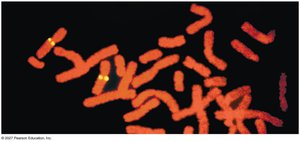
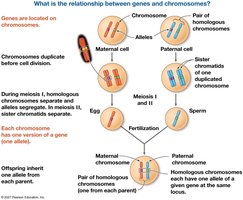
Mendelian inheritance is rooted in the physical behavior of chromosomes during cell division. Early geneticists observed parallels between Mendel’s theoretical hereditary units and chromosome behavior, leading to the chromosome theory of inheritance.
Chromosome Theory of Inheritance: Genes are located on chromosomes, and the behavior of chromosomes during meiosis accounts for inheritance patterns.
Historical Context: Sutton, Boveri, and others developed this theory around 1902.
Experimental Evidence: Thomas Hunt Morgan’s work with Drosophila melanogaster (fruit flies) provided the first solid evidence associating specific genes with specific chromosomes.
Morgan’s Choice of Experimental Organism
Morgan selected fruit flies for genetic studies due to their rapid life cycle, high offspring numbers, and simple chromosome structure.
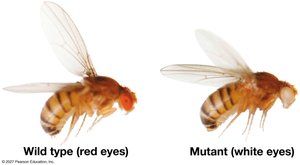
Wild Type vs. Mutant Phenotypes: Wild type refers to the normal phenotype; mutant phenotypes are alternatives, such as white eyes instead of red.
Correlating Gene Alleles with Chromosome Behavior
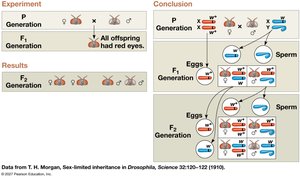
Morgan’s experiments demonstrated that the white-eyed mutant allele in fruit flies is located on the X chromosome, supporting the chromosome theory of inheritance.
Inheritance Pattern: Only males exhibited the white-eye trait in the F2 generation, indicating sex-linked inheritance.
The Chromosomal Basis of Mendel’s Laws
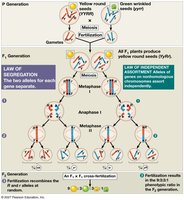
Mendel’s laws of segregation and independent assortment are explained by the behavior of chromosomes during meiosis.
Law of Segregation: Each parent contributes one allele for each gene.
Law of Independent Assortment: Alleles of different genes assort independently if they are on different chromosomes.
Concept 15.2: Sex-Linked Genes and Patterns of Inheritance
The Chromosomal Basis of Sex
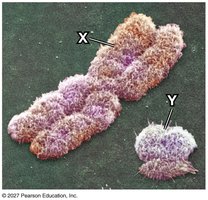
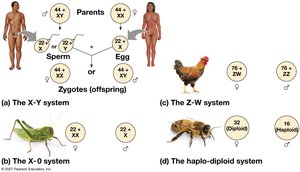
Sex determination in humans and other mammals is based on the presence of X and Y chromosomes. Other organisms use different chromosomal systems.
X-Y System: Two X chromosomes result in female anatomy; one X and one Y result in male anatomy.
Other Systems: X-0, Z-W, and haplo-diploid systems exist in insects, birds, and bees.
SRY Gene: Located on the Y chromosome, responsible for testis development.
Inheritance of X-Linked Genes
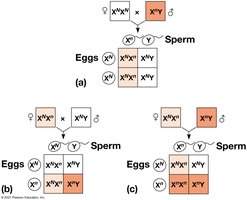
X-linked genes follow unique inheritance patterns. Recessive X-linked traits are more common in males due to their single X chromosome.
Hemizygosity: Males need only one copy of the allele to express a recessive trait; females need two.
Examples: Color blindness, Duchenne muscular dystrophy, hemophilia.
X Inactivation in Female Mammals
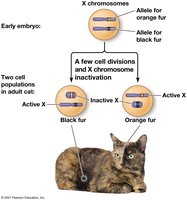
One X chromosome in each cell of female mammals is randomly inactivated, forming a Barr body. This results in mosaic expression of X-linked genes.
XIST Gene: Controls X inactivation.
Mosaicism: Heterozygous females may display mixed phenotypes, such as tortoiseshell fur in cats.
Concept 15.3: Linked Genes and Genetic Recombination
Linked Genes
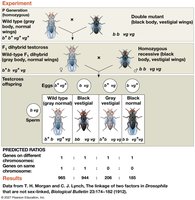
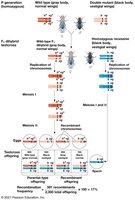
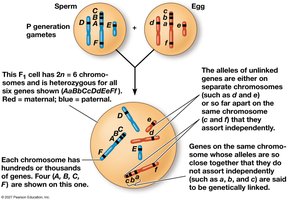
Genes located near each other on the same chromosome tend to be inherited together. Morgan’s experiments with fruit flies demonstrated this phenomenon.
Linkage: Linked genes do not assort independently.
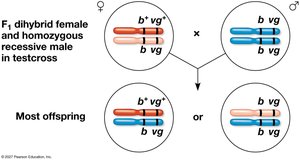
Testcross: Used to study inheritance patterns of linked genes.
Genetic Recombination and Linkage
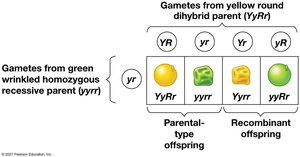
Genetic recombination produces offspring with new combinations of traits. Recombination frequency is used to map gene distances.
Independent Assortment: Unlinked genes show a 50% recombination frequency.
Crossing Over: Linked genes can be separated by crossing over during meiosis.
Mapping the Distance Between Genes
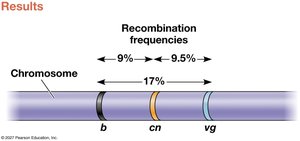
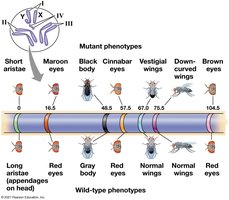
Alfred Sturtevant developed linkage maps based on recombination frequencies. Map units (centimorgans) represent 1% recombination frequency.
Linkage Map: Indicates relative gene order and distance, not exact locations.
Genetic vs. Physical Linkage: Genes far apart on the same chromosome may behave as unlinked.
Concept 15.4: Chromosomal Alterations and Genetic Disorders
Abnormal Chromosome Number
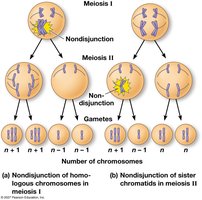
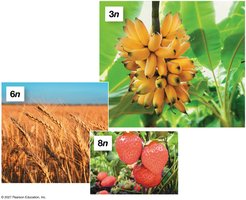
Nondisjunction during meiosis can result in gametes with abnormal chromosome numbers, leading to conditions such as aneuploidy, monosomy, trisomy, and polyploidy.
Nondisjunction: Failure of homologous chromosomes or sister chromatids to separate.
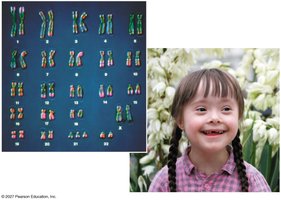
Aneuploidy: Abnormal number of chromosomes (e.g., trisomy 21 - Down syndrome).
Polyploidy: More than two complete sets of chromosomes, common in plants.
Alterations of Chromosome Structure
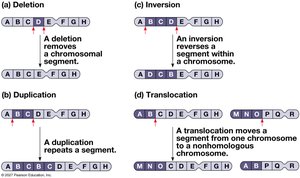
Chromosome breakage can lead to deletion, duplication, inversion, or translocation, each affecting gene expression and potentially causing disorders.
Deletion: Loss of a chromosomal segment.
Duplication: Repetition of a segment.
Inversion: Reversal of segment orientation.
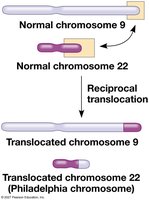
Translocation: Movement of a segment to another chromosome.
Human Conditions Due to Chromosomal Alterations
Alterations in chromosome number or structure can cause syndromes such as Down syndrome, Klinefelter syndrome, Turner syndrome, cri du chat, and certain cancers.
Down Syndrome: Trisomy 21, associated with intellectual disability and characteristic physical features.
Klinefelter Syndrome: XXY males.
Turner Syndrome: XO females.
Cri du Chat: Deletion in chromosome 5.
Chronic Myelogenous Leukemia: Caused by translocation between chromosomes 9 and 22.
Concept 15.5: Exceptions to Standard Mendelian Inheritance
Genomic Imprinting
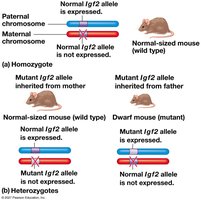
Genomic imprinting involves the silencing of certain genes depending on the parent of origin. This affects the phenotype of offspring for specific traits.
Imprinted Genes: Most are autosomal and critical for embryonic development.
Example: Only the paternal allele of the mouse Igf2 gene is expressed.
Inheritance of Organelle Genes
Extranuclear genes are found in mitochondria and chloroplasts. These genes are inherited maternally, as the zygote’s cytoplasm comes from the egg.
Mitochondrial Disorders: Affect muscular and nervous systems (e.g., mitochondrial myopathy, Leber’s hereditary optic neuropathy).
Plant Plastids: Inheritance of leaf color in plants demonstrates extranuclear inheritance.

Skills Exercise: Using the Chi-Square Test
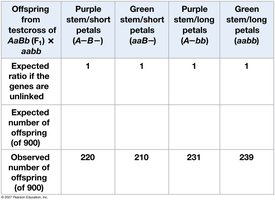
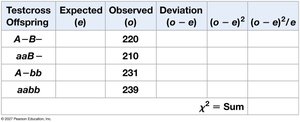
The Chi-square test is used to analyze genetic data and determine if observed results deviate significantly from expected ratios.
Formula:
Application: Used in testcrosses to evaluate linkage and inheritance patterns.

Summary of Key Concepts: Linked Genes
Linked genes are inherited together unless separated by crossing over. Linkage maps and recombination frequencies help elucidate gene order and distance.
Additional info: These notes expand on brief points with academic context, definitions, and examples to ensure completeness and clarity for exam preparation.
