 Back
Chapter 15: The Chromosomal Basis of Inheritance - Study Notes
Study Guide - Smart Notes
 Tailored notes based on your materials, expanded with key definitions, examples, and context.
Chromosomal Basis of Inheritance
Locating Genes Along Chromosomes
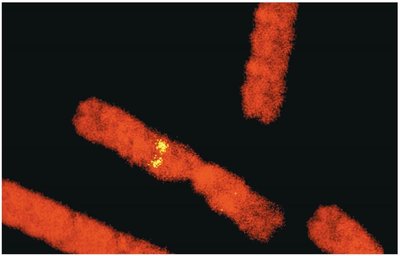
The concept of genes as "hereditary factors" was first proposed by Mendel, but their physical location was unknown. Modern techniques allow us to visualize genes on chromosomes using fluorescent dyes, confirming that genes are located on chromosomes.
Genes are segments of DNA found on chromosomes.
Fluorescent tagging highlights specific genes, enabling their visualization.
Mendelian Laws and Chromosome Theory
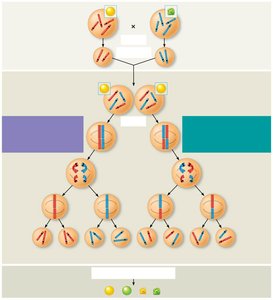
Early cytologists observed parallels between Mendel's laws and chromosome behavior during cell division. The chromosome theory of inheritance was developed, linking Mendel's hereditary factors to chromosomes.
Law of Segregation: Two alleles for each gene separate during gamete formation.
Law of Independent Assortment: Alleles of genes on nonhomologous chromosomes assort independently.
Chromosome theory formed around 1902 by Sutton, Boveri, and others.
Morgan's Experiments and Drosophila melanogaster
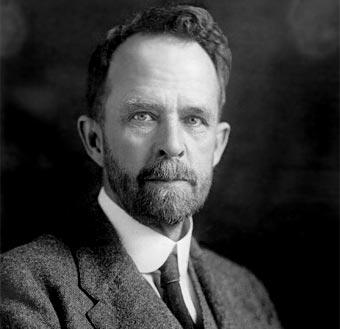
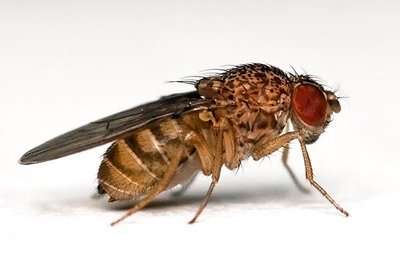
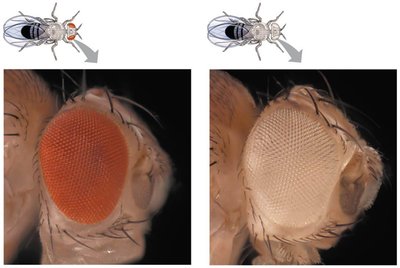
Thomas Hunt Morgan provided the first solid evidence associating specific genes with specific chromosomes using fruit flies (Drosophila melanogaster).
Fruit flies are ideal for genetic studies due to their short generation time, ease of breeding, and four pairs of chromosomes.
Morgan's experiments confirmed that chromosomes are the location of Mendel's heritable factors.
Sex Chromosomes and Sex-Linked Genes
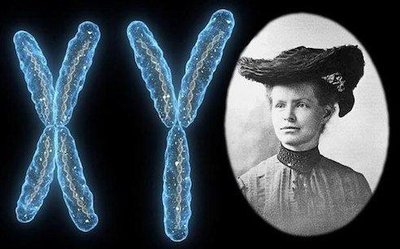
Sex chromosomes determine the sex of an organism and carry genes related to sex determination. Nettie Stevens discovered sex chromosomes in beetles, and Morgan's work showed that some traits are linked to sex chromosomes.
Humans have two types of sex chromosomes: X (large) and Y (small).
Females: XX; Males: XY.
Only the ends of the Y chromosome are homologous with the X chromosome.
The SRY gene on the Y chromosome triggers male development.
Patterns of Inheritance for Sex-Linked Genes
Sex-linked genes exhibit unique inheritance patterns. X-linked genes are more likely to cause disorders in males, as they have only one X chromosome.
X-linked genes: Found on the X chromosome; males are hemizygous.
Y-linked genes: Found on the Y chromosome; mostly related to sex determination.
Examples of X-linked disorders: color blindness, Duchenne muscular dystrophy, hemophilia.
Color Blindness and Genetic Disorders
Color blindness is often X-linked and more common in males. It results from mutations in genes coding for photoreceptors.
Humans have three types of cones for color vision: red, green, and blue.
Red and green cone genes are located on the X chromosome.
Types of color blindness include dichromacy (missing cone type) and anomalous trichromacy (altered sensitivity).
Other X-linked disorders include Duchenne muscular dystrophy and hemophilia.
X Inactivation in Female Mammals
In female mammals, one X chromosome in each cell is randomly inactivated, forming a Barr body. This results in mosaic expression of X-linked genes.
Barr body: Inactive X chromosome in female cells.
Females heterozygous for X-linked genes are mosaics for those traits.
Linked Genes and Genetic Recombination
Genes located close together on the same chromosome tend to be inherited together (linked genes). However, crossing over during meiosis can produce recombinant phenotypes.
Linked genes: Genes located near each other on the same chromosome.
Genetic recombination: Production of offspring with combinations of traits different from either parent.
Crossing over breaks the physical connection between linked genes.
Genetic Mapping and Linkage Maps
Alfred Sturtevant constructed genetic maps based on recombination frequencies. The farther apart two genes are, the higher the probability of crossover and recombination.
Linkage map: Genetic map based on recombination frequencies.
Map units (centimorgans) represent 1% recombination frequency.
Genes cluster into linkage groups corresponding to chromosomes.
Alterations of Chromosome Number and Structure
Abnormal chromosome number or structure can cause genetic disorders. Nondisjunction leads to aneuploidy, while structural changes include deletions, duplications, inversions, and translocations.
Nondisjunction: Failure of chromosome pairs to separate properly during meiosis.
Aneuploidy: Abnormal number of chromosomes (e.g., trisomy, monosomy).
Polyploidy: More than two complete sets of chromosomes; common in plants.
Common human trisomies: 16, 18 (Edward syndrome), 13 (Patau syndrome), 21 (Down syndrome).
Sex chromosome aneuploidies: XXY (Klinefelter's), XXX (triple X), XYY (supermale), X0 (Turner syndrome).
Structural changes: deletion, duplication, inversion, translocation.
Inheritance of Organelle Genes
Genes found in mitochondria and chloroplasts are inherited maternally. Mutations in mitochondrial genes can cause diseases affecting energy production.
Extranuclear genes: Genes located in organelles outside the nucleus.
Mitochondrial inheritance is strictly maternal.
Examples: mitochondrial myopathy, Leber’s hereditary optic neuropathy.
