 Back
Chapter 17: From Gene to Protein – Transcription and Translation Study Guide
Study Guide - Smart Notes
 Tailored notes based on your materials, expanded with key definitions, examples, and context.
From Gene to Protein
Historical Foundations of Genetics
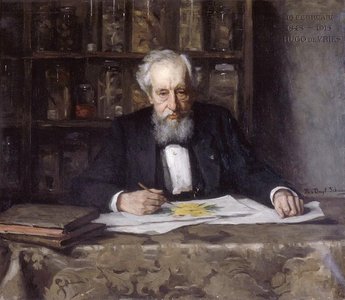
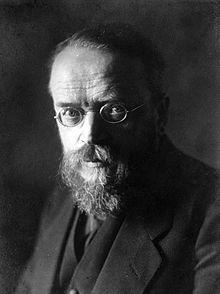
The study of genetics began with early botanists who explored inheritance and the material basis of heredity. Hugo De Vries, Carl Correns, and Erich von Tschermak independently rediscovered Mendel's laws and contributed to the understanding of mutations and recombination.
Hugo De Vries: Proposed "pangenes" as hereditary particles, first suggested mutations, and studied inheritance in Oenothera (evening primrose).
Carl Correns & Erich von Tschermak: Rediscovered Mendel's laws, connecting modern genetics to classical experiments.
Mutations: De Vries was the first to propose the occurrence of mutations, inspiring research into gene evolution.
The Flow of Genetic Information
Genetic information flows from DNA to RNA to protein, linking genotype to phenotype. This process is central to cell function and inheritance.
Mitosis: Retains all genes/chromosomes from the parent cell.
Meiosis: Reduces chromosome number, passing half to gametes.
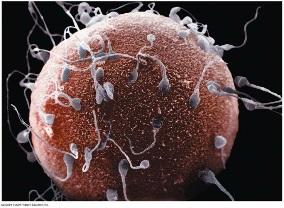
Fertilization: Combines genes from sperm and egg, restoring diploidy.
Gene Expression: DNA directs protein synthesis via transcription and translation.
Central Dogma: Information flows from DNA to RNA to protein, not in reverse.
One Gene–One Enzyme Hypothesis
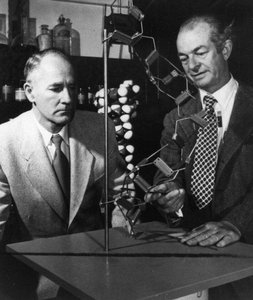
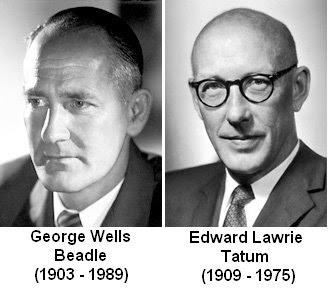
George Beadle and Edward Tatum demonstrated that each gene encodes a specific enzyme, using Neurospora crassa as a model organism. This concept evolved to "one gene–one polypeptide" as proteins can be composed of multiple polypeptides.
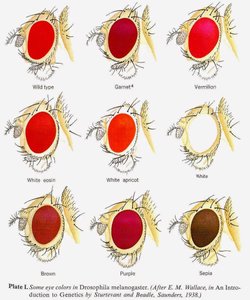
Mutational Analysis: Mutations in Drosophila eye color revealed steps in pigment synthesis.
Radiation Mutagenesis: X-rays induce mutations, used in genetic studies and plant breeding.
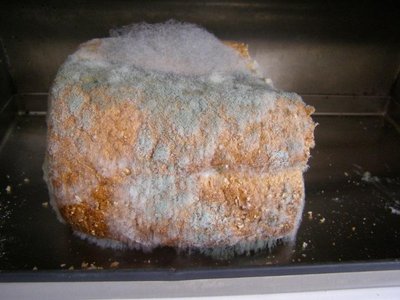
Neurospora: Mutants unable to synthesize arginine revealed gene-enzyme relationships.
Gene Expression: Transcription and Translation
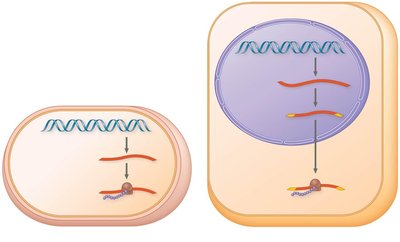
Gene expression involves two main stages: transcription (DNA to RNA) and translation (RNA to protein). RNA acts as a bridge between genes and proteins.
Transcription: Synthesis of RNA from DNA template, producing mRNA.
Translation: Synthesis of polypeptide from mRNA template.
RNA Processing: In eukaryotes, pre-mRNA is modified (splicing, capping, polyadenylation) before translation.
Types of RNA
Three main types of RNA are involved in gene expression:
Messenger RNA (mRNA): Carries genetic code from DNA to ribosome.
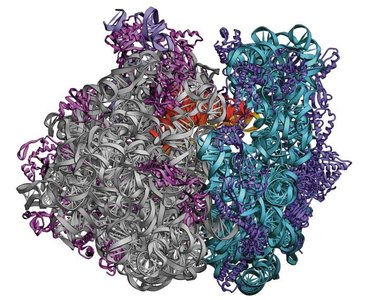
Ribosomal RNA (rRNA): Forms the core of ribosome's structure and catalyzes protein synthesis.
Transfer RNA (tRNA): Brings amino acids to ribosome, matching codons in mRNA with anticodons.
Structure of RNA vs. DNA
RNA and DNA are both nucleic acids but differ in structure and function.
RNA: Single-stranded, contains ribose sugar, bases: A, U, G, C.
DNA: Double-stranded, contains deoxyribose sugar, bases: A, T, G, C.


The Genetic Code: Codons
The genetic code is a triplet code, with each codon (three nucleotides) specifying an amino acid. The code is universal, redundant, and non-overlapping.
64 Codons: 61 code for amino acids, 3 are stop signals.
Start Codon: AUG (Methionine).
Stop Codons: UAA, UGA, UAG.
Redundancy: Multiple codons can specify the same amino acid.
Reading Frame: Codons must be read in correct groupings.
Transcription: Mechanism and Regulation
Transcription is catalyzed by RNA polymerase, which binds to promoter regions and synthesizes RNA complementary to the DNA template strand.
Promoter: DNA sequence where RNA polymerase binds.
Transcription Factors: Mediate binding and initiation in eukaryotes.
TATA Box: Crucial promoter element in eukaryotes.
Elongation: RNA polymerase moves along DNA, adding nucleotides to the 3' end.
Termination: Different mechanisms in prokaryotes (hairpin, Rho-dependent) and eukaryotes (polyadenylation signal).
RNA Processing in Eukaryotes
Pre-mRNA undergoes modifications before becoming mature mRNA:
5' Cap: Modified guanine nucleotide added to protect RNA.
Poly-A Tail: 50–250 adenine nucleotides added to 3' end.
Splicing: Introns removed, exons joined by spliceosomes.
Alternative Splicing: Allows production of multiple proteins from one gene.
Functional and Evolutionary Importance of Introns
Introns and non-coding DNA play roles in gene regulation, alternative splicing, and evolution. Exon shuffling and transposable elements contribute to genetic diversity.
Introns: May regulate gene expression and facilitate exon shuffling.
Transposons: DNA elements that move within the genome, discovered by Barbara McClintock.
Translation: Mechanism and Components
Translation converts mRNA into a polypeptide chain using tRNA and ribosomes. The process involves initiation, elongation, and termination.
tRNA: Carries amino acids, matches anticodon to mRNA codon.
Ribosome: Facilitates coupling of tRNA and mRNA, composed of rRNA and protein.
Binding Sites: A (aminoacyl), P (peptidyl), E (exit).
Initiation: Assembly of mRNA, initiator tRNA, and ribosomal subunits.
Elongation: Addition of amino acids to growing chain.
Termination: Release factor binds stop codon, polypeptide released.
Protein Folding and Targeting
After translation, polypeptides fold into functional proteins and may undergo post-translational modifications. Proteins are targeted to specific cellular locations.
Folding: Secondary and tertiary structures form spontaneously.
Post-Translational Modifications: Chemical changes required for function.
Targeting: Signal peptides direct proteins to the ER or other locations.
Mutations and Their Effects
Mutations are changes in genetic material that can affect protein structure and function. They are classified as point mutations, insertions, deletions, and can be silent, missense, or nonsense.
Point Mutations: Single nucleotide changes; can be silent, missense, or nonsense.
Insertions/Deletions: Can cause frameshift mutations, often more disruptive.
Transitions vs. Transversions: Transitions (purine to purine) are more common and less likely to be harmful than transversions (purine to pyrimidine).
Mutagens: Physical or chemical agents causing mutations.
What Is a Gene?
The concept of a gene has evolved from a unit of inheritance to a region of DNA that can be expressed to produce a functional product, either a polypeptide or an RNA molecule.
Locus: Specific location of a gene on a chromosome.
Allele: Variant form of a gene.
Summary Table: Types of Mutations
Mutation Type | Effect | Example |
|---|---|---|
Silent | No change in amino acid | Synonymous codon |
Missense | Change in amino acid | Sickle-cell anemia |
Nonsense | Premature stop codon | Beta-thalassemia |
Frameshift | Altered reading frame | Indel mutations |
Key Equations
Central Dogma:
Transcription:
Translation:
