 Back
Chapter 2: Biomolecules and Atomic Structure – Key Concepts and Study Guide
Study Guide - Smart Notes
 Tailored notes based on your materials, expanded with key definitions, examples, and context.
Atoms, Elements, and Atomic Structure
Basic Definitions and Relationships
Understanding the structure of matter is fundamental to biology. Atoms are the smallest units of elements, which are pure substances consisting of only one type of atom. The properties of atoms and their arrangements determine the behavior of all matter, including biological molecules.
Atom: The smallest unit of an element that retains the properties of that element.
Element: A substance made entirely of one type of atom; cannot be broken down by chemical means.
Atomic Number: The number of protons in the nucleus of an atom; defines the element.
Atomic Mass: The sum of protons and neutrons in the nucleus.
Isotope: Atoms of the same element with different numbers of neutrons.
Radioactive Isotope: An isotope with an unstable nucleus that decays, emitting radiation.
Relationship between Atom and Element: An element is defined by its atoms, all of which have the same number of protons.
Particles in the Nucleus: The nucleus contains protons and neutrons.
Major Elements in the Human Body: Carbon (C), Hydrogen (H), Oxygen (O), and Nitrogen (N) make up about 96% of the human body.
How Ions Form: Ions are atoms that have gained or lost electrons, resulting in a net charge.
How Atoms Bond:
Covalent Bonds: Atoms share electrons.
Ionic Bonds: Atoms transfer electrons, creating charged ions that attract each other.
Hydrogen Bonds: Weak attractions between a hydrogen atom (in a polar molecule) and an electronegative atom (like oxygen or nitrogen).
Which Particles Affect Bonding? Electrons, especially those in the outermost shell (valence electrons), determine how atoms bond.
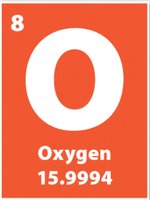
Oxygen Example: Atomic number = 8, Atomic mass ≈ 16. A neutral oxygen atom has 8 protons, 8 neutrons (rounded), and 8 electrons.
Water and Its Properties
Hydrogen Bonds and Water's Unique Properties
Water's structure allows it to form hydrogen bonds, giving it unique properties essential for life.
Solvent Abilities: Water dissolves many substances due to its polarity, making it an excellent solvent.
Cohesion and Adhesion: Water molecules stick to each other (cohesion) and to other substances (adhesion).
High Specific Heat: Water can absorb a lot of heat before changing temperature.
Chemical Properties as a Solvent: Water's polarity allows it to surround and separate ions and polar molecules, facilitating chemical reactions in cells.
pH and Acidity
Understanding pH
The pH scale measures the concentration of hydrogen ions (H+) in a solution, indicating its acidity or basicity.
pH Range: 0 (most acidic) to 14 (most basic), with 7 being neutral.
Acids: Increase H+ concentration (pH < 7).
Bases: Decrease H+ concentration (pH > 7).
Antacids and Heartburn: Antacids are bases that neutralize excess stomach acid (HCl), raising the pH and relieving discomfort.
Macromolecules: Structure and Function
Overview of Biological Macromolecules
Living organisms are built from four main types of macromolecules: carbohydrates, lipids, proteins, and nucleic acids. Each has unique structures and functions.
Macromolecule: Large molecules made of smaller subunits (monomers).
Monomer: A single subunit that can join with others to form a polymer.
Polymer: A chain of monomers linked together.
Carbohydrates
Monomer: Monosaccharide (simple sugar, e.g., glucose).
Polymer: Polysaccharide (e.g., starch, cellulose).
Function: Energy storage and structural support.
Effect of Simple vs. Complex Carbohydrates: Simple sugars cause rapid spikes in blood glucose, while complex carbohydrates lead to slower, sustained increases.
Lipids
Types: Fats, oils, phospholipids, sterols.
Hydrophobic: Repelled by water.
Hydrophilic: Attracted to water.
Triglyceride Structure: One glycerol molecule bonded to three fatty acids.
Saturated Fat: Fatty acids have no double bonds; solid at room temperature.
Unsaturated Fat: Fatty acids have one or more double bonds; liquid at room temperature.
Sterols: Four fused carbon rings; basic structure of cholesterol and steroid hormones.
Relationship to Hormones: Sterols serve as precursors for steroid hormones.
Proteins
Monomer: Amino acid.
Polymer: Polypeptide or protein.
Distinguishing Feature: Proteins contain nitrogen (N), unlike carbohydrates and lipids.
Denaturation: Loss of protein structure (and function) due to heat, pH, or chemicals.
Complete Protein: Contains all essential amino acids.
Incomplete Protein: Lacks one or more essential amino acids.
Three Main Groups in Amino Acid Structure: Amino group (–NH2), carboxyl group (–COOH), and R group (side chain).
What Makes Amino Acids Different? The R group (side chain) varies among amino acids, giving each unique properties.
Nucleic Acids
Monomer: Nucleotide.
Polymer: DNA or RNA.
DNA vs. RNA: DNA stores genetic information; RNA helps in protein synthesis and gene regulation.
Utility: DNA is the blueprint for life; RNA translates genetic code into proteins.
Biogeochemical Cycles
Elemental Locations in the Physical Environment
Carbon: Found in atmosphere (CO2), rocks (carbonates), and dissolved in water.
Nitrogen: Found in atmosphere (N2 gas), soil (nitrates, ammonium), and water.
Phosphorus: Found in rocks (phosphate minerals) and soil; not abundant in atmosphere.
Practice Questions and Key Concepts
Do electrons contribute to atomic mass? Electrons have negligible mass compared to protons and neutrons.
Effect of Losing Neutrons: Changes the isotope of the atom.
Effect of Losing Protons: Changes the element itself.
Atomic Weight and Number of Oxygen: Atomic number = 8, atomic mass ≈ 16; a neutral atom has 8 electrons.
Proteins vs. Carbohydrates and Lipids: Proteins contain nitrogen, which distinguishes them from carbohydrates and lipids.
Macromolecule | Monomer | Polymer | Key Elements |
|---|---|---|---|
Carbohydrate | Monosaccharide | Polysaccharide | C, H, O |
Lipid | Fatty acid, Glycerol | Triglyceride, Phospholipid | C, H, O |
Protein | Amino acid | Polypeptide | C, H, O, N |
Nucleic Acid | Nucleotide | DNA, RNA | C, H, O, N, P |
Additional info: This guide expands on the provided outline with academic context, definitions, and examples to ensure a comprehensive understanding of Chapter 2 concepts in General Biology.
