 Back
BackChapter 2: The Chemical Basis of Life – Study Notes
Study Guide - Smart Notes
 Tailored notes based on your materials, expanded with key definitions, examples, and context.
Elements, Atoms, and Compounds
Essential Elements in Living Organisms
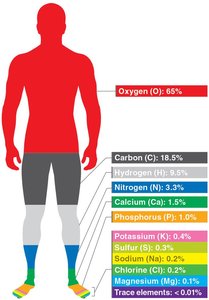
Living organisms are composed of matter, which consists of chemical elements. About 25 elements are essential for human life, with four elements—oxygen, carbon, hydrogen, and nitrogen—making up approximately 96% of the weight of most living organisms. Elements are pure substances consisting of only one type of atom, while compounds are substances formed from two or more different elements in a fixed ratio.
Element: A substance that cannot be broken down into other substances by chemical means.
Compound: A substance consisting of two or more elements combined in a fixed ratio.
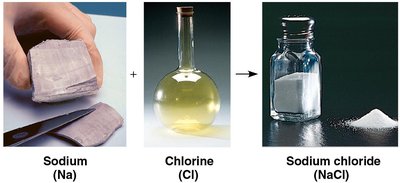
Emergent Properties: New properties that arise when elements combine to form compounds, such as table salt (NaCl) having properties different from sodium and chlorine.
Trace Elements: Elements required in minute quantities for proper physiological functioning (e.g., iron, iodine, fluoride).
Atoms: Structure and Properties
Atomic Structure
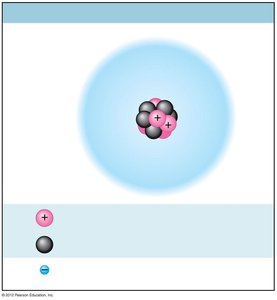
An atom is the smallest unit of matter that retains the properties of an element. Atoms are composed of three subatomic particles: protons (positive charge), neutrons (no charge), and electrons (negative charge). Protons and neutrons are located in the nucleus, while electrons orbit the nucleus in electron shells.
Atomic Number: The number of protons in an atom, which determines the element.
Mass Number: The sum of protons and neutrons in the nucleus.
Atomic Mass: Approximately equal to the mass number.
Isotopes: Atoms of the same element with different numbers of neutrons.
Radioactive Isotopes
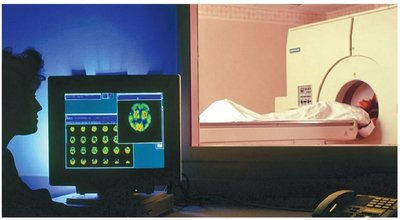
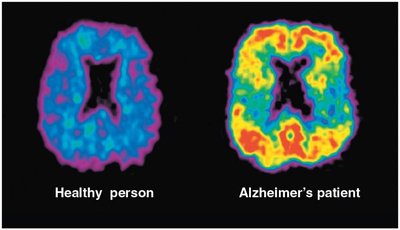
Radioactive isotopes are unstable forms of elements that emit radiation as they decay. They are useful as tracers in biological research and medical imaging, but can also pose health risks.
Tracer: Radioactive isotopes used to track the movement of substances in organisms.
Imaging: PET scans utilize radioactive isotopes to visualize metabolic activity in tissues.
Chemical Bonds
Electron Distribution and Chemical Properties
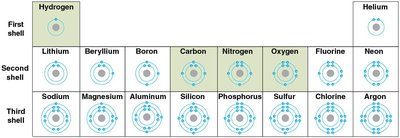
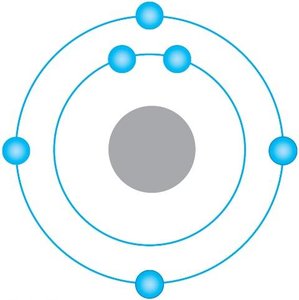
Electrons occupy specific shells around the nucleus. Atoms with incomplete outer shells tend to interact with other atoms, forming chemical bonds by sharing, gaining, or losing electrons.
Electron Shell: Energy levels where electrons are found.
Valence Electrons: Electrons in the outermost shell, involved in bonding.
Covalent Bonds
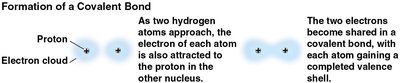
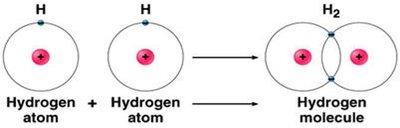
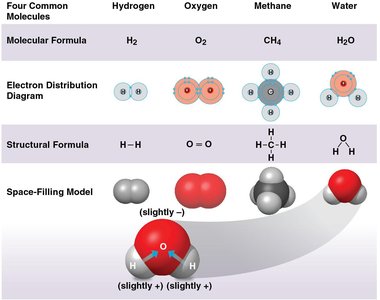
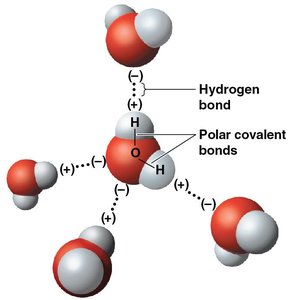
Covalent bonds form when atoms share electrons. In a nonpolar covalent bond, electrons are shared equally; in a polar covalent bond, electrons are shared unequally, resulting in partial charges.
Covalent Bond: A bond formed by sharing electrons between atoms.
Nonpolar Covalent Bond: Equal sharing of electrons.
Polar Covalent Bond: Unequal sharing, leading to partial positive and negative charges.
Ionic Bonds
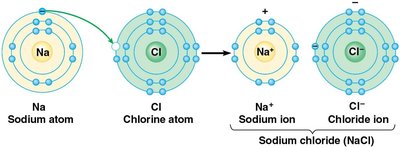
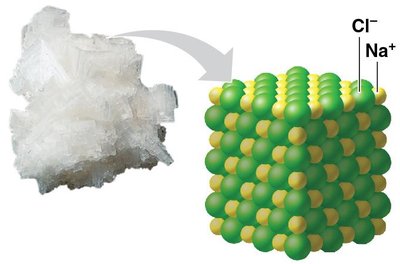
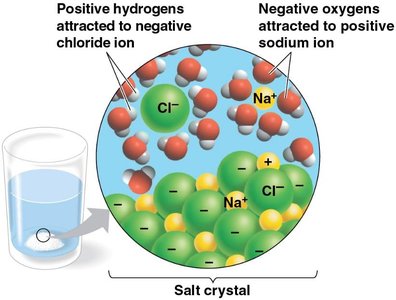
Ionic bonds are formed when electrons are transferred from one atom to another, resulting in oppositely charged ions that attract each other. Ionic compounds, such as salt (NaCl), are formed by these attractions.
Ion: An atom or molecule with a net electrical charge.
Ionic Bond: Attraction between oppositely charged ions.
Salt: Synonym for ionic compound.
Hydrogen Bonds
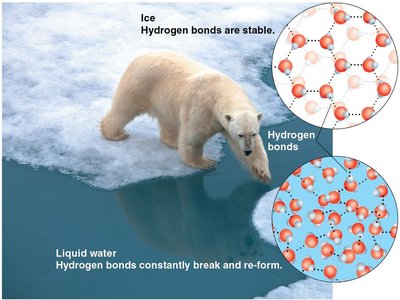
Hydrogen bonds are weak attractions between a hydrogen atom in one molecule and an electronegative atom (such as oxygen or nitrogen) in another. These bonds are crucial in the chemistry of life, especially in water and biological molecules.
Hydrogen Bond: Weak bond between a hydrogen atom and an electronegative atom.
Polar Molecule: Molecule with an uneven distribution of charges.
Chemical Reactions
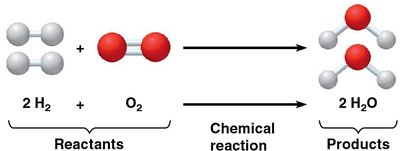
Chemical reactions involve the breaking and forming of chemical bonds, converting reactants into products. Matter is not created or destroyed, only rearranged.
Reactant: Starting material in a chemical reaction.
Product: Resulting substance after a chemical reaction.
Law of Conservation of Matter: Matter is neither created nor destroyed in a chemical reaction.
Example: Formation of water from hydrogen and oxygen:
Water’s Life-Supporting Properties
Cohesion, Adhesion, and Surface Tension
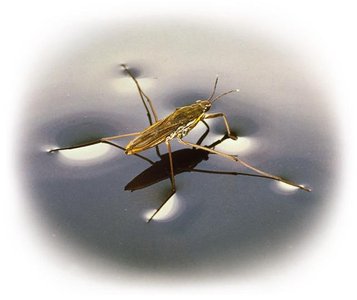
Water molecules exhibit cohesion (sticking together) and adhesion (clinging to other substances). Cohesion contributes to surface tension, which allows certain organisms to walk on water.
Cohesion: Attraction between molecules of the same substance.
Adhesion: Attraction between different substances.
Surface Tension: Difficulty in breaking the surface of a liquid.
Temperature Moderation
Water moderates temperature due to its high specific heat, which is a result of hydrogen bonding. Evaporative cooling occurs when water evaporates, cooling the surface left behind.
Thermal Energy: Energy from random movement of atoms and molecules.
Heat: Transfer of thermal energy from warmer to cooler matter.
Evaporative Cooling: Cooling effect as water evaporates.
Ice Floats on Water
Water is less dense as a solid than as a liquid because hydrogen bonds stabilize and keep molecules apart in ice. This property allows ice to float, providing insulation for aquatic life.
Density: Mass per unit volume; ice is less dense than liquid water.
Hydrogen Bonding: Stabilizes ice structure.
Water as a Solvent
Water is known as the "solvent of life" due to its ability to dissolve a wide range of substances. Its polarity allows it to surround and dissolve ionic and polar molecules, forming aqueous solutions.
Solution: Uniform mixture of two or more substances.
Solvent: The dissolving agent (water).
Solute: The substance dissolved.
Acids, Bases, and pH
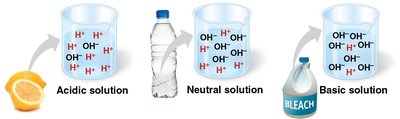
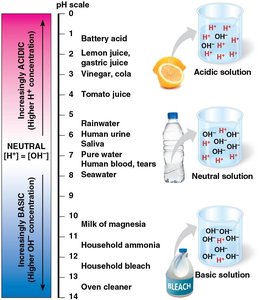
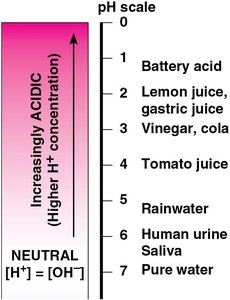
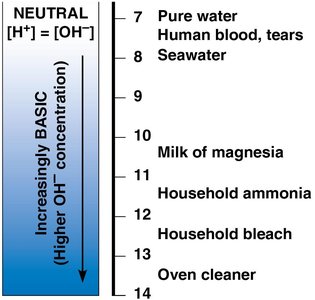
The pH scale measures the acidity or basicity of a solution. Acids increase hydrogen ion (H+) concentration, while bases decrease it. Buffers help maintain stable pH in biological systems.
Acid: Substance that increases H+ concentration.
Base: Substance that decreases H+ concentration.
Buffer: Substance that minimizes changes in pH.
pH Scale: Ranges from 0 (most acidic) to 14 (most basic); 7 is neutral.
Impact of Rising CO2 on Coral Reefs
Ocean Acidification
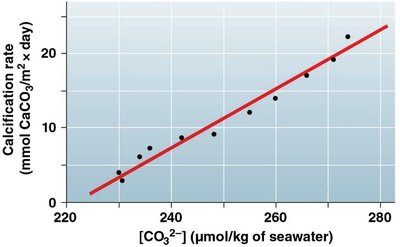
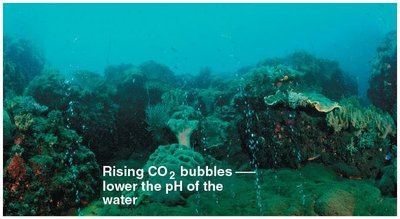
Rising atmospheric CO2 from fossil fuel combustion is absorbed by oceans, lowering pH through ocean acidification. This process reduces carbonate ion concentration, which is essential for coral and shell-building organisms.
Ocean Acidification: Decrease in ocean pH due to increased CO2.
Calcification: Process by which corals build their skeletons using carbonate ions.
Impact: Lower carbonate ion concentration slows coral growth.
Summary Table: Isotopes of Carbon
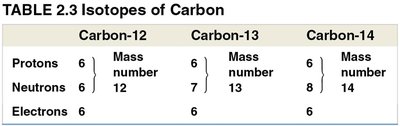
The following table compares the three main isotopes of carbon, highlighting differences in neutron number and mass number.
Carbon-12 | Carbon-13 | Carbon-14 | |
|---|---|---|---|
Protons | 6 | 6 | 6 |
Neutrons | 6 | 7 | 8 |
Electrons | 6 | 6 | 6 |
Mass number | 12 | 13 | 14 |
Summary Flowchart: Atoms and Chemical Bonds
This flowchart summarizes the relationships between atoms, their charges, and the types of chemical bonds they form.
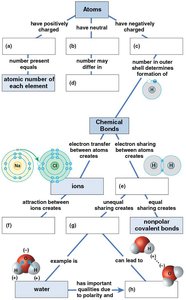
A) Protons B) Neutrons C) Electrons D) Isotopes E) Covalent Bonds F) Ionic Bonds G) Polar Covalent H) Hydrogen Bonds
Key Concepts for Review
Importance of chemical elements to living organisms
Formation and properties of compounds
Structure of atoms and subatomic particles
Differences between ionic, hydrogen, and covalent bonds
Definition and impact of chemical reactions
Life-supporting properties of water
pH scale and acid/base solutions
Effects of rising CO2 levels on coral reefs
