 Back
BackChapter 2: The Chemical Context of Life – Study Notes
Study Guide - Smart Notes
 Tailored notes based on your materials, expanded with key definitions, examples, and context.
Chemistry of Life: Creating Compounds
Introduction to Matter, Elements, and Compounds
All living organisms are composed of matter, which is anything that occupies space and has mass. The study of biology requires an understanding of the chemical principles that govern the structure and behavior of matter.
Element: A substance that cannot be broken down into other substances by chemical means.
Atom: The smallest unit of an element that retains its chemical properties.
Compound: A substance consisting of two or more elements combined in a fixed ratio. Compounds have emergent properti
es distinct from their constituent elements.
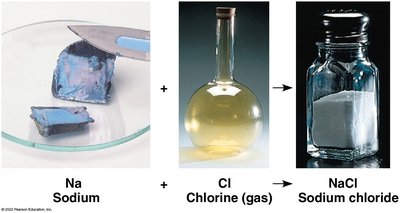
Example: Sodium (Na) and chlorine (Cl) are both dangerous in pure form, but together they form sodium chloride (NaCl), or table salt, which is essential for life.
Elements of Life
Essential and Trace Elements
Of the 92 naturally occurring elements, only about 20–25% are essential for life. These elements are required for an organism to survive, grow, and reproduce. Trace elements are needed in minute quantities but are still vital for biological processes.
Essential elements: Oxygen, carbon, hydrogen, and nitrogen make up about 96% of living matter.
Trace elements: Elements like iodine are required in small amounts; deficiency can cause disorders such as goiter.
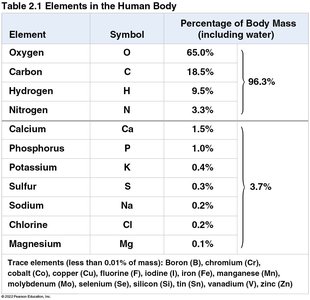
Example: Iodine is necessary for thyroid function in vertebrates.
Evolution of Tolerance to Toxic Elements
Adaptation and Phytoremediation
Some elements are toxic to most organisms, but certain species have evolved mechanisms to tolerate or even utilize these elements. Phytoremediation is a process where plants are used to remove contaminants from the environment.
Phytoremediation: Sunflowers can absorb heavy metals like lead and zinc from contaminated soils, helping to detoxify the environment.
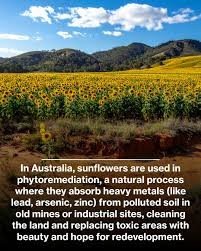
Example: Sunflowers were used to clean up soils after environmental disasters.
Element Properties Depend on Atomic Structure
Subatomic Particles and Atomic Structure
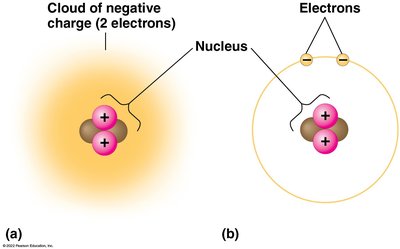
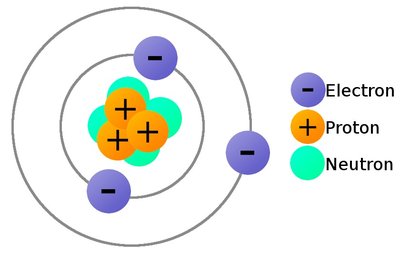
Atoms are composed of three types of subatomic particles: protons, neutrons, and electrons. The arrangement and number of these particles determine the chemical properties of an element.
Proton: Positively charged particle found in the nucleus.
Neutron: Electrically neutral particle found in the nucleus.
Electron: Negatively charged particle found in orbitals around the nucleus.
Atomic Number and Atomic Mass
Definitions and Calculations
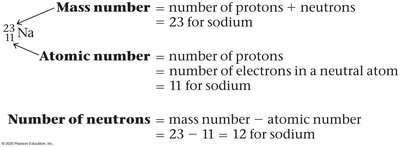
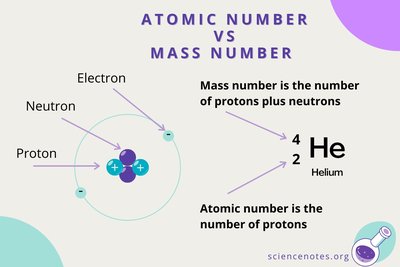
The atomic number and mass number are fundamental properties of elements. The atomic number is the number of protons in the nucleus, while the mass number is the sum of protons and neutrons.
Atomic number (Z): Number of protons in the nucleus.
Mass number (A): Number of protons plus neutrons.
Number of neutrons: Calculated as mass number minus atomic number.
Isotopes
Stable and Radioactive Isotopes
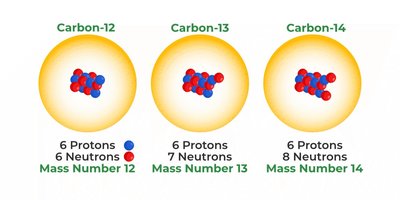
Isotopes are different forms of the same element that have the same number of protons but different numbers of neutrons. Some isotopes are stable, while others are radioactive and decay over time, emitting radiation.
Stable isotopes: Do not change over time.
Radioactive isotopes: Unstable and decay, releasing particles and energy.
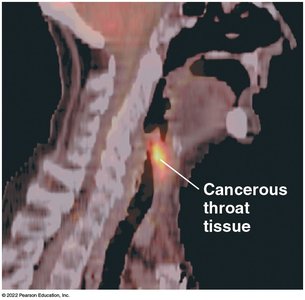
Applications: Used in dating fossils, tracing metabolic pathways, and medical diagnostics (e.g., PET scans).
Energy and Electrons
Electron Shells and Energy Levels
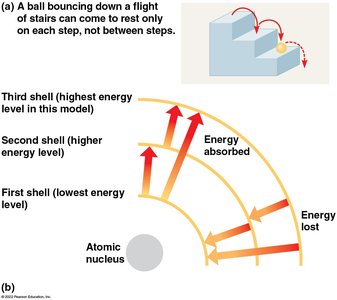
Electrons occupy specific energy levels or shells around the nucleus. The energy of an electron increases with its distance from the nucleus. Electrons can move between shells by absorbing or releasing energy.
Potential energy: Energy due to position or structure.
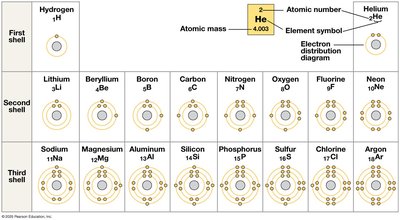
Electron shells: Electrons are arranged in shells with increasing energy further from the nucleus.
Electrons and Chemical Bonds
Valence Electrons and Reactivity
The chemical behavior of an atom is determined by the number of electrons in its outermost shell (valence shell). Atoms with incomplete valence shells are reactive and tend to form chemical bonds to achieve stability.
Inert atoms: Atoms with full valence shells (e.g., noble gases) are unreactive.
Reactive atoms: Atoms with unpaired electrons in the valence shell seek to complete their shells by forming bonds.
Covalent Bonds
Types and Properties
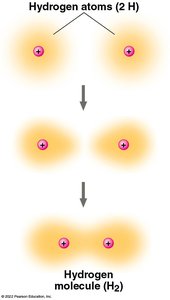
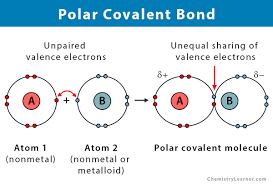
A covalent bond involves the sharing of a pair of valence electrons between two atoms. Molecules are formed when two or more atoms are held together by covalent bonds.
Single bond: Sharing of one pair of electrons.
Double bond: Sharing of two pairs of electrons.
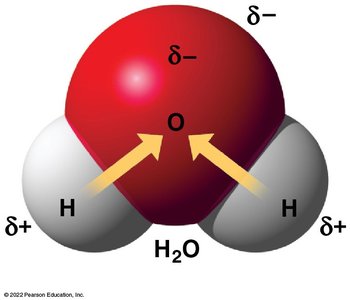
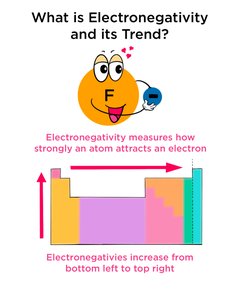
Electronegativity: The tendency of an atom to attract electrons in a covalent bond.
Ionic Bonds
Formation and Properties
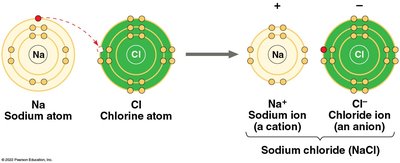
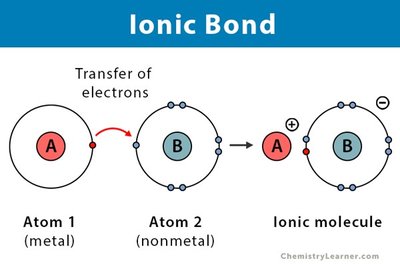
Ionic bonds are formed when one atom transfers electrons to another, resulting in the formation of oppositely charged ions. The electrostatic attraction between these ions forms an ionic bond.
Cation: Positively charged ion (loses electron).
Anion: Negatively charged ion (gains electron).
Ionic compound: A compound formed by ionic bonds, often called a salt.
Weak Chemical Interactions
Hydrogen Bonds and Van der Waals Interactions
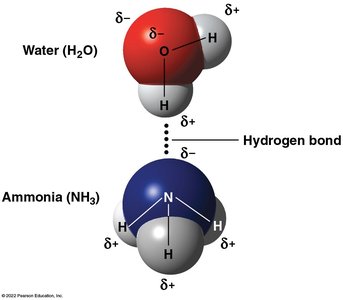
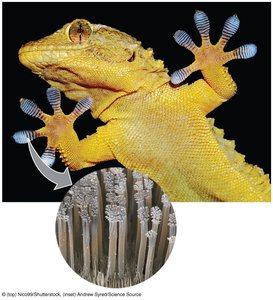
Many biological molecules are stabilized by weak chemical interactions, including hydrogen bonds and van der Waals interactions.
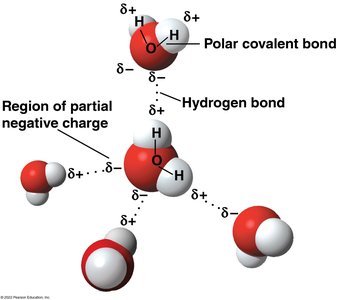
Hydrogen bond: A weak bond between a hydrogen atom covalently bonded to an electronegative atom and another electronegative atom.
Van der Waals interactions: Weak attractions between molecules or parts of molecules that result from transient local partial charges.
Chemical Reactions
Making and Breaking Bonds
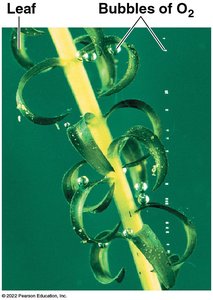
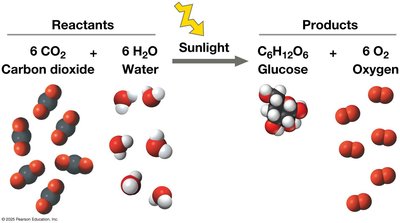
Chemical reactions involve the making and breaking of chemical bonds. Reactants are transformed into products through these reactions. Photosynthesis is a key example of a biological chemical reaction.
Reactants: Starting substances in a chemical reaction.
Products: Substances formed as a result of the reaction.
Photosynthesis equation:
Hydrogen Bonding and Water
Properties of Water
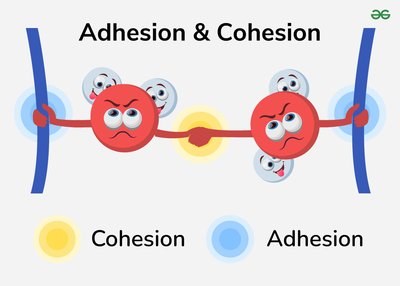
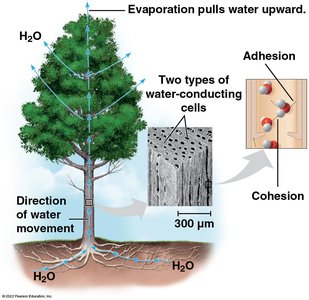
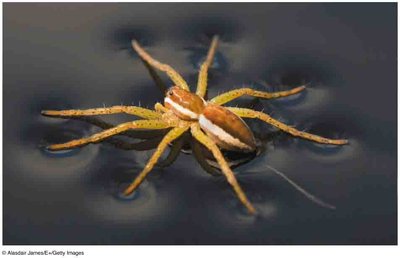
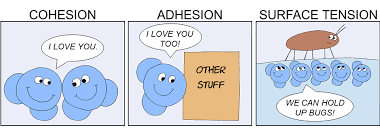
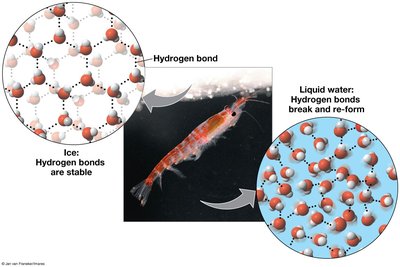
Water is a polar molecule, and hydrogen bonding between water molecules gives rise to unique properties essential for life, including cohesion, adhesion, surface tension, temperature moderation, and the ability to dissolve many substances.
Cohesion: Attraction between water molecules due to hydrogen bonding.
Adhesion: Attraction between water molecules and other substances.
Surface tension: Measure of how difficult it is to stretch or break the surface of a liquid.
Moderation of Temperature by Water
Heat Absorption and Release
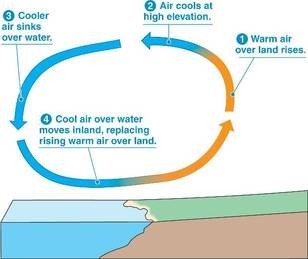
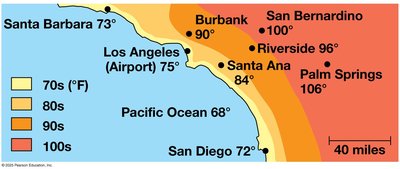
Water can absorb or release large amounts of heat with only slight changes in its own temperature, helping to stabilize environmental and organismal temperatures.
High specific heat: Water resists temperature changes due to hydrogen bonding.
Evaporative cooling: As water evaporates, it removes heat, cooling the surface.
Floating of Ice on Liquid Water
Density and Insulation
Ice is less dense than liquid water because hydrogen bonds in ice are more ordered, causing it to float. This property insulates bodies of water, protecting aquatic life in cold climates.
Ice floats: Prevents bodies of water from freezing solid.
Insulation: Floating ice insulates the water below, allowing life to persist.
Water: The Solvent of Life
Solutions, Solvents, and Solutes
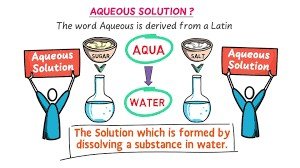
Water's polarity makes it an excellent solvent, capable of dissolving a wide variety of substances. Solutions are homogeneous mixtures, with water as the solvent in aqueous solutions.
Solvent: The dissolving agent (water in biological systems).
Solute: The substance dissolved in the solvent.
Aqueous solution: A solution where water is the solvent.
Hydrophilic and Hydrophobic Substances
Affinity for Water
Substances that dissolve in water are hydrophilic, while those that do not are hydrophobic. Hydrophilic substances have polar or charged regions, whereas hydrophobic substances are typically nonpolar.
Hydrophilic: Water-loving; dissolves easily in water.
Hydrophobic: Water-fearing; does not dissolve in water (e.g., oils).
Acids, Bases, and pH
pH Scale and Buffers
The pH scale measures the concentration of hydrogen ions (H+) in a solution. Acids increase H+ concentration (pH < 7), while bases decrease it (pH > 7). Buffers help maintain stable pH in biological systems by accepting or donating H+ as needed.
Acid: Substance that increases H+ concentration.
Base: Substance that decreases H+ concentration.
Buffer: Substance that minimizes changes in pH.
Example: The internal pH of most living cells is close to 7, and buffers are crucial for maintaining this stability.
