 Back
Chapter 2: The Chemical Context of Life – Study Notes
Study Guide - Smart Notes
 Tailored notes based on your materials, expanded with key definitions, examples, and context.
Chapter 2: The Chemical Context of Life
Introduction
Chemistry is fundamental to understanding biological processes. The interaction of chemical compounds, such as carbon dioxide with water, can have profound effects on living systems, including coral reefs. This chapter explores the elements, atoms, and compounds that make up living organisms, the types of chemical bonds, and the life-supporting properties of water.
Elements, Atoms, and Compounds
Essential Elements in Living Organisms
Living organisms are composed of matter, which consists of chemical elements. About 25 elements are essential for human life, with four elements—oxygen, carbon, hydrogen, and nitrogen—making up about 96% of the weight of most living organisms.
Element: A substance that cannot be broken down into other substances by chemical means.
Compound: A substance consisting of two or more different elements in a fixed ratio.
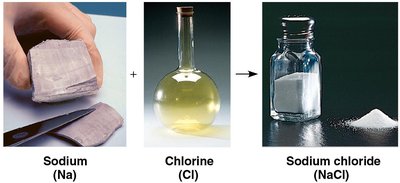
Emergent Properties: New properties that arise when elements combine to form compounds, such as table salt (NaCl) formed from sodium and chlorine.
Example: Table salt illustrates emergent properties; sodium is a reactive metal, chlorine is a poisonous gas, but together they form edible salt.
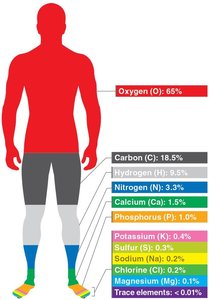
Trace Elements
Trace elements are required in minute quantities but are essential for health. Examples include iron, iodine, and fluoride.
Iron: Needed for oxygen transport in blood.
Iodine: Prevents goiter, a symptom of deficiency.
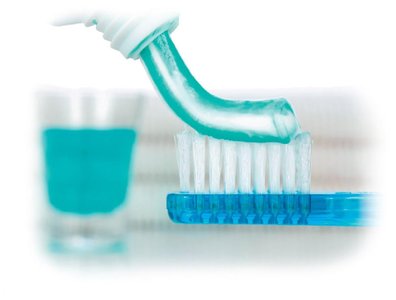
Fluoride: Added to water and dental products to reduce tooth decay.


Atomic Structure
Atoms and Subatomic Particles
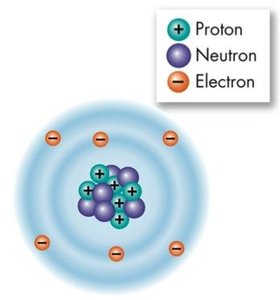
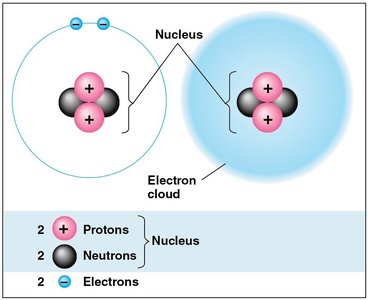
An atom is the smallest unit of matter that retains the properties of an element. Atoms consist of three subatomic particles:
Protons: Positively charged, found in the nucleus.
Neutrons: Neutral, found in the nucleus.
Electrons: Negatively charged, orbit the nucleus.
Atomic Number: Number of protons in an atom.
Mass Number: Sum of protons and neutrons.
Isotopes
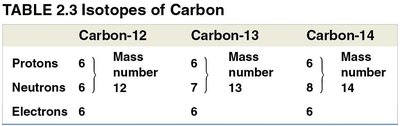
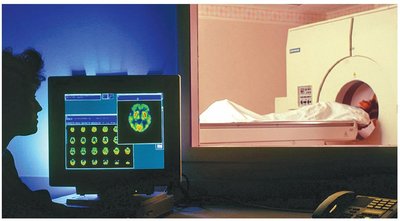
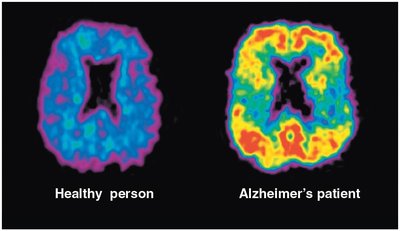
Isotopes are variants of elements with the same number of protons but different numbers of neutrons. Some isotopes are radioactive and can be used as tracers in biological research.
Example: Carbon-12, Carbon-13, and Carbon-14 are isotopes of carbon.
Isotope | Protons | Neutrons | Electrons | Mass Number |
|---|---|---|---|---|
Carbon-12 | 6 | 6 | 6 | 12 |
Carbon-13 | 6 | 7 | 6 | 13 |
Carbon-14 | 6 | 8 | 6 | 14 |
Chemical Bonds
Electron Distribution and Chemical Properties
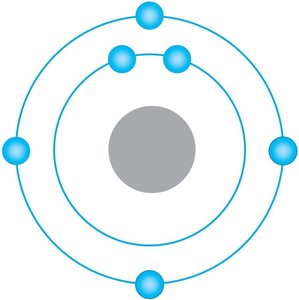
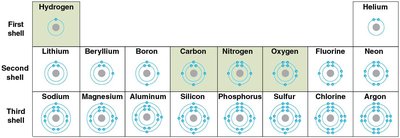
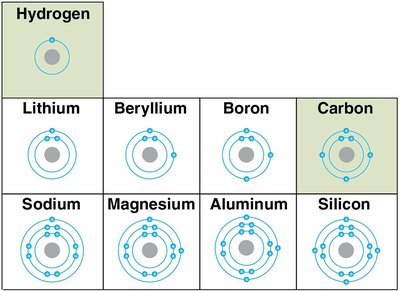
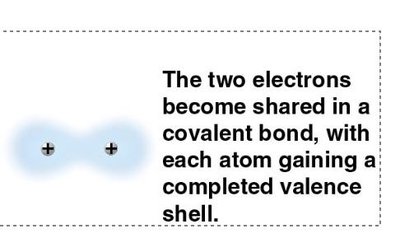
Electrons occupy electron shells around the nucleus. Atoms with incomplete outer shells tend to form chemical bonds by sharing, gaining, or losing electrons.
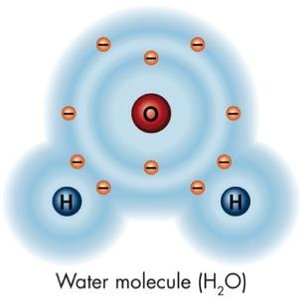
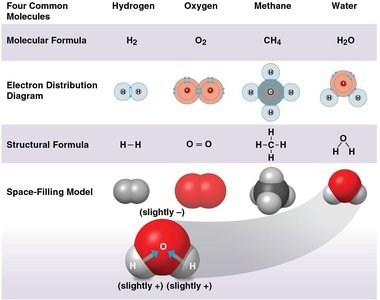
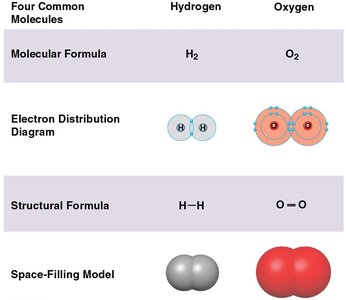
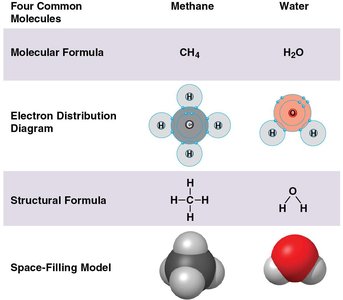
Covalent Bonds: Atoms share electrons. Example: H2O.
Ionic Bonds: Atoms transfer electrons, resulting in attraction between oppositely charged ions. Example: NaCl.

Covalent Bonds: Polar and Nonpolar
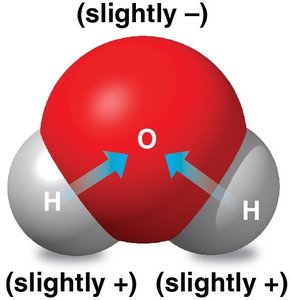
Covalent bonds can be nonpolar (electrons shared equally) or polar (electrons shared unequally). Water is a polar molecule due to the higher electronegativity of oxygen.
Nonpolar Covalent Bond: Electrons shared equally.
Polar Covalent Bond: Electrons shared unequally, creating partial charges.
Ionic Bonds
An ion is an atom or molecule with an electrical charge resulting from the gain or loss of electrons. Ionic bonds form between ions of opposite charge.
Example: Sodium (Na+) and chloride (Cl-) form NaCl.
Hydrogen Bonds
Hydrogen bonds are weak bonds important in the chemistry of life. They occur when a hydrogen atom covalently bonded to a highly electronegative atom (like oxygen) is attracted to another electronegative atom.
Example: Water molecules form hydrogen bonds with each other.
Chemical Reactions
Making and Breaking Bonds
Chemical reactions involve breaking existing bonds and forming new ones, converting reactants to products. Matter is not created or destroyed, only rearranged.
Example: Formation of water from hydrogen and oxygen.
Water’s Life-Supporting Properties
Cohesion, Adhesion, and Surface Tension
Hydrogen bonds make liquid water cohesive. Cohesion is the tendency of molecules of the same kind to stick together, while adhesion is the clinging of one substance to another. Surface tension is a measure of how difficult it is to break the surface of a liquid.
Temperature Moderation
Water’s hydrogen bonds moderate temperature by absorbing and releasing heat slowly. Evaporative cooling occurs when a substance evaporates, cooling the surface left behind.
Ice Floats
Water is less dense as a solid than as a liquid due to hydrogen bonding. Ice floats because its molecules are less densely packed than in liquid water.
Water as a Solvent
Water is known as the solvent of life. Its polarity allows it to dissolve many substances, forming aqueous solutions.
Acids, Bases, and pH
Water can dissociate into ions, affecting the pH of solutions. The pH scale measures how acidic or basic a solution is. Buffers help maintain stable pH in biological systems.
Acid: Substance that increases H+ concentration.
Base: Substance that decreases H+ concentration.
Buffer: Minimizes changes in pH.
Impact of Rising CO2 on Coral Reefs
Ocean Acidification
Rising atmospheric CO2 dissolves in seawater, forming carbonic acid and lowering ocean pH. This process, called ocean acidification, reduces carbonate ion concentration, slowing coral growth and calcification.
Evolution Connection: Water and Extraterrestrial Life
The unique properties of water are essential for life on Earth and are central to the search for life on other planets.
Summary Table: Types of Chemical Bonds
Bond Type | Definition | Example |
|---|---|---|
Covalent | Atoms share electrons | H2O |
Ionic | Atoms transfer electrons | NaCl |
Hydrogen | Weak attraction between molecules | Water molecules |
Key Concepts to Remember
Importance of chemical elements to living organisms
Formation of compounds and emergent properties
Structure of atoms and isotopes
Types of chemical bonds: ionic, covalent, hydrogen
Properties of water essential for life
Acidic and basic conditions, pH scale, and buffers
Impact of CO2 on coral reefs and ocean acidification
