 Back
Chapter 2: The Chemical Context of Life – General Biology Study Notes
Study Guide - Smart Notes
 Tailored notes based on your materials, expanded with key definitions, examples, and context.
Chapter 2: The Chemical Context of Life
2.1 Matter Consists of Chemical Elements in Pure Form and in Combinations Called Compounds
Matter is anything that occupies space and has mass. All organisms are composed of matter, which can exist in different states and forms. Matter is made up of elements, and elements can combine to form compounds.
Matter: Anything that takes up space and can be weighed.
Element: A substance that cannot be broken down into other substances by chemical means.
Compound: A substance consisting of two or more elements in a fixed ratio.
States of Matter: Solid, liquid, and gas.
Organic Compounds: Compounds containing carbon, typically found in living organisms.
Examples: Sodium (Na) and chlorine (Cl) combine to form sodium chloride (NaCl), an edible salt.
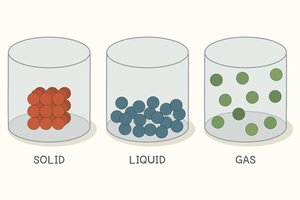
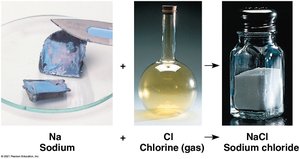
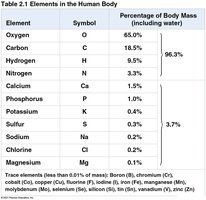
Table: Elements in the Human Body
Element | Symbol | Percentage of Body Mass (including water) |
|---|---|---|
Oxygen | O | 65.0% |
Carbon | C | 18.5% |
Hydrogen | H | 9.5% |
Nitrogen | N | 3.3% |
Calcium | Ca | 1.5% |
Phosphorus | P | 1.0% |
Potassium | K | 0.4% |
Sulfur | S | 0.3% |
Sodium | Na | 0.2% |
Chlorine | Cl | 0.2% |
Magnesium | Mg | 0.1% |
2.2 An Element’s Properties Depend on the Structure of Its Atoms
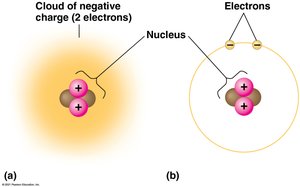
Atoms are the smallest units of matter that retain the properties of an element. Each atom consists of a nucleus containing protons and neutrons, surrounded by electrons.
Proton: Positively charged particle, mass of 1 Dalton (amu).
Neutron: Neutral particle, mass of 1 Dalton (amu).
Electron: Negatively charged particle, negligible mass.
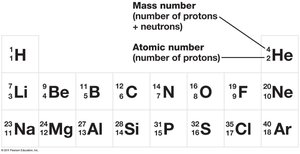
Atomic Number: Number of protons in the nucleus.
Mass Number: Number of protons plus neutrons.
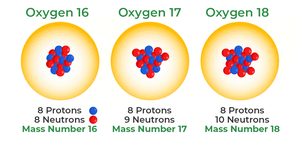
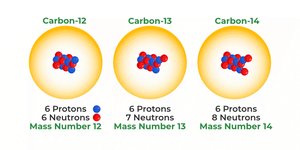
Isotopes: Variants of an element with different numbers of neutrons.
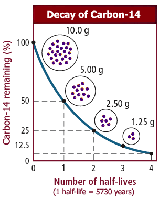
Radioactive Isotopes: Isotopes that decay spontaneously, releasing energy.
2.3 The Formation and Function of Molecules Depend on Chemical Bonding Between Atoms
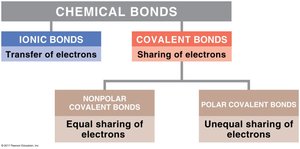
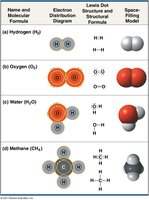
Chemical bonds are the forces that hold atoms together in molecules. The main types of chemical bonds are ionic, covalent, and weak interactions such as hydrogen bonds and Van der Waals forces.
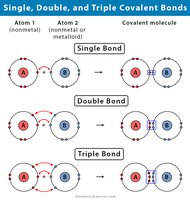
Covalent Bond: Sharing of a pair of electrons between two atoms.
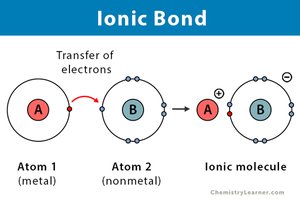
Ionic Bond: Transfer of electrons between oppositely charged atoms (cation and anion).
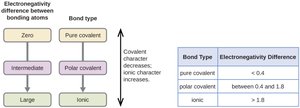
Electronegativity: The tendency of an atom to attract electrons when bonded.
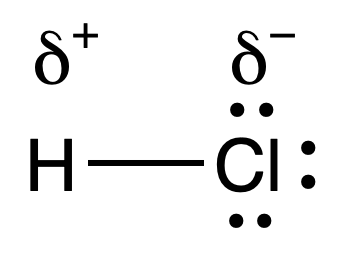
Polar Covalent Bond: Unequal sharing of electrons due to differences in electronegativity.
Non-Polar Covalent Bond: Equal sharing of electrons.
Hydrogen Bond: Weak interaction between H bonded to a highly electronegative atom and another electronegative atom.
Van der Waals Interaction: Weak, distance-dependent interactions due to fluctuations in electron clouds.

Electron Arrangement and Chemical Properties
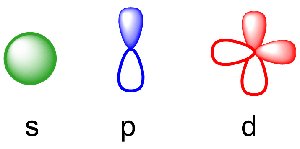
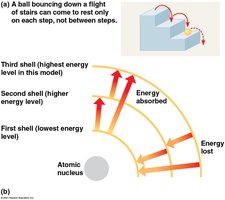
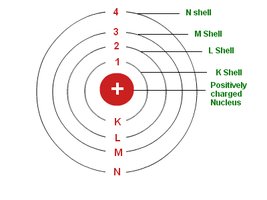
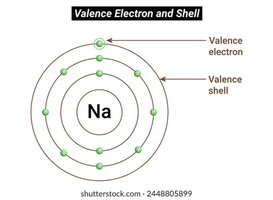
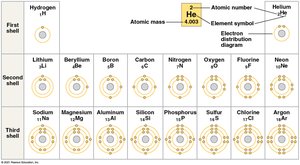
Electrons occupy specific regions called orbitals, which are organized into shells. The outermost shell, known as the valence shell, determines the chemical behavior of the atom.
Orbital: Region where electrons are found 90% of the time.
Electron Shell: Group of orbitals with similar energy levels.
Valence Shell: Outermost electron shell; determines reactivity.
Shell Capacity: where n is the shell number.
Summary of Major Points
Matter consists of chemical elements that can come together to form compounds.
The smallest unit of an element is the atom.
Atoms are composed of a positive nucleus (protons + neutrons) and a surrounding negative cloud (electrons).
Each element on the periodic table can be characterized by its atomic number and its atomic mass.
Isotopes of an element differ from each other in neutron number, therefore mass.
There are different types of chemical bonds that differ in nature and strength: ionic, covalent (polar vs. non-polar), hydrogen bonds and Van der Waals interactions.
