 Back
Chapter 2: The Chemical Context of Life – Study Notes
Study Guide - Smart Notes
 Tailored notes based on your materials, expanded with key definitions, examples, and context.
Chapter 2: The Chemical Context of Life
Key Concepts
This chapter explores the chemical foundations essential for understanding biological processes. Matter, elements, atoms, and chemical bonds are discussed, along with the unique properties of water that make life possible.
Matter consists of chemical elements in pure form and in combinations called compounds.
An element’s properties depend on the structure of its atoms.
The formation and function of molecules depend on chemical bonding between atoms.
Chemical reactions make and break chemical bonds.
Hydrogen bonding gives water properties that help make life possible.
Matter, Elements, and Atoms
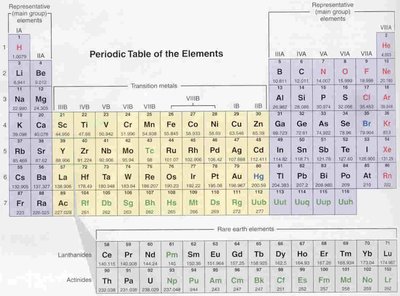
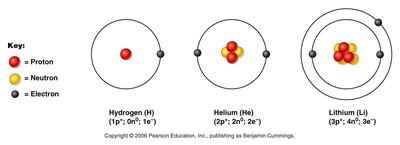
Matter is anything that occupies space and has mass. Elements are pure substances that cannot be broken down by chemical reactions. Atoms are the smallest units of elements, retaining their properties.
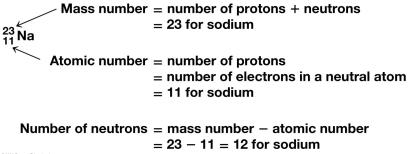
Atomic Number: Number of protons in the nucleus.
Mass Number: Sum of protons and neutrons.
Isotopes: Atoms with the same number of protons but different numbers of neutrons.
Atomic Structure and Models
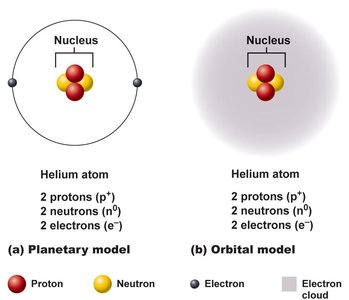
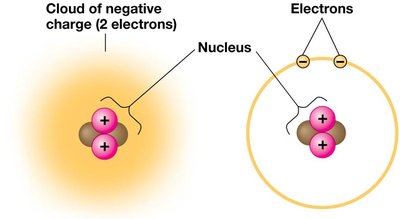
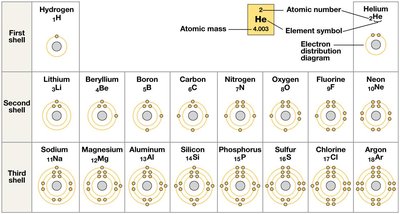
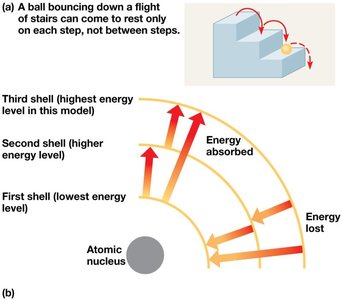
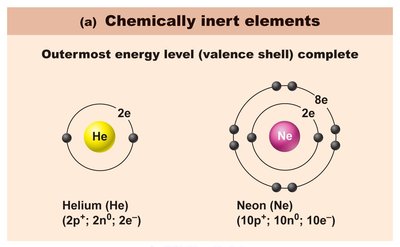
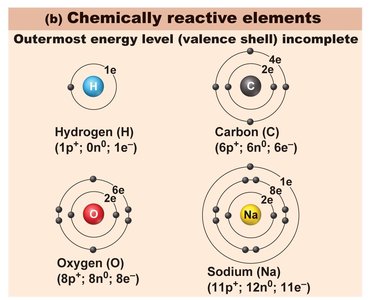
Atoms consist of a nucleus (protons and neutrons) surrounded by electrons in shells or orbitals. The arrangement of electrons determines chemical reactivity.
Bohr Model: Electrons orbit the nucleus in defined shells.
Quantum Model: Electrons occupy orbitals, regions of probability.
Octet Rule: Atoms tend to fill their outermost shell with eight electrons.
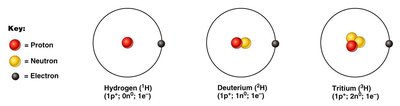
Isotopes and Their Applications
Isotopes are variants of elements with different neutron numbers. Some are radioactive and used in biological research and medicine.
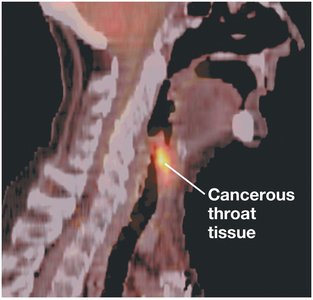
Radioactive Isotopes: Used in tracing biological processes and medical imaging.
Examples: 14C, 22Na, 32P, 36Cl, 18F.
Chemical Bonds
Chemical bonds are forces that hold atoms together in molecules. The main types are ionic, covalent, and hydrogen bonds.
Ionic Bonds: Formed by electron transfer between atoms with large differences in electronegativity. Result in charged ions (cations and anions).
Covalent Bonds: Formed by electron sharing. Can be non-polar (equal sharing) or polar (unequal sharing).
Hydrogen Bonds: Weak attractions between partially charged atoms in molecules with polar covalent bonds.
Van der Waals Interactions: Weak, transient interactions important in protein folding and membrane structure.
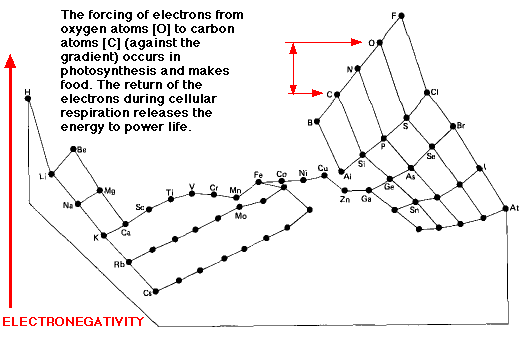
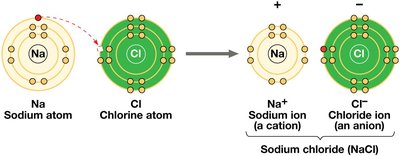
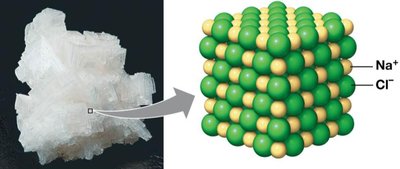
Properties of Water
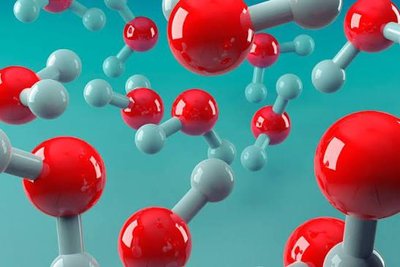
Water is essential for life due to its unique chemical properties, largely resulting from hydrogen bonding.
Polarity: Water molecules have partial positive (𝛿+) and negative (𝛿–) charges due to unequal sharing of electrons.
Cohesion: Water molecules stick together, enabling transport in plants and surface tension.
Adhesion: Water molecules stick to other surfaces, forming menisci.
High Specific Heat: Water resists temperature changes, moderating Earth's climate.
High Heat of Vaporization: Water absorbs heat when evaporating, enabling cooling.
Density of Ice: Ice is less dense than liquid water, allowing it to float and insulate aquatic life.
Solvent Properties: Water dissolves polar and ionic compounds, forming hydration shells around ions.
Types of Chemical Reactions
Chemical reactions involve making or breaking bonds. They are classified as synthesis, decomposition, exchange, and oxidation-reduction reactions.
Synthesis (Anabolic): Building larger molecules from smaller ones.
Decomposition (Catabolic): Breaking down molecules.
Exchange: Swapping parts between molecules.
Oxidation-Reduction: Transfer of electrons between molecules.
Metabolism is the sum of all anabolic and catabolic reactions in an organism.
Factors Affecting Chemical Reaction Rates
Chemical/physical properties of reactants
Temperature
Reactant concentrations
pH
Catalysts
Acids, Bases, and Buffers
Acids are proton donors, releasing H+ ions. Bases are proton acceptors, taking up H+ ions. Buffers resist changes in pH, maintaining homeostasis.
Strong acids/bases: Ionize fully and irreversibly.
Weak acids/bases: Dissociate reversibly.
Buffer: Mixture of weak acid and weak base that stabilizes pH.
The pH Scale
The pH scale measures hydrogen ion concentration in a solution, ranging from 0 (acidic) to 14 (basic). It is logarithmic: a change of 1 pH unit equals a tenfold change in [H+].
Acidic: pH < 7
Neutral: pH = 7
Basic: pH > 7
Formula:
Effects of Ocean Acidification
Ocean acidification occurs when increased CO2 lowers ocean pH, removing carbonate ions and inhibiting formation of calcium carbonate by marine organisms.
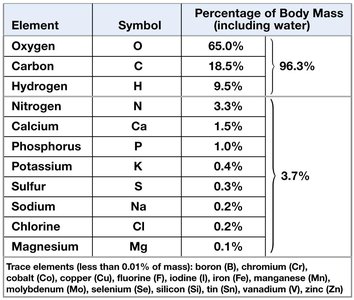
Table: Common Elements in Living Systems
Element | Symbol | Percentage of Body Mass (including water) |
|---|---|---|
Oxygen | O | 65.0% |
Carbon | C | 18.5% |
Hydrogen | H | 9.5% |
Nitrogen | N | 3.3% |
Calcium | Ca | 1.5% |
Phosphorus | P | 1.0% |
Potassium | K | 0.4% |
Sulfur | S | 0.3% |
Sodium | Na | 0.2% |
Chlorine | Cl | 0.2% |
Magnesium | Mg | 0.1% |
Trace elements (<0.01%): B, Cr, Co, Cu, F, I, Fe, Mn, Mo, Se, Si, Sn, V, Zn | ||
Additional info: Some context and explanations were expanded for clarity and completeness, including definitions, formulas, and examples.
