Back
Chapter 2: The Chemical Context of Life – Study Notes
Study Guide - Smart Notes
 Tailored notes based on your materials, expanded with key definitions, examples, and context.
The Chemical Context of Life
Elements and Compounds
All living organisms are composed of matter, which is anything that occupies space and has mass. Matter consists of elements, which are pure substances that cannot be broken down by chemical reactions. When two or more elements combine in a fixed ratio, they form compounds, which possess emergent properties distinct from their constituent elements.
Element: A substance that cannot be broken down to other substances by chemical reactions.
Compound: A substance consisting of two or more elements in a fixed ratio.
Emergent properties: New characteristics that arise when elements combine to form compounds.
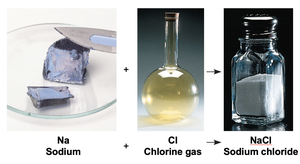
Example: Sodium (Na) and chlorine (Cl) combine to form sodium chloride (NaCl), which is table salt.
The Elements of Life
Of the 92 naturally occurring elements, only a subset is essential for life. Essential elements are required for an organism to live and reproduce, while trace elements are needed in minute quantities. Deficiencies in certain trace elements can lead to health issues.
Essential elements: About 20–25% of elements are essential for life.
Trace elements: Required in very small amounts (e.g., iodine for thyroid function).
Example: Iodine deficiency in humans can cause goiter.
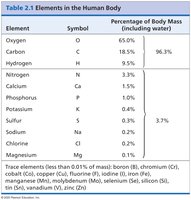
Element | Symbol | Percentage of Body Mass |
|---|---|---|
Oxygen | O | 65.0% |
Carbon | C | 18.5% |
Hydrogen | H | 9.5% |
Nitrogen | N | 3.3% |
Calcium | Ca | 1.5% |
Phosphorus | P | 1.0% |
Potassium | K | 0.4% |
Sulfur | S | 0.3% |
Sodium | Na | 0.2% |
Chlorine | Cl | 0.2% |
Magnesium | Mg | 0.1% |
Concept 2.2: An Element’s Properties Depend on the Structure of Its Atoms
Atomic Structure and Subatomic Particles
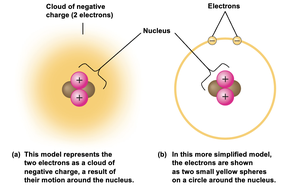
Each element is made up of a unique type of atom, which is the smallest unit of matter retaining the properties of that element. Atoms consist of subatomic particles: neutrons (neutral), protons (positive), and electrons (negative).
Neutrons and protons: Located in the atomic nucleus.
Electrons: Form a cloud around the nucleus.
Dalton: Unit of mass for subatomic particles (1.7 × 10⁻²⁴ g).
Atomic Number and Atomic Mass
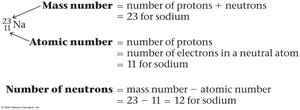
Atoms of different elements vary in their number of subatomic particles. The atomic number is the number of protons, while the mass number is the sum of protons and neutrons. Atomic mass is approximately equal to the mass number.
Atomic number: Number of protons in the nucleus.
Mass number: Number of protons plus neutrons.
Atomic mass: Total mass of an atom, measured in daltons.
Formula:
Isotopes
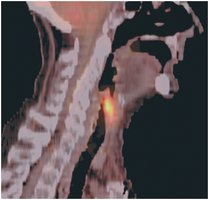
Isotopes are variants of an element with the same number of protons but different numbers of neutrons. Some isotopes are radioactive and decay spontaneously, emitting particles and energy. Radioactive isotopes have important applications in biology and medicine, but can also pose hazards.
Isotope: Atomic form of an element differing in neutron number.
Radioactive isotope: Unstable isotope that decays, releasing energy.
Applications: Fossil dating, metabolic tracing, medical diagnostics (e.g., PET scans).
The Energy Levels of Electrons
Electron Shells and Potential Energy
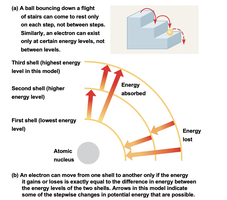
Energy is the capacity to cause change, and potential energy is stored due to an object's position or structure. Electrons in atoms have potential energy based on their distance from the nucleus, and occupy discrete energy levels called shells.
Electron shell: Energy level where electrons reside.
Energy absorption: Electrons move to higher shells by absorbing energy.
Energy release: Electrons move to lower shells by releasing energy.
Electron Distribution and Chemical Properties
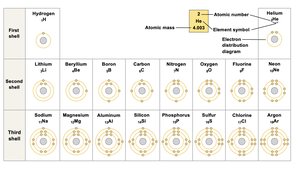
The chemical behavior of an atom is determined by the arrangement of electrons in its shells, especially the valence shell (outermost shell). Atoms with full valence shells are inert, while those with unpaired electrons are reactive.
Valence electrons: Electrons in the outermost shell.
Periodic table: Shows electron distribution for each element.
Reactivity: Arises from unpaired electrons in the valence shell.
Concept 2.3: The Formation and Function of Molecules Depend on Chemical Bonding Between Atoms
Covalent Bonds
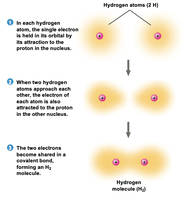
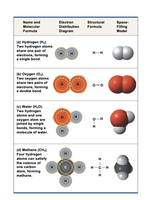
Atoms with incomplete valence shells can share or transfer electrons, forming chemical bonds. Covalent bonds involve the sharing of electron pairs between atoms, resulting in molecules. The bonding capacity (valence) of an atom is determined by the number of electrons needed to complete its valence shell.
Covalent bond: Sharing of a pair of valence electrons.
Single bond: One pair of electrons shared.
Double bond: Two pairs of electrons shared.
Pure element: Molecule of one type of atom (e.g., H2, O2).
Compound: Molecule of two or more types of atoms (e.g., H2O, CH4).
Electronegativity and Polar/Nonpolar Covalent Bonds
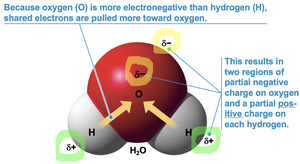
Electronegativity is an atom’s ability to attract electrons in a covalent bond. In nonpolar covalent bonds, electrons are shared equally. In polar covalent bonds, electrons are shared unequally, resulting in partial charges.
Electronegativity: Atom’s attraction for electrons in a bond.
Nonpolar covalent bond: Equal sharing of electrons.
Polar covalent bond: Unequal sharing, causing partial positive and negative charges.
Example: Water (H2O) is a polar molecule.
Ionic Bonds
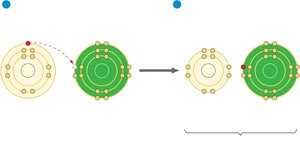
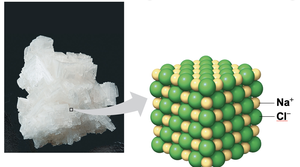
Ionic bonds form when electrons are transferred from one atom to another, resulting in oppositely charged ions. A cation is positively charged, and an anion is negatively charged. Ionic compounds, or salts, are often crystalline in nature.
Ionic bond: Attraction between a cation and an anion.
Cation: Positively charged ion.
Anion: Negatively charged ion.
Example: Sodium chloride (NaCl) forms from sodium and chlorine.
Weak Chemical Interactions
While covalent bonds are strong, many biological molecules are held together by weak interactions, including ionic bonds, hydrogen bonds, and van der Waals interactions. These weak bonds are crucial for maintaining the functional forms of large molecules.
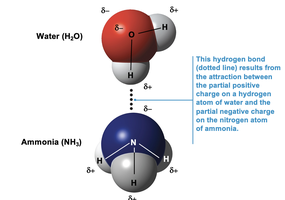
Hydrogen bond: Attraction between a hydrogen atom covalently bonded to an electronegative atom and another electronegative atom nearby (usually oxygen or nitrogen).
Van der Waals interactions: Weak attractions due to transient local partial charges.
Collective strength: Many weak interactions together can be strong (e.g., gecko toe hairs).