 Back
BackChapter 2: The Chemical Context of Life – Atoms, Molecules, and Water
Study Guide - Smart Notes
 Tailored notes based on your materials, expanded with key definitions, examples, and context.
Atoms & Molecules
Elements and Atomic Structure
All matter is composed of elements, which are substances that cannot be broken down into simpler substances by chemical means. Each element is represented by a chemical symbol, typically derived from its English or Latin name (e.g., O for oxygen, Fe for iron).
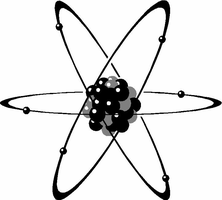
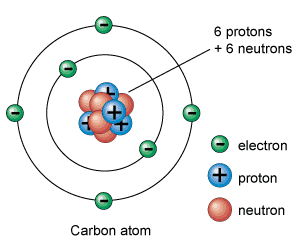
Atom: The smallest unit of an element that retains its chemical properties.
Atomic Number: The number of protons in an atom, written as a subscript before the chemical symbol.
Mass Number: The total number of protons and neutrons in an atom, written as a superscript.
Ions and Isotopes
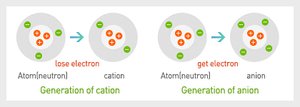
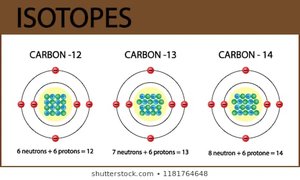
Ions are atoms that have gained or lost electrons, resulting in a net electrical charge. A cation is positively charged, while an anion is negatively charged. Isotopes are atoms of the same element with different numbers of neutrons.
Cation: Atom that has lost electrons; positive charge.
Anion: Atom that has gained electrons; negative charge.
Isotope: Atoms of the same element with different neutron numbers (e.g., 12C, 13C, 14C).
Molecules and Compounds
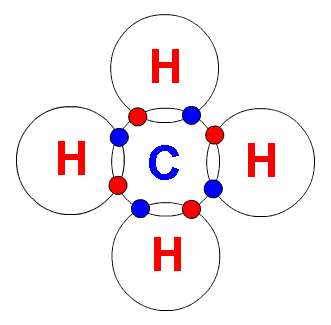
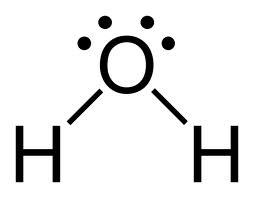
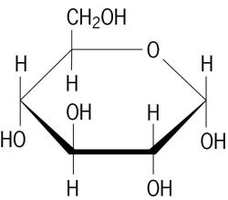
A molecule is a stable particle composed of two or more atoms joined by chemical bonds. A compound consists of two or more different elements combined in a fixed ratio. The molecular formula identifies the composition and number of each atom in a molecule (e.g., CH4, H2O, CO2, C6H12O6).
Molecule: Two or more atoms bonded together.
Compound: Molecule containing different elements in a fixed ratio.
Molecular Formula: Shows the types and numbers of atoms in a molecule.

Chemical Reactions
Role of Electrons
Chemical reactions involve the rearrangement of electrons in atoms. Electrons exist in an electron cloud around the nucleus and occupy orbitals in energy levels or shells. The valence shell is the outermost shell, and its electron configuration determines an atom's reactivity.
Electron Shells: Energy levels where electrons reside; the outermost is the valence shell.
Valence Electrons: Electrons in the outermost shell, involved in chemical bonding.
Atoms tend to fill or empty their valence shells by sharing, gaining, or losing electrons.
Chemical Bonds
Types of Chemical Bonds
Atoms form chemical bonds to achieve stable electron configurations. The main types of bonds are covalent, ionic, and hydrogen bonds.
Covalent Bond: Electrons are shared between atoms; strongest type of bond.
Ionic Bond: Attraction between oppositely charged ions (cations and anions).
Hydrogen Bond: Weak bond between a hydrogen atom with a partial positive charge and an electronegative atom (e.g., oxygen).


Water: Structure and Properties
Polarity and Hydrogen Bonding
Water (H2O) is a polar molecule, meaning it has partial positive and negative charges due to unequal sharing of electrons in its covalent bonds. This polarity allows water molecules to form hydrogen bonds with each other.
Polar Covalent Bond: Electrons are not shared equally, resulting in partial charges.
Hydrogen Bonds: Form between the partial positive hydrogen of one molecule and the partial negative oxygen of another.
Each water molecule can form up to four hydrogen bonds.
Unique Properties of Water
Hydrogen bonding gives water several unique physical properties essential for life:
Cohesion: Water molecules stick together, contributing to surface tension.
Adhesion: Water molecules stick to other substances.
High Specific Heat: Water resists temperature changes, helping maintain stable environments.
High Heat of Vaporization: Water absorbs a lot of heat before evaporating, enabling evaporative cooling.
Ice is Less Dense than Liquid Water: Water expands upon freezing, making ice float.
Solvent Properties: Water dissolves many polar and ionic substances (hydrophilic), but not nonpolar substances (hydrophobic).
Acids, Bases, and pH
Dissociation of Water
Water can dissociate into hydrogen ions (H+) and hydroxide ions (OH-). Acids are substances that increase the concentration of H+ ions in solution, while bases increase the concentration of OH- ions.
Acid: Proton donor; [H+] > [OH-]
Base: Proton acceptor; [OH-] > [H+]
pH Scale
The pH scale measures the acidity of a solution based on the concentration of H+ ions. It ranges from 0 (most acidic) to 14 (most basic), with 7 being neutral. The scale is logarithmic: each unit change represents a tenfold change in acidity.
pH < 7: Acidic
pH > 7: Basic
pH = 7: Neutral
$\text{pH} = -\log_{10}[\text{H}^+]$
Example: A solution with pH 4 is 10 times more acidic than one with pH 5, and 100 times more acidic than pH 6.
Summary Table: Key Atomic and Molecular Concepts
Term | Definition | Example |
|---|---|---|
Element | Substance that cannot be broken down further | Oxygen (O), Iron (Fe) |
Atom | Smallest unit of an element | Carbon atom |
Ion | Electrically charged atom | Na+, Cl- |
Isotope | Atoms with same protons, different neutrons | 12C, 13C, 14C |
Molecule | Two or more atoms bonded | H2O, O2 |
Compound | Molecule of different elements | CO2, C6H12O6 |
Additional info: These notes expand on the original slides and handwritten content, providing definitions, examples, and academic context for each concept. Images included are directly relevant to the explanation of atomic structure, ions, isotopes, molecules, water properties, and chemical bonds.
