 Back
Chapter 2: The Chemistry of Life – Study Notes
Study Guide - Smart Notes
 Tailored notes based on your materials, expanded with key definitions, examples, and context.
Chapter 2: The Chemistry of Life
Big Ideas in Chemistry of Life
This chapter explores the foundational chemical principles that underlie all biological processes. Understanding the nature of matter, atomic structure, chemical bonds, and the properties of water is essential for grasping how life operates at the molecular level.
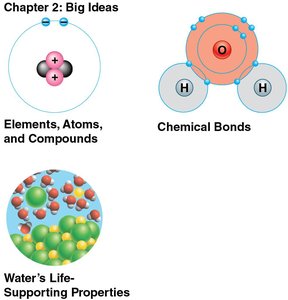
Elements, Atoms, and Compounds
Definitions and Properties
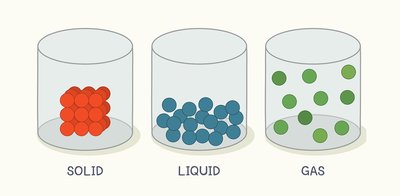
Matter: Anything that occupies space and has mass. All living organisms are composed of matter.
Element: A substance that cannot be broken down into simpler substances by chemical means. Each element consists of one kind of atom.
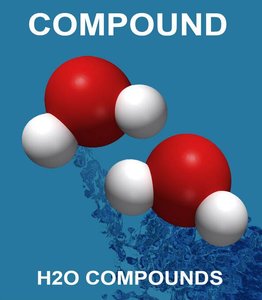
Compound: A substance consisting of two or more elements combined in a fixed ratio (e.g., H2O).
Atom: The smallest unit of an element that retains the properties of that element.
Atomic Structure
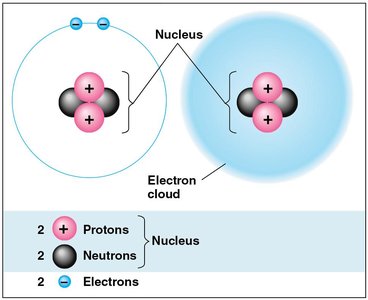
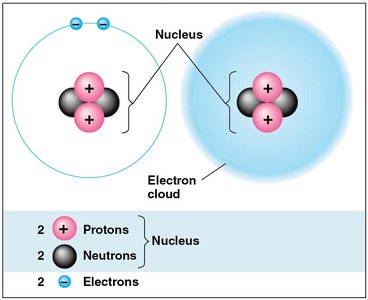
Atoms are composed of three types of subatomic particles:
Protons: Positively charged particles found in the nucleus.
Neutrons: Neutral particles also located in the nucleus.
Electrons: Negatively charged particles that orbit the nucleus in electron shells.
Atomic Number, Mass Number, and Isotopes
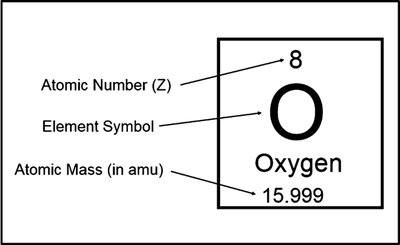
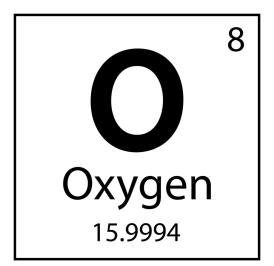
Atomic Number (Z): The number of protons in an atom, which determines the element.
Mass Number: The sum of protons and neutrons in the nucleus.
Atomic Mass: The average mass of all isotopes of an element, measured in atomic mass units (amu).
Isotope: Atoms of the same element with different numbers of neutrons.
Calculating Subatomic Particles
Number of neutrons = Atomic mass (rounded to nearest whole number) – Atomic number
Number of electrons = Number of protons (in a neutral atom)
Example: Oxygen (O) has atomic number 8 and atomic mass 16. Number of neutrons = 16 – 8 = 8.
Isotopes and Radioactivity
Isotopes can be stable or radioactive. Radioactive isotopes have unstable nuclei that decay, emitting radiation. They are useful as tracers in biological research and medicine, but can also be hazardous.
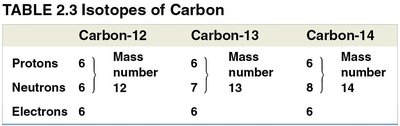
Isotope | Protons | Neutrons | Electrons | Mass Number |
|---|---|---|---|---|
Carbon-12 | 6 | 6 | 6 | 12 |
Carbon-13 | 6 | 7 | 6 | 13 |
Carbon-14 | 6 | 8 | 6 | 14 |
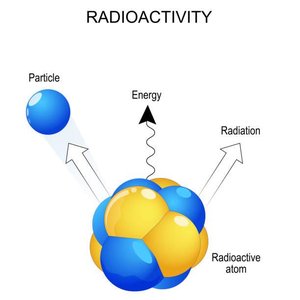
Additional info: Carbon dating uses the decay of radioactive carbon-14 to estimate the age of organic materials.
Electron Configuration and Chemical Behavior
Electron Shells and Valence Electrons
Electrons occupy energy levels called shells. The chemical behavior of an atom is largely determined by the number of electrons in its outermost shell (valence shell).
1st shell: holds up to 2 electrons
2nd shell: holds up to 8 electrons
3rd shell: holds up to 8 electrons
Atoms are most stable when their valence shell is full.
Chemical Bonds
Types of Chemical Bonds
Covalent Bonds: Atoms share pairs of electrons. Can be nonpolar (equal sharing) or polar (unequal sharing).
Ionic Bonds: Electrons are transferred from one atom to another, creating ions that attract each other.
Hydrogen Bonds: Weak attractions between a hydrogen atom in one molecule and an electronegative atom (like oxygen or nitrogen) in another.
Example: In water (H2O), oxygen and hydrogen are held together by polar covalent bonds, and water molecules are attracted to each other by hydrogen bonds.
Bond Strength Comparison
Bond Type | Relative Strength | Example |
|---|---|---|
Covalent | Strongest | H2O, CH4 |
Ionic | Intermediate | NaCl |
Hydrogen | Weakest | Between H2O molecules |
Chemical Reactions
Definition and Importance
A chemical reaction is a process that makes and breaks chemical bonds, rearranging atoms into new substances. Chemical reactions do not create or destroy matter, but change its composition.
Solutions, Solvents, and Solutes
Definitions
Solution: A homogeneous mixture of two or more substances.
Solvent: The dissolving agent (e.g., water).
Solute: The substance that is dissolved (e.g., salt).
Water is known as the "solvent of life" due to its ability to dissolve many substances, which is essential for biological processes.
Acids, Bases, pH, and Buffers
The pH Scale
The pH scale measures the concentration of hydrogen ions (H+) in a solution, ranging from 0 (most acidic) to 14 (most basic). A pH of 7 is neutral.
Acid: Donates H+ ions to a solution (pH < 7).
Base: Reduces H+ concentration, often by releasing OH- ions (pH > 7).
The pH scale is logarithmic: each unit represents a tenfold change in [H+].
Example: A solution with pH 3 has 10 times more H+ than a solution with pH 4.
Buffers
A buffer is a solution that resists changes in pH by binding or releasing H+ ions as needed. Buffers are crucial in maintaining stable pH in biological systems, such as blood.
Applications and Biological Relevance
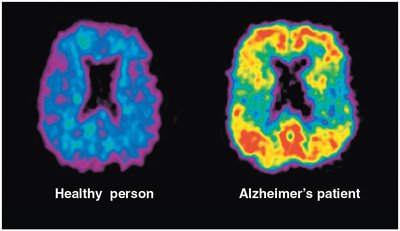
Radioactive isotopes are used in medical imaging (e.g., PET scans) and dating ancient biological materials (carbon dating).
Changes in pH can affect enzyme activity and biological processes in blood, oceans, and soils.
Practice Problems
Calculate the number of protons, neutrons, and electrons for Li, N, and O using their atomic numbers and masses.
Explain why helium is nonreactive (its valence shell is full).
Draw and describe the bond formed between O and 2 Li atoms (ionic bond formation).
