 Back
BackChapter 20: Biotechnology – DNA Libraries, Gene Cloning, and Analysis
Study Guide - Smart Notes
 Tailored notes based on your materials, expanded with key definitions, examples, and context.
Biotechnology: DNA Libraries and Gene Cloning
Storing Cloned Genes in DNA Libraries
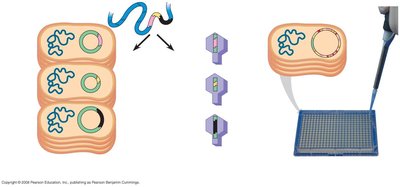
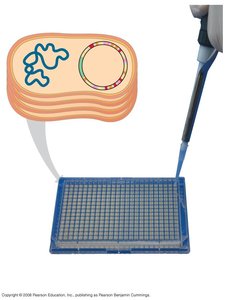
DNA libraries are essential tools in biotechnology, allowing researchers to store and access cloned genes from an organism's genome. These libraries are collections of DNA fragments inserted into vectors and maintained in host cells.
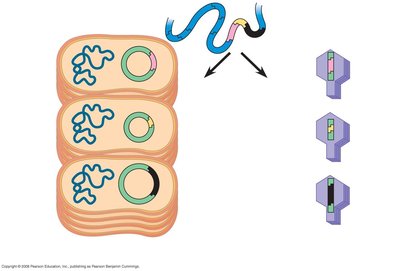
Genomic Library: A collection of cell clones, each carrying a DNA fragment from the entire genome of an organism. Vectors such as plasmids, bacteriophages, or bacterial artificial chromosomes (BACs) are used to store these fragments.
Plasmid Library: Uses plasmids as vectors to carry DNA fragments into bacterial cells.
Phage Library: Utilizes bacteriophage vectors to store and propagate DNA fragments.
BAC Library: Employs BACs, which are large plasmids capable of carrying large DNA inserts, useful for cloning large genomic fragments.
cDNA Libraries
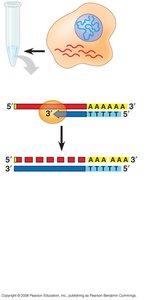
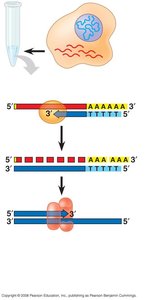
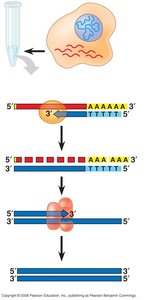
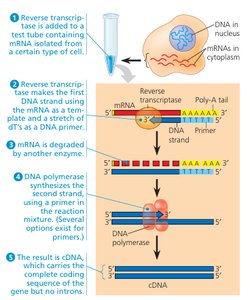
A complementary DNA (cDNA) library is constructed by reverse transcribing mRNA from a specific cell type, resulting in DNA copies of only the expressed genes. This library represents the subset of genes actively transcribed in the original cells.
Reverse Transcriptase: Enzyme used to synthesize cDNA from mRNA templates.
cDNA Library: Contains only exons (coding regions) of expressed genes, excluding introns and non-expressed sequences.
Screening DNA Libraries for Genes of Interest
Nucleic Acid Hybridization
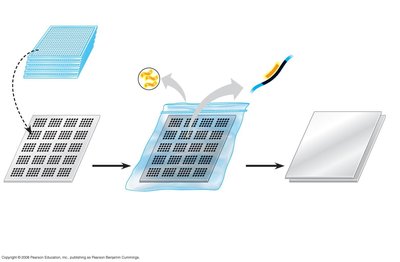
To identify a clone carrying a gene of interest, researchers use nucleic acid probes—short, labeled DNA or RNA sequences complementary to the target gene. This process is called nucleic acid hybridization.
Probe Design: Probes are synthesized to match the sequence of the gene of interest and labeled with radioactive or fluorescent tags for detection.
Screening: Cells from each clone are transferred to a membrane and exposed to the probe. Hybridization indicates the presence of the target gene.
Gene Expression in Cloning Hosts
Bacterial Expression Systems
Cloned eukaryotic genes can be expressed in bacterial hosts, but differences in gene regulation and the presence of introns in eukaryotic genes can complicate expression.
Expression Vector: A cloning vector with a strong prokaryotic promoter to drive expression of the inserted gene.
cDNA Use: To avoid intron-related issues, the cDNA (lacking introns) is often used for bacterial expression.
Eukaryotic Expression Systems
Yeast and other eukaryotic cells are sometimes used as hosts to express eukaryotic genes, especially when post-translational modifications are required for protein function.
Advantages of Yeast: Easy to grow and possess plasmids, allowing for recombinant DNA replication.
Post-Translational Modifications: Some proteins require modifications (e.g., glycosylation) that bacteria cannot perform.
DNA Introduction Methods: Electroporation and microinjection are used to introduce recombinant DNA into eukaryotic cells.
Amplifying DNA: The Polymerase Chain Reaction (PCR)
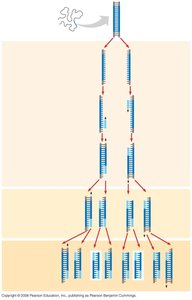
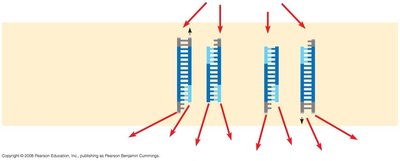
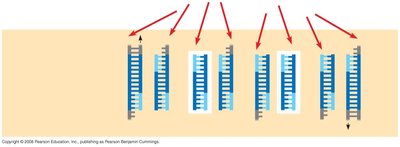
PCR is a rapid and selective method for amplifying specific DNA sequences in vitro, especially useful when DNA samples are limited or impure.
Three-Step Cycle: Denaturation (heating), annealing (cooling and primer binding), and extension (DNA synthesis).
Exponential Amplification: Each cycle doubles the amount of target DNA, leading to millions of copies.
Analyzing DNA: Gel Electrophoresis and Southern Blotting
Gel Electrophoresis
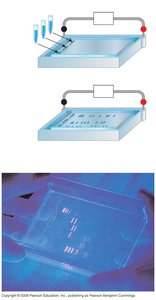
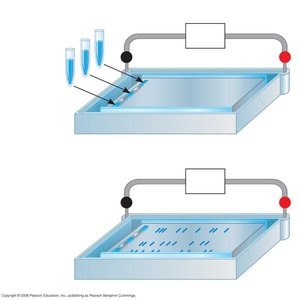
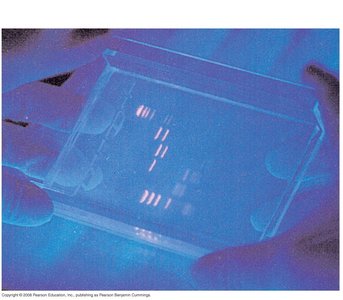
This technique separates DNA fragments by size using an electric field and a gel matrix. DNA, being negatively charged, migrates toward the positive electrode, with shorter fragments moving faster.
Band Formation: DNA fragments form distinct bands according to size.
Applications: Used for restriction fragment analysis, DNA fingerprinting, and checking PCR products.
Restriction Fragment Length Polymorphism (RFLP)
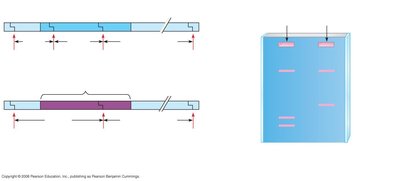
RFLP analysis detects variations in DNA sequences by comparing the pattern of fragments produced by restriction enzyme digestion. Sequence differences that alter restriction sites result in different fragment patterns.
Polymorphisms: Sequence variations among individuals, useful for genetic mapping and disease diagnosis.
Example: Sickle-cell disease is caused by a single nucleotide change that creates or abolishes a restriction site in the β-globin gene.
Southern Blotting
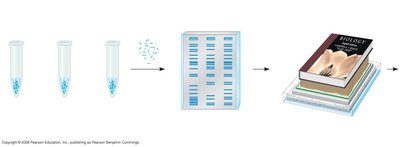
Southern blotting combines gel electrophoresis and nucleic acid hybridization to detect specific DNA fragments within a complex mixture. DNA is transferred from the gel to a membrane, then probed with a labeled DNA fragment complementary to the gene of interest.
Steps: Restriction digestion, gel electrophoresis, transfer to membrane, hybridization with probe, and detection.
DNA Sequencing
Dideoxy Chain Termination Method
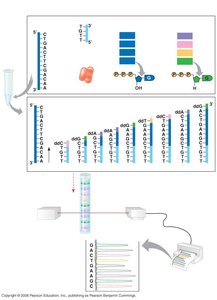
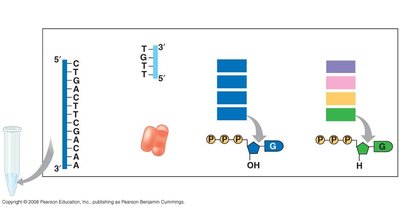
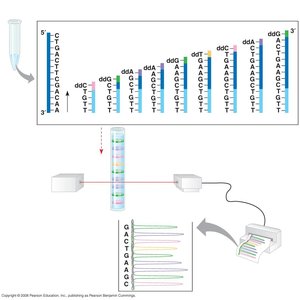
This method determines the nucleotide sequence of DNA fragments using dideoxyribonucleotides (ddNTPs), which terminate DNA synthesis at specific bases. Each ddNTP is labeled with a fluorescent tag, allowing the sequence to be read by a detector.
Key Components: DNA template, primer, DNA polymerase, normal nucleotides (dNTPs), and fluorescently labeled ddNTPs.
Output: A spectrogram showing the order of nucleotides in the DNA fragment.
Analyzing Gene Expression
Hybridization Techniques
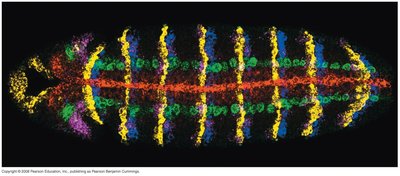
Nucleic acid probes can be used to detect when and where specific genes are expressed by hybridizing to mRNA transcripts.
Northern Blotting: Similar to Southern blotting, but analyzes mRNA to study gene expression at different developmental stages.
Reverse Transcriptase-PCR (RT-PCR): Converts mRNA to cDNA, then amplifies specific genes to compare expression levels.
In Situ Hybridization: Uses fluorescent probes to visualize the location of specific mRNAs within intact tissues or organisms.
Summary Table: Types of DNA Libraries
Library Type | Source Material | Content | Vector Used | Applications |
|---|---|---|---|---|
Genomic Library | Genomic DNA | All genes (coding and non-coding) | Plasmid, Phage, BAC | Gene discovery, genome mapping |
cDNA Library | mRNA (via reverse transcription) | Expressed genes (exons only) | Plasmid, Phage | Gene expression studies, protein production |
